
Last updated October 17, 2026
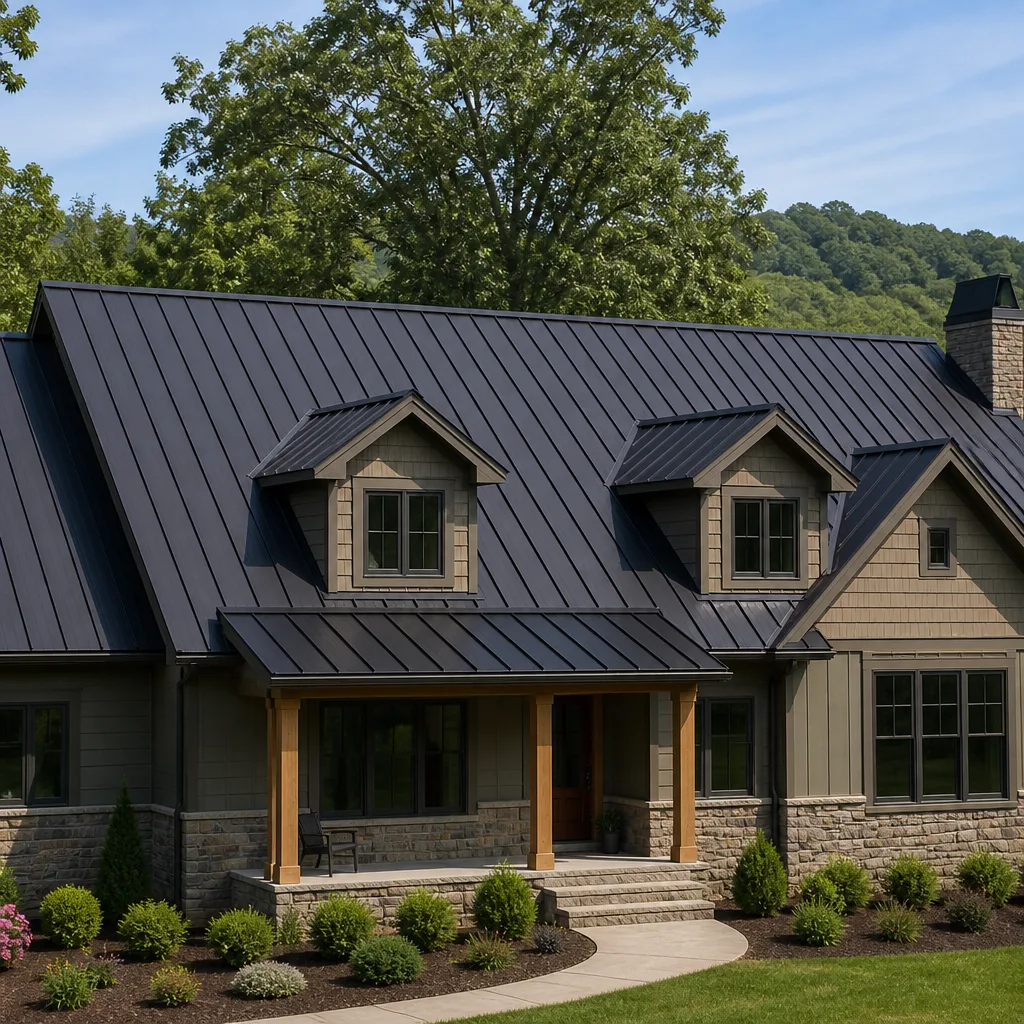 Metal roofing
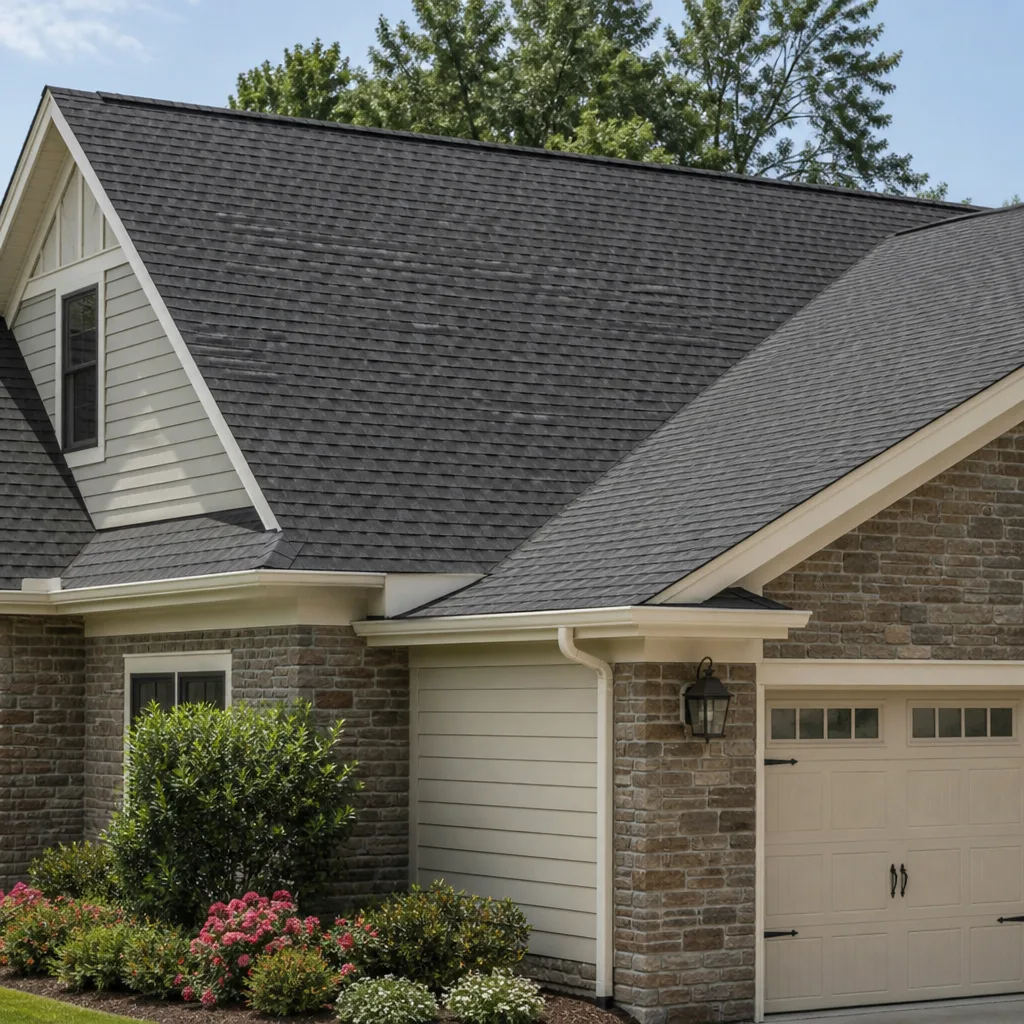 Architectural shingles
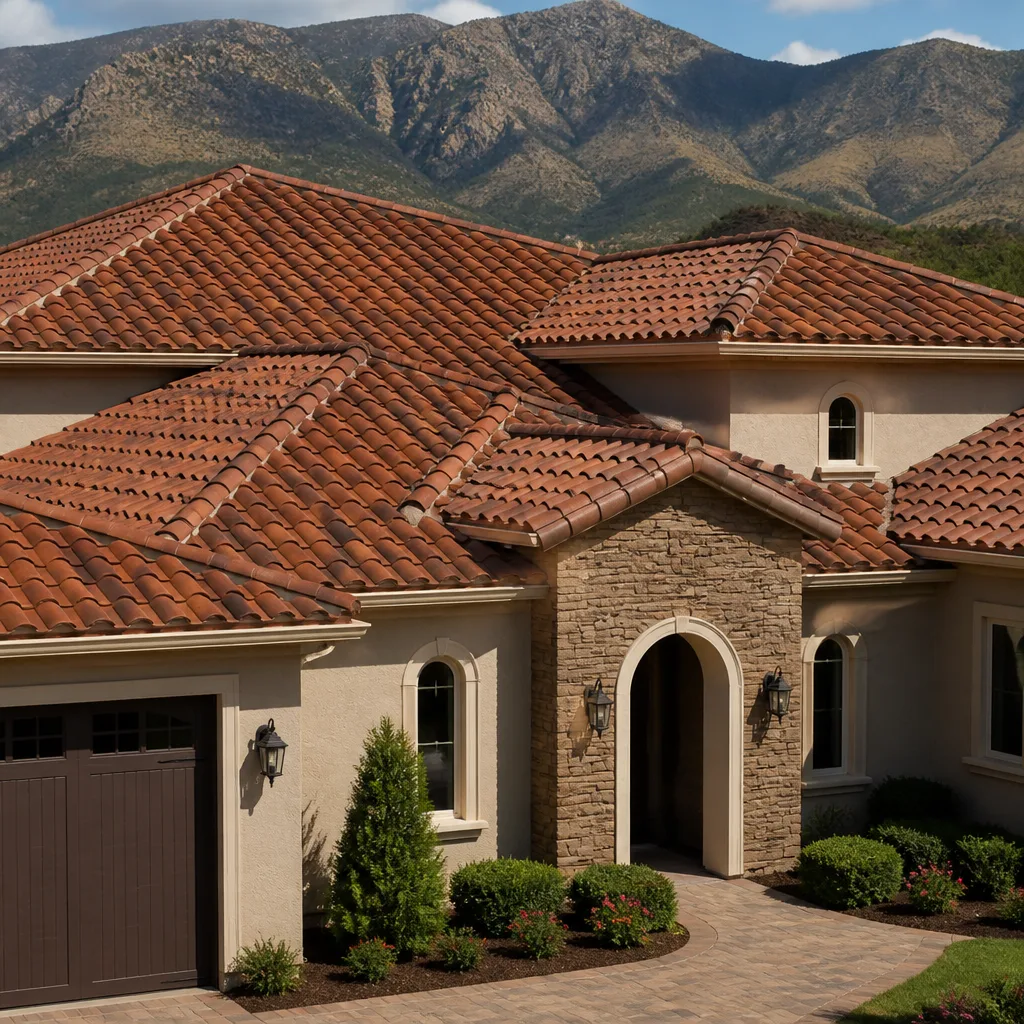 Tile roofing
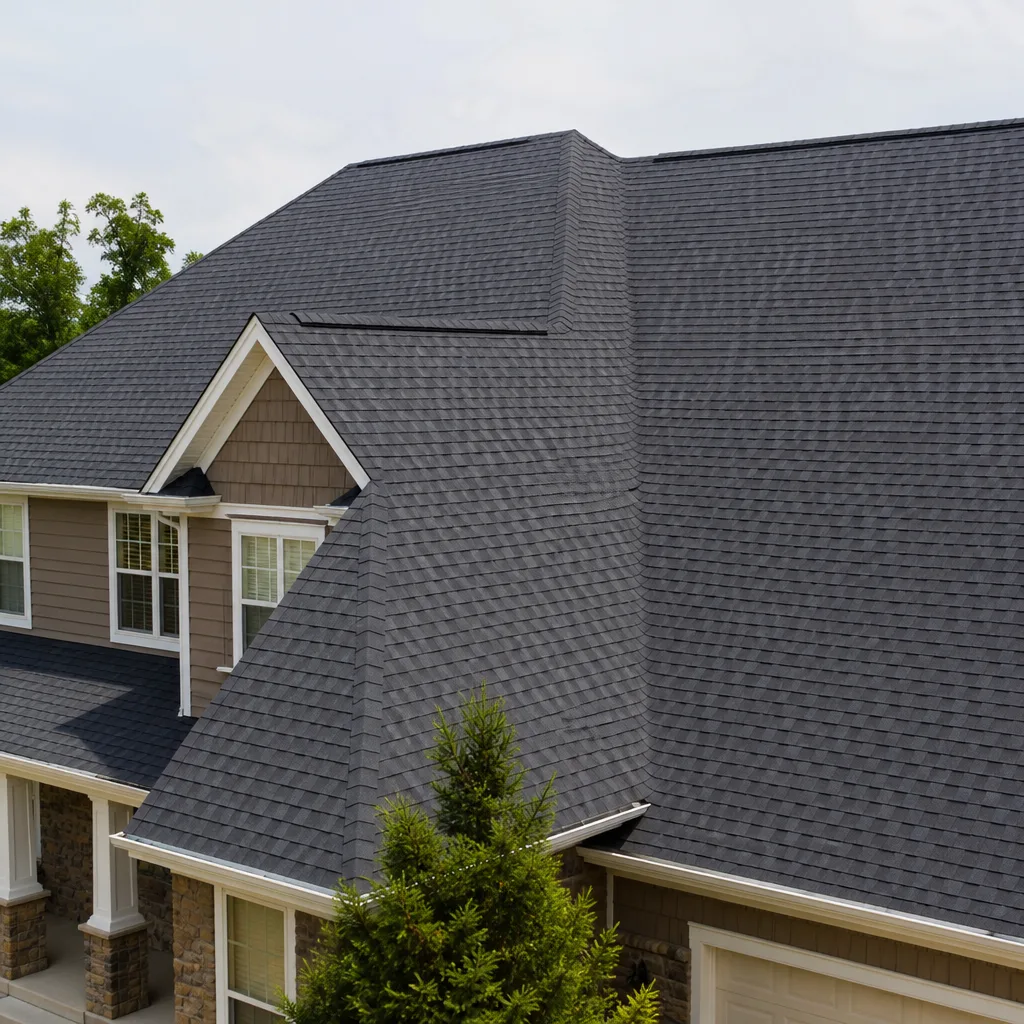 GAF
GAF Owens Corning
 Flat & low-slope
Free roof inspection with deck photos before we talk money - GAF and Owens Corning certified installation
Roofing Permits, Codes & Inspections in TX: What You Need to Know
An Austin homeowner who accepts a cash-paid roof replacement without a permit may save $400 to $600 in permit fees and lose $15,000 to $30,000 in resale value when a buyer’s inspector pulls the city permit history and finds nothing on record for a roof that’s clearly not original. That gap between short-term savings and long-term liability is wider in Texas than almost anywhere else, because the state gives cities broad authority to set their own roofing rules. What passes in Round Rock can fail in Austin, and what Austin requires can differ again in Cedar Park or Pflugerville. This guide explains what Austin’s Development Services Department actually requires, when you need a permit, what inspectors look for during a rooftop inspection, and what unpermitted work does to your home’s value and your insurance coverage. For a deeper dive, see The Complete Guide to Roofing in Austin.
Quick Answer
In Austin, a full roof replacement or any re-roof involving more than one layer of existing shingles requires a residential re-roof permit from the Development Services Department. Repairs covering less than 100 square feet of roof surface typically do not require a permit, though structural damage to decking or framing changes that threshold. Permit fees for a standard asphalt shingle re-roof in Austin run roughly $150 to $500 depending on valuation, and the process takes about one to three weeks from application to final inspection.
Styles & brands we work with
Table of Contents
- When a Roofing Permit Is Required in Austin
- Austin’s Roofing Code: What the 2021 IRC Actually Demands
- The Austin Permit Process: Step by Step
- What Inspectors Check During a Rooftop Inspection
- Unpermitted Roofing Work and Your Insurance
- Historic Districts and HOA Rules in Austin
- Permit History and Resale Value
- Common Mistakes to Avoid
When a Roofing Permit Is Required in Austin
Austin draws a brighter line than most Texas cities between a repair and a replacement. The Development Services Department requires a permit when the work removes and replaces more than 100 square feet of roof covering, when you’re adding a second layer of shingles over an existing layer, or when any decking, framing, or structural component gets replaced. A straightforward repair that patches a small section of torn shingles or replaces a few pieces of damaged flashing stays below the threshold and needs no permit.
Here’s what most homeowners miss: the “more than one layer” trigger. Austin code prohibits installing a new shingle layer over an existing layer in most residential applications. If your roof already has two layers and you’re considering a third, the city requires a full tear-off to the deck. That means the project becomes a re-roof, which always requires a permit. We’ve met homeowners in Allandale and Crestview who assumed their roofer was doing a simple overlay, only to learn at inspection that the city required a complete tear-off because the home already carried two layers.
Permit Thresholds at a Glance
- Repairs under 100 square feet: No permit required. This covers most leak repairs, shingle replacement, and flashing work.
- Repairs over 100 square feet: Permit required. This includes large sections of shingle replacement or underlayment repair.
- Full re-roof (tear-off and replacement): Permit always required, regardless of square footage.
- Adding a layer over existing shingles: Requires a permit and is generally prohibited if the roof already has two layers.
- Decking or structural repair: Permit required any time sheathing or framing is replaced, even if the total area is under 100 square feet.
The square footage rule matters because roofers in Austin sometimes quote a “repair” that’s actually a replacement by another name. If a storm tears off 200 square feet of shingles on a Mueller home, that’s not a repair. That’s a permitted re-roof of a section, and the city expects it on record. Getting this classification right protects you from a failed inspection later.
For homeowners comparing quotes, the permit is a useful filter. Any contractor who suggests skipping it on work that clearly exceeds the threshold is making a decision that benefits their schedule, not your property record. Tilehurst Roofing Austin handles permits on every re-roof and replacement we perform in Austin, and the permit fee appears as a line item on your written estimate before any work starts. That’s the Tilehurst Roofing Austin home standard: the price is in your hands before a single shingle comes off.
Austin’s Roofing Code: What the 2021 IRC Actually Demands
Austin adopted the 2021 International Residential Code with local amendments, which means the city’s residential roofing standard is specific and enforced. Three areas trip up homeowners and even some roofers: underlayment requirements, decking condition, and drip edge. Knowing these before you sign a contract prevents change orders and failed inspections. For seasonal roofing care for Austin, planning ahead pays off year-round.
Underlayment is the water-shedding layer between your decking and your shingles. Austin’s code requires a minimum of one layer of ASTM D226 Type I or Type II felt, or a synthetic underlayment that meets the same standard. In high-wind zones, which includes much of Travis County, the code may require additional fastening or a self-adhered membrane at eaves. For homes with low-slope sections, a two-ply underlayment or a self-adhered ice-and-water shield is common. Inspectors check underlayment fastening during the intermediate inspection, before shingles go down.
Decking is where we see the most change orders, and they’re almost always avoidable. Austin code requires decking to be sound, properly fastened, and free of rot or delamination. If an inspector finds soft plywood or gaps between sheets, the job stops until the decking is repaired or replaced. That’s a legitimate change order, but a good roofing company identifies decking issues during the tear-off and tells you before new decking goes in. Our crews at Roofing Company in Austin document decking condition with photos and give you a written price for any replacement before proceeding.
Drip edge is the metal flashing that runs along the roof’s edges. Austin code requires drip edge on eaves and rakes, and it must be fastened according to manufacturer specs. This is a small detail that inspectors actually check, and it’s also a common place for unpermitted crews to cut corners. The fix is cheap. The failed inspection is not.
What the 2021 IRC Means for Your Roof
- Underlayment: One layer of felt or synthetic minimum, with additional requirements for low-slope sections.
- Decking: Must be structurally sound; rot or delamination triggers replacement before shingle installation.
- Drip edge: Required at eaves and rakes, fastened per code and manufacturer instructions.
- Fasteners: Shingles must be fastened with the correct number of nails per shingle per manufacturer specs for Austin’s wind zone.
- Flashing: Valley, wall, and penetration flashing must meet code minimums, including corrosion-resistant materials.
The wind zone point deserves emphasis. Austin sits in a region where design wind speeds demand certain nailing patterns. The standard is six nails per shingle in high-wind areas, not four. Some manufacturers require six nails across all Austin-area installations to maintain their warranty. When we install GAF or Atlas products, we follow the manufacturer’s high-wind nailing schedule regardless of the minimum code. That keeps both the city and the manufacturer satisfied, and it means fewer shingles in your yard after the next spring storm.
The Austin Permit Process: Step by Step
The Austin permit process is manageable if you know the sequence. Most single-family re-roof permits are processed through the Development Services Department’s online portal, and a standard shingle re-roof on a simple roof takes one to two weeks from application to approval. Complex roofs, historic properties, or homes with existing code violations add time.
Here’s the sequence we walk through on every Austin re-roof:
- Application: The contractor or homeowner submits a residential re-roof permit application through the Austin Build + Connect portal. The application includes the property address, roof area, material type, and contractor information.
- Review: For standard re-roofs, review is often same-day or within a few business days. The city checks the application for completeness and confirms the property has no outstanding code issues.
- Permit issuance: Once approved, the permit is issued and the fee is paid. Permit fees for a typical Austin re-roof run $150 to $500 depending on the project valuation.
- Work begins: The tear-off happens, and decking condition is assessed. If decking repair is needed, the contractor documents it and discusses the change with the homeowner before proceeding.
- Intermediate inspection: For most re-roofs, an inspector visits after underlayment and flashing are installed but before shingles. This is when decking, underlayment, and drip edge get checked.
- Final inspection: After shingles, ridge caps, and ventilation are complete, the inspector returns for a final check. The permit closes only after this inspection passes.
Inspection scheduling is where delays happen. Austin’s inspection queue varies by season and neighborhood. During spring storm season, the queue can back up three to five business days. A good roofing company schedules inspections as soon as the work reaches the right stage, rather than waiting until the roof is fully complete. That sequencing keeps the project moving and prevents a finished roof from sitting uninspected for a week.
Tilehurst Roofing Austin pulls permits on every Roof Replacement in Austin we perform, and we schedule the intermediate and final inspections as part of the job. You’ll know the permit number, the fee, and the inspection schedule before the tear-off begins.
What Inspectors Check During a Rooftop Inspection
An Austin roofing inspector is looking for specific code violations, and knowing what they check helps you understand why some roofs pass and others fail. The checklist is not secret, and it’s not subjective.
Decking condition: The inspector looks for rot, delamination, gaps, and improper fastening. If decking was replaced, the inspector verifies the thickness matches code requirements and that clips or blocking are installed where required.
Underlayment: The inspector checks that underlayment is the correct type, properly lapped, and adequately fastened. A common failure: underlayment that’s too short at the eaves, leaving exposed decking where water runs off.
Flashing: Valley flashing, wall flashing, chimney flashing, and pipe boot flashing all get checked. The inspector wants to see corrosion-resistant material, proper overlap, and correct fastening. Missing or incorrectly lapped flashing is one of the most common inspection failures in Austin.
Shingle installation: After the final shingles go down, the inspector verifies the nailing pattern, the exposure, and the alignment. Off-pattern nailing or overdriven nails are visible failures. The inspector also checks that the ridge cap is installed correctly and that ventilation openings meet code.
Drip edge: Eaves and rakes need drip edge, and it needs to extend slightly beyond the decking. Missing drip edge is a cheap fix but a common failure.
Here’s what’s not on the inspector’s checklist: the brand of shingle, the color, or the contractor’s preference for how the job should look. The inspector enforces code, not aesthetics. That’s why material choice is yours to make. When we install products from GAF, CertainTeed, Owens Corning, IKO, Atlas, Tamko, or Boral, the inspector cares only that the installation meets code. The brand is your decision, and you should have genuine options. Our written estimates include material options from all seven manufacturers so the product fits your home and your budget, not just what happens to be in the truck.
Unpermitted Roofing Work and Your Insurance
Unpermitted roofing work creates a specific vulnerability in Texas: your insurance carrier can use the missing permit to reduce or deny a claim, even if the unpermitted work had nothing to do with the damage. That’s not speculation. Learn to spot trouble early with Roofing Warning Signs: A Austin Homeowner’s Reference Guide. It’s standard language in many Texas homeowners policies, and it’s been tested in claims across the state.
Here’s how it plays out. A storm damages your roof. You file a claim. The adjuster visits and notes that the roof was replaced five years ago. The adjuster checks the city permit history and finds no permit on record. At that point, the carrier has a basis to argue that the roof was not installed to code, that the work was not inspected, and that the damage is therefore not covered to the full replacement cost. Some carriers deny the claim outright. Others cover only the depreciated value, leaving you with tens of thousands of dollars in uncovered repair costs.
The same problem appears during a sale. A buyer’s inspector pulls the permit history and finds a roof that’s clearly not original with no permit on record. The buyer’s lender may require the permit issue to be resolved before closing, which means you either pay to have the roof permitted retroactively, which is not always possible, or you reduce the sale price. In Austin’s market, that reduction commonly runs five to ten percent of the roof’s replacement cost.
Austin homeowners also face a specific disclosure requirement. Texas property condition disclosures ask whether any improvements were made without required permits. Answering yes triggers the buyer’s scrutiny. Answering no when the truth is yes creates legal exposure. Neither answer is good.
The solution is straightforward: permit every roof that needs one. The fee is a few hundred dollars. The insurance and resale protection is worth vastly more. When you work with a Roof Repair in Austin company that handles permits as standard practice, you never have to think about this risk. The permit is pulled, the inspections happen, and the record exists.
Historic Districts and HOA Rules in Austin
Austin’s historic districts add a layer of approval that goes beyond the standard city permit. If your home sits in a locally designated historic district or is itself a landmark, the Historic Landmark Commission reviews exterior changes, including roofing materials. The standard asphalt shingle re-roof may require a certificate of appropriateness before the building permit is issued, and the commission may insist on materials that match the home’s historic character.
This matters in neighborhoods like Hyde Park, Bouldin Creek, and parts of East Austin, where historic designations are common. A homeowner in Hyde Park who wants to replace a cedar shake roof with asphalt shingles may need to demonstrate that the new material is visually compatible with the district’s guidelines. In some cases, the commission requires wood shingles or a specific color range, which changes both the material cost and the installation requirements.
HOA-governed neighborhoods add their own rules on top of city requirements. Many Austin HOAs require architectural review before a roof replacement, and some restrict shingle colors, materials, or even the timing of work. The HOA approval is separate from the city permit, and neither replaces the other. You need both.
The sequence matters: HOA approval first, then historic commission approval if applicable, then the city permit. Starting the city permit before the HOA approves can waste weeks if the HOA denies the material choice and forces a redesign. A roofing company familiar with Austin’s approval layers knows to check HOA covenants and historic designations before the permit application goes in.
Tilehurst Roofing Austin works in Austin neighborhoods with HOA and historic oversight, and we check both layers before quoting. That way your written estimate reflects the materials the HOA and historic commission will actually approve, not a number that changes after the first rejection.
Permit History and Resale Value
The permit record is part of your home’s permanent file with the city, and buyers in Austin increasingly treat that file as part of due diligence. A clean permit history tells a buyer that the roof was installed to code and inspected by the city. A missing permit tells a buyer that the roof is an unknown.
Here’s the practical math. A typical Austin roof replacement costs $12,000 to $25,000 depending on size and material. A missing permit doesn’t erase the entire value, but it does introduce negotiation leverage for the buyer. As noted earlier, the concession commonly lands in the $15,000 to $30,000 range on higher-end homes, because the buyer is pricing in the risk of an uninsurable or non-warrantied roof.
The permit also preserves your manufacturer warranty. GAF, CertainTeed, Owens Corning, IKO, Atlas, Tamko, and Boral all require installation by a licensed contractor and, in many cases, proof of permit as a condition of warranty coverage. A roof installed without a permit can mean a manufacturer that declines a warranty claim, which compounds the insurance vulnerability.
For homeowners planning to sell in the next five to ten years, the permit is cheap insurance. The fee is a one-time cost. The resale protection lasts as long as you own the home, and it transfers to the buyer with the property record.
Common Mistakes to Avoid
- Skipping the permit on a full replacement: This is the most expensive mistake. You save a few hundred dollars and create a resale and insurance problem that costs thousands later.
- Treating a large repair as a small one: The 100-square-foot threshold is specific. Work that exceeds it requires a permit, even if the contractor calls it a repair.
- Assuming the contractor pulled the permit: Verify it yourself. Ask for the permit number and confirm it with the city before work starts. A contractor who says “we’ll handle it” and never does leaves you holding the liability.
- Ignoring the intermediate inspection: The inspection between tear-off and shingle installation is where decking and underlayment problems get caught. Skipping it means problems get buried under shingles and discovered years later.
- Choosing materials without checking HOA or historic rules: A roof replacement approved by the city can still be rejected by your HOA or historic commission. Check both before you buy materials.
- Not getting the change order in writing: Austin inspectors sometimes require decking replacement that wasn’t visible before tear-off. A written change order with a specific price before the work happens is the difference between a legitimate cost and a surprise at the end.
- Paying in full before the final inspection passes: The job isn’t done until the city signs off. Hold the final payment until the permit closes.
See the difference
 Before
 After
After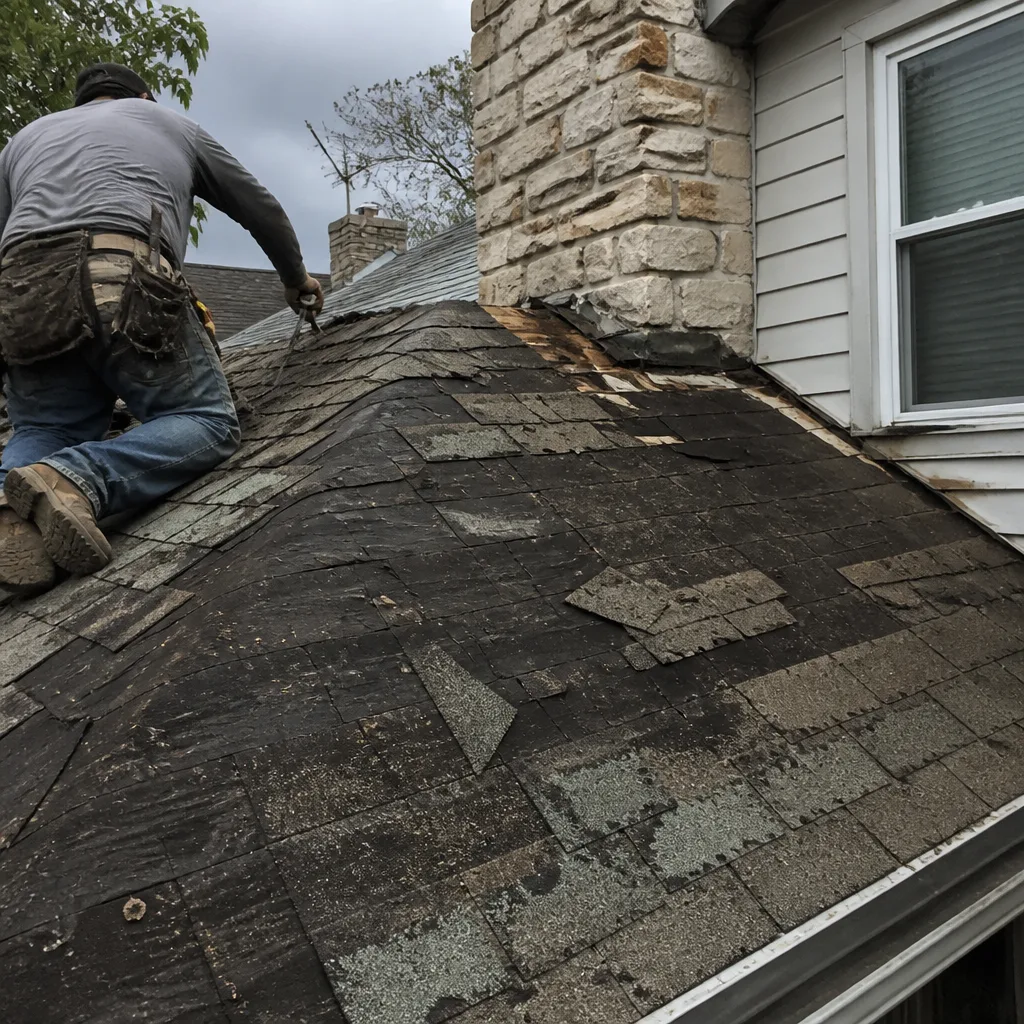 Before
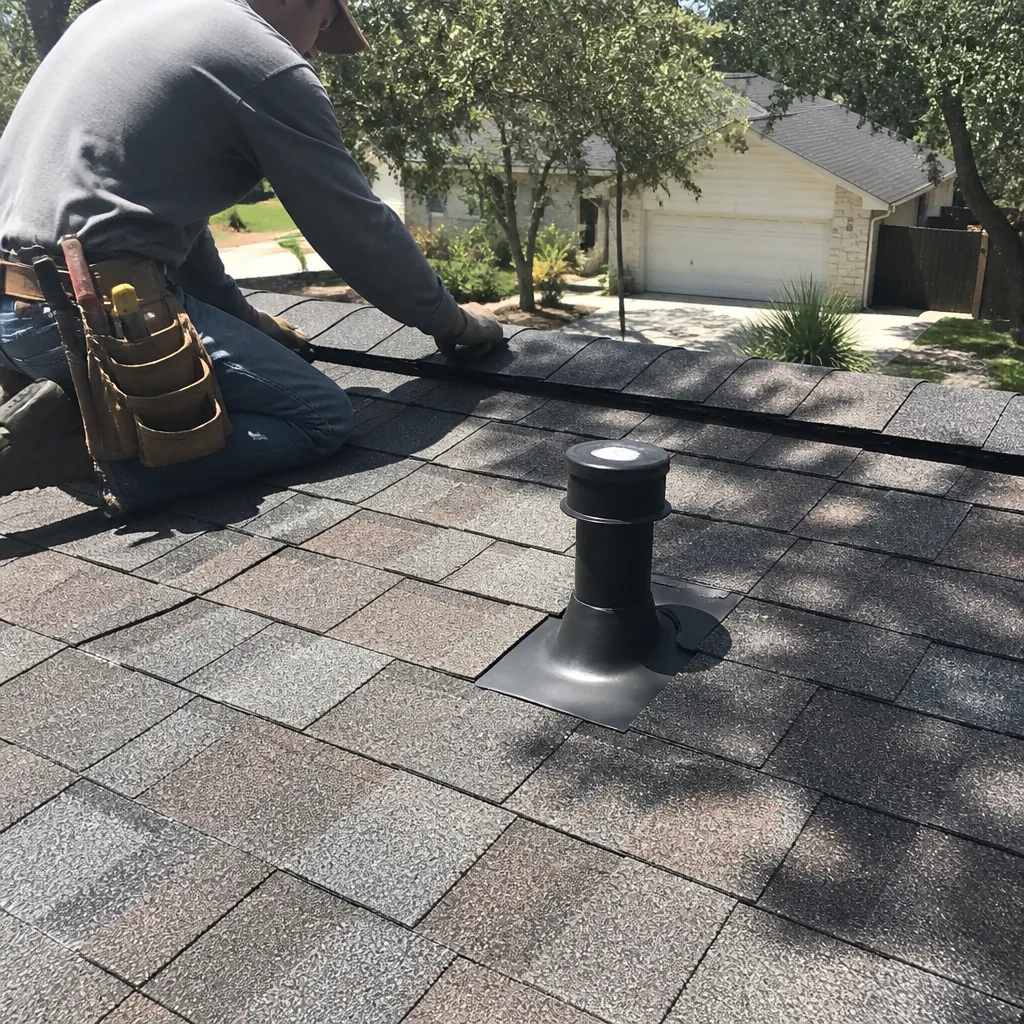 After
After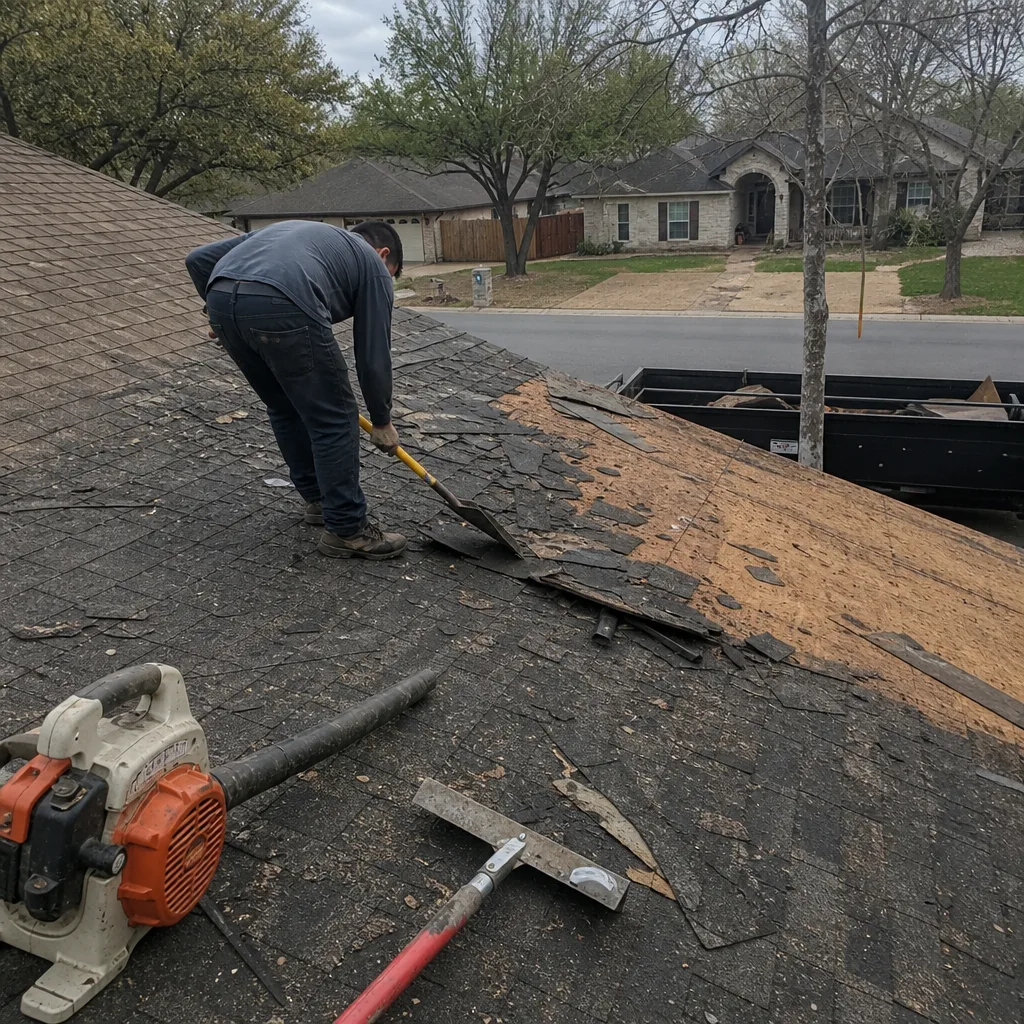 Before
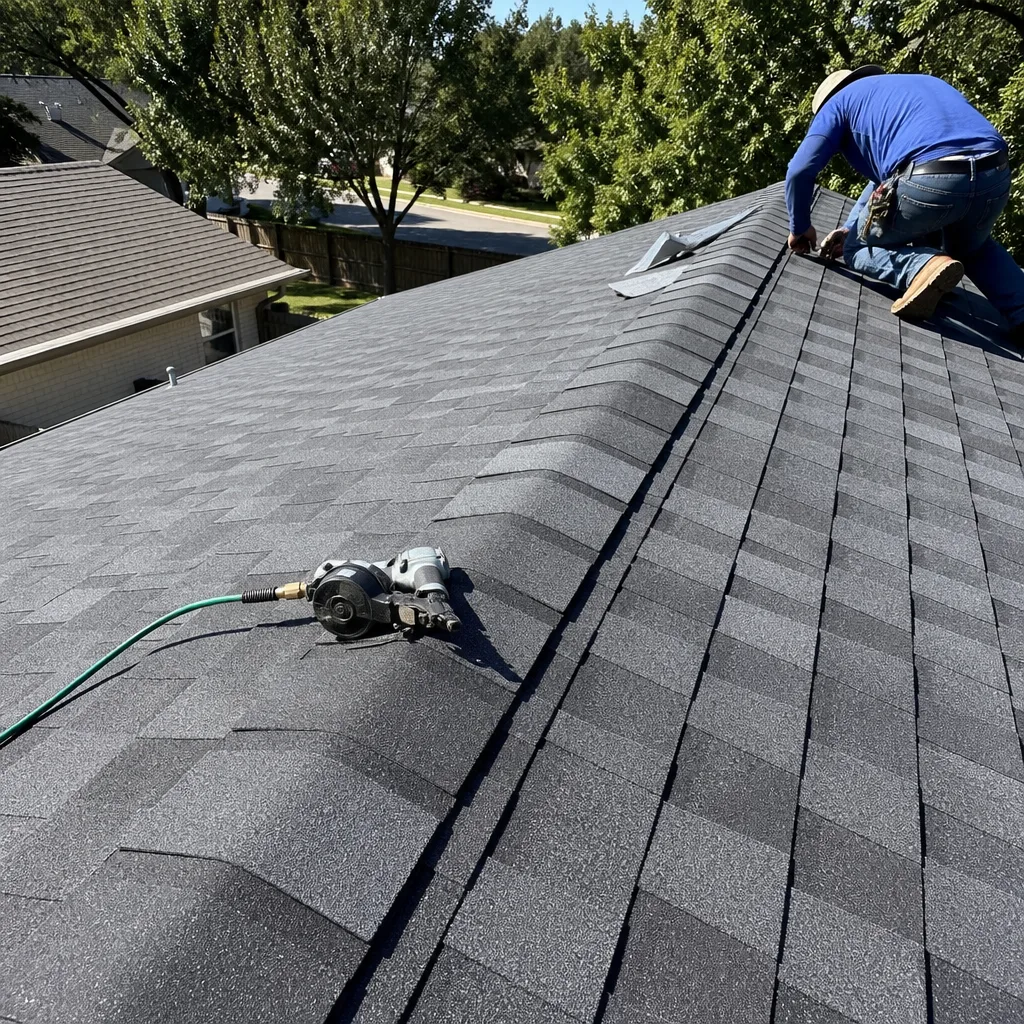 After
AfterWhen to Call a Professional
A roof replacement that requires a permit is not a weekend project, and the inspection process rewards professionals who know what Austin inspectors look for. If your roof has two layers of shingles, needs decking repair, sits in a historic district, or hasn’t been permitted in a past replacement, you need a roofing company that handles permits as standard practice, not as an afterthought. Tilehurst Roofing Austin offers free estimates in Austin, including a written line-item quote with the permit fee, material options, and schedule before any work starts. Call (254) 540-7345 to schedule yours, and a live person will answer, day or night.
Frequently Asked Questions
A roofing permit in Austin typically costs $150 to $500 for a standard single-family re-roof, depending on the project valuation the city assigns. The fee appears as a line item on your estimate, not as a surprise later. Call (254) 540-7345 for an exact quote on your roof, permit included.
No permit is required for repairs covering less than 100 square feet of roof surface, which includes most shingle replacement and flashing repairs. Repairs over 100 square feet or any work involving structural decking require a permit regardless of size.
Yes, a licensed contractor can pull the permit on your behalf, and this is standard practice for reputable Austin roofing companies. Always ask for the permit number and verify it with the Development Services Department before work begins.
A roof replaced without a permit creates problems with your insurance carrier, your manufacturer warranty, and your resale value. The insurance carrier may use the missing permit to reduce or deny a claim, and a buyer’s inspector will flag the gap during a sale.
A standard residential re-roof permit in Austin takes about one to three weeks from application to issuance, with same-day or short review for simple applications. The inspection queue adds a few days, and it backs up during spring storm season.
Yes, homes in Austin’s historic districts or individually designated landmarks may require approval from the Historic Landmark Commission before a building permit is issued, and the commission can restrict roofing materials and colors. HOA approval is separate and additional.
The Bottom Line
Roofing permits in Austin are not a bureaucratic formality. They’re the record that protects your insurance coverage, your manufacturer warranty, and your resale value. The fee is a few hundred dollars. The cost of skipping it runs into the tens of thousands. A permitted roof means the decking was checked, the underlayment was inspected, and the installation passed city code. A missing permit means none of those things can be proven, and in Texas, the burden of proof falls on the homeowner. Get the permit, verify it’s pulled, and hold final payment until the inspection passes. That’s how you protect the roof over your head and the value under it. For more guides & resources, explore our blog.
Written by Greg Holloway, Owner at Tilehurst Roofing Austin, serving Austin since 2000.