
Last updated October 17, 2026
 Metal roofing
 Architectural shingles
 Tile roofing
 GAF
GAF Owens Corning
 Flat & low-slope
Free roof inspection with deck photos before we talk money - GAF and Owens Corning certified installation
Roofing Company Maintenance Checklist for Austin Homeowners
The most expensive roofing calls we get at Tilehurst Roofing Austin home aren’t from roofs that were ignored for thirty years. They’re from roofs that had “maintenance visits” where someone walked around, said everything looked fine, and drove off. Nothing was written down. Nothing was measured. Nothing was photographed. The homeowner assumed they were covered until the first real storm proved otherwise. This guide fixes that. We’re going to show you exactly what to look for from the ground in Austin, what a legitimate inspection report must include, and which findings should trigger a written repair order before anyone leaves your driveway.
Styles & brands we work with
Quick Answer
A roof maintenance checklist for Austin homeowners should cover ground-level visual inspection of granules, flashing, soffit staining, and ridge lines; require written documentation with photos and measurements from any professional visit; and prioritize checks after Austin-specific weather events like hail, extended 105°F+ heat, and post-drought rains. If the roofer won’t put findings in writing, the maintenance visit didn’t happen in any way that protects you.
Table of Contents
- Ground-Level Inspection Items Any Austin Homeowner Can Check
- What a Legitimate Professional Inspection Report Must Include
- Austin-Specific Maintenance Triggers: Hail, Heat, and Post-Drought Rain
- The Five Flashing Points Most Austin Roofers Skip
- How to Build a Roof Maintenance Log Your Insurance Adjuster Will Respect
- A Seasonal Maintenance Schedule for Austin’s Climate
- Common Mistakes to Avoid
- When to Call a Professional
- Frequently Asked Questions
- The Bottom Line
Ground-Level Inspection Items Any Austin Homeowner Can Check
You don’t need to climb onto your roof to catch most early warning signs. In fact, we’d rather you stay on the ground. The steep pitches on many Austin homes, from Tarrytown bungalows to Steiner Ranch two-stories, make ladder work genuinely dangerous. Here’s what to check from the yard, the driveway, and the curb.
First, walk the perimeter and look at your gutters. Run your fingers through the debris at the downspout openings. Asphalt shingles shed granules their entire life, but if you’re finding what looks like coarse black sand accumulating in piles, that’s accelerated granule loss. On an Austin roof that’s ten years old or younger, this is a red flag. Granules are the UV shield. Once they’re gone, the asphalt beneath bakes and cracks in the Texas sun.
Second, look at the soffit, the flat underside of the roof overhang. In Austin’s humidity, soffit staining tells you a lot. Dark streaks near the outer edge often mean water is wicking back under the shingles and running down the fascia instead of through the gutter. Stains in the middle of a soffit panel suggest a leak further up the slope. Either pattern deserves a closer look by someone with a ladder and a moisture meter.
Third, step back to the street and sight down each ridge line. You’re looking for sag. A roof ridge should read as a straight line. If it dips in the middle, even slightly, you may have decking rot or a structural issue. This is more common in older Austin neighborhoods like Hyde Park and Crestview, where original 1950s and 60s decking is reaching end of life. A sagging ridge is not a caulk-and-paint problem. It’s a written-estimate problem.
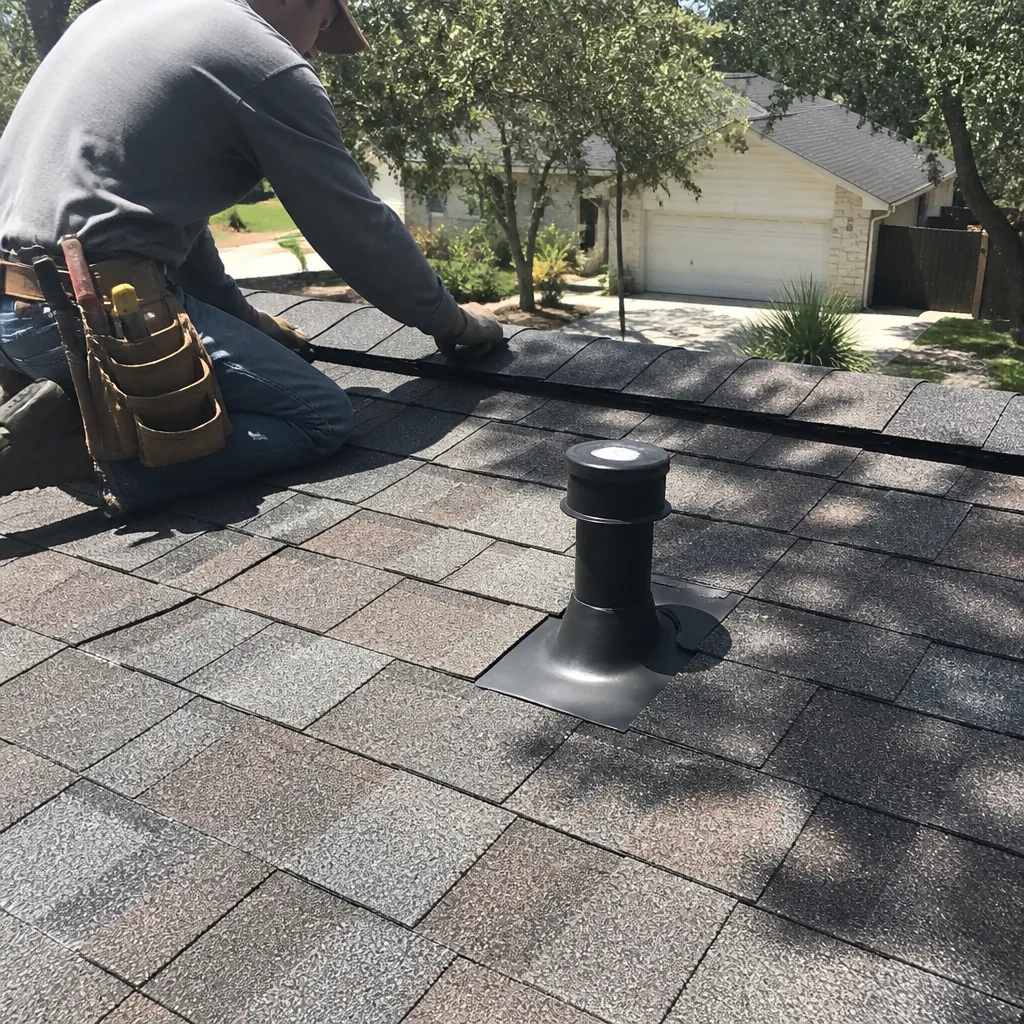
Fourth, check your pipe boots from the ground with binoculars if you have them. The rubber boot around plumbing vent pipes is one of the first things to fail in Austin. UV and heat crack the rubber in as little as five to seven years here. If you can see cracks or the boot looks chalky and brittle, water is getting in during the next heavy rain.
Finally, look at your roof valleys from the ground on a rainy day. Valleys are the V-shaped channels where two roof planes meet. Watch how water moves through them. If water is backing up and spilling over the valley metal during a normal Austin downpour, debris has built up or the valley metal has shifted. Both are fixable early and expensive late.
What a Legitimate Professional Inspection Report Must Include
A verbal walkthrough protects exactly one person: the contractor. If a roofer walks your roof, comes down, and says “you’re good for another few years,” you have nothing. No record. No documentation. No proof the visit ever happened if a leak appears three months later.
Here’s what a legitimate professional maintenance or inspection report from a roofing company in Austin must include, in writing, before you pay a dollar:
- Dated photographs. At least ten to fifteen photos covering all roof planes, valleys, flashing points, pipe boots, and problem areas. These should show the current condition clearly enough that a future visit can compare against them.
- Granule loss measurement. Not just “some granule loss.” A professional report should note where granules are being lost, how concentrated the loss is, and whether bare asphalt is showing. This is the single most important metric for asphalt shingle life in Austin’s UV environment.
- Flashing condition with specific locations. “Flashing looks okay” is not a finding. The report should say “chimney step flashing intact, left side; pipe boot at rear vent cracking at 2 o’clock position; valley metal on north plane showing surface rust but no perforation.”
- Moisture readings on suspect areas. If soffit staining or interior water marks suggest a leak, the report should include actual moisture meter readings, not a guess.
- Identified failure points with a recommended action and a written price. If something needs repair, the report should say exactly what, where, and what it costs. Not a verbal estimate. A written price, in your hand, before you decide anything.
At Tilehurst Roofing Austin, every inspection we perform ends with this documentation. It’s the same standard we hold ourselves to on roof repair in Austin and full roof replacement in Austin. If the roofer you’re considering won’t put findings in writing, find another roofer.
Austin-Specific Maintenance Triggers: Hail, Heat, and Post-Drought Rain
Austin’s climate isn’t like Dallas or Houston. We get the hail of North Texas, the heat of the Hill Country, and sudden deluges that overwhelm drainage. Your maintenance schedule needs to reflect all three.
After Hail: Quarter-Size or Larger
The threshold that matters in Austin is quarter-size hail, about one inch in diameter. Smaller than that rarely damages a healthy roof. Quarter-size and up can bruise shingles, crack the fiberglass mat beneath the asphalt, and knock granules loose in patterns that lead to premature failure years later.
After a hail event, do this within 48 hours:
- Walk your yard and look at plant leaves, patio furniture, and air conditioner fins. If these show impact marks, your roof likely took hits too.
- Check gutters and downspouts for granule accumulation that wasn’t there before the storm.
- Look at your roof from the ground for impact marks. Hail hits on shingles often look like dark spots where granules were knocked off.
- Photograph everything from the ground. Date the photos.
- If you see impact marks or find sudden granule loss, get a written inspection. Don’t wait. Insurance claims in Austin have filing windows, and the longer you wait, the harder it is to tie damage to a specific storm.
After a Week Above 105°F
Extended extreme heat isn’t just uncomfortable. It’s a structural stress test for your roof. Austin regularly sees stretches above 105°F in July and August. During those stretches, the surface temperature of an asphalt shingle roof can exceed 160°F.
What to check after a heat wave:
- Pipe boots and rubber seals. Heat accelerates rubber degradation. Check for cracking, chalkiness, and separated seams.
- Thermal splitting on exposed flashing. Metal expands and contracts. Repeated cycling can open seams at chimney step flashing and skylight curbs.
- Shingle curling at the edges. If you can see shingle edges lifting from the ground, the asphalt is losing flexibility. This is the early stage of shingle failure.
- Attic temperature and ventilation. If your attic feels like an oven after sunset, your ventilation isn’t moving enough air. This shortens shingle life from the underside.
After the First Significant Rain Following a Dry Summer
This is the scenario we see cause the most surprise failures in Austin. A long dry spell lets soil around your foundation shrink, which subtly shifts framing. Debris accumulates in valleys and gutters over the dry months. When the first real rain hits, everything that was waiting fails at once.
After the first substantial rain of fall, check for:
- Interior water marks on ceilings and walls. Especially near chimneys, skylights, and where the roof meets exterior walls.
- Water backing up in valleys. Debris that sat all summer now blocks drainage. This forces water under shingles.
- Overflow at gutters. If water is spilling over the gutter edge during a normal rain, downspouts are clogged or gutters are undersized for the roof area.
- New soffit staining. Compare against photos from your pre-summer inspection. New stains mean new water entry.
The Five Flashing Points Most Austin Roofers Skip
Flashing is the metal or rubber material that seals the transitions and penetrations on your roof. It’s the most common failure point and the most commonly skipped inspection item. Here are the five flashing points that quick maintenance visits miss, and what you should ask your roofer to document specifically.
1. Chimney Step Flashing
Step flashing is the L-shaped metal woven into the shingles where your roof meets the chimney. In Austin, we see two failure modes. The metal itself corrodes over decades, but more often, the sealant used at the counter-flashing fails within a few years. Have the roofer photograph each side of the chimney and note the condition of both the metal and the sealant.
2. Pipe Boot Seals
Plumbing vent pipes pass through your roof and are sealed with a rubber or neoprene boot. These boots fail faster in Austin than almost anywhere in the country because of UV exposure and heat. If your roof has more than one vent pipe, each one needs individual documentation. They don’t fail at the same rate.
3. Valley Metal
Valley metal channels water from two adjoining roof planes into the gutter. When it corrodes or shifts, water gets under the shingles it’s meant to protect. Austin’s older homes, especially in Mueller and Allandale, often have original valley metal that’s now fifty or sixty years old. Surface rust isn’t a crisis. Perforation is.
4. Drip Edge at the Eave
Drip edge is the metal strip along the edges of your roof that directs water away from the fascia and into the gutter. If it’s missing, bent, or pulled away from the decking, water wicks back under the shingles and rots the roof edge. This is visible from the ground with binoculars. Ask your roofer to check it on every eave, not just the ones facing the street.
5. Skylight Curb Seals
Skylights mounted on curbs rely on a continuous seal where the curb meets the roof. That seal takes full Austin sun on the south and west faces. When it fails, water runs down the curb and into your ceiling. Have your roofer document the seal condition on all four sides of every skylight, with photos.
How to Build a Roof Maintenance Log Your Insurance Adjuster Will Respect
An insurance adjuster doesn’t care about your memory. They care about documentation. A roof maintenance log that’s kept consistently does more than any verbal claim ever will. It also does something even more valuable: it shows a future buyer of your Austin home that the roof was maintained, not neglected.
Here’s how to build one, step by step:
- Create a digital folder. Use Google Drive, Dropbox, or any cloud storage. Create one folder per calendar year. Inside, create subfolders for each inspection or event: “March Inspection,” “Hail Event April 12,” “Repair June 3.”
- Photograph everything. On the day you do a ground inspection, take photos of your gutters, soffits, flashings, and the roof surface from every angle you can manage from the ground. Date-stamp the photos. Your phone does this automatically.
- Write a short summary. Three to five sentences in a text file. What you checked, what you saw, what changed since last time. If nothing changed, write that. A log that records “no change” is still evidence of consistent maintenance.
- Save every professional report. Every inspection, every repair, every written estimate goes in the folder. This is why written documentation matters. A folder full of professional reports is a maintenance history. A folder full of memories is not.
- Note the weather events. When Austin gets hail, a heat wave, or a major storm, note it in the log. Date, event type, and what you checked afterward. When you file an insurance claim, this creates a clear chain connecting roof damage to a specific event.
- Keep receipts for any work done. Even minor repairs. A receipt with a written scope of work proves the roof was cared for, which matters to both insurance adjusters and buyers.
Greg Holloway, who leads our roofing company in Austin, has walked homeowners through insurance claims where this kind of log made the difference between a covered replacement and a denied claim. The documentation is the claim.
A Seasonal Maintenance Schedule for Austin’s Climate
Austin has two real seasons for roofing: the storm season from March through June, and the furnace season from July through September. October through February is the window for major work, when temperatures are moderate and rain is less frequent. Here’s how to think about maintenance through the year.
Spring (March – May): Pre-Storm Inspection
Do your ground-level inspection in late February or early March, before the spring hail season kicks in. Focus on granule loss, flashing condition, and gutter cleanliness. If anything looks questionable, get a written inspection before the storms arrive. Austin’s spring storms are the time when small problems become big ones.
Summer (June – September): Heat Monitoring
Check pipe boots and rubber seals in mid-summer, after the first stretch above 105°F. Look for shingle curling. Pay attention to attic temperature. If your air conditioner is running more than usual and the attic is unbearably hot, the roof may be heat-saturated, which accelerates shingle aging.
Fall (October – November): Post-Drought Rain Check
After the first significant rain of fall, do a full interior and exterior check. Look for water marks on ceilings, new soffit staining, and valley drainage problems. This is also the best time in Austin to schedule major repairs or replacement. Contractor availability is better, weather is mild, and prices are more stable than during the spring storm rush.
Winter (December – February): Preventive Repairs
Austin winters are mild compared to the rest of the country, which makes this the ideal window for preventive work. Repair pipe boots, replace failing flashing, and address any issues found during fall checks. Getting this work done in winter means you’re ready when March storms arrive.
Common Mistakes to Avoid
- Trusting a verbal inspection. If it’s not in writing with photos and specific findings, it didn’t happen in any way that protects you. A roofer who won’t document an inspection won’t document a repair.
- Waiting until a leak appears. By the time water shows up inside your Austin home, the leak has been active for weeks or months. The water travels along rafters and decking before finding a path through the ceiling. Early detection costs hundreds; late detection can cost tens of thousands.
- Ignoring granule loss. Granules in your gutters aren’t cosmetic. They’re the most reliable early warning of shingle aging. If you see significant granule accumulation on a roof under ten years old, you have a problem worth a written inspection.
- Working with a roofer who won’t give a written price before work starts. The Kingswell way is simple: say the price before the work, show up in the window we gave, leave the place cleaner than we found it, put the guarantee in writing, and come back if it fails. Any roofer unwilling to write a price before touching your roof is a risk you don’t need to take.
- Skipping maintenance on a newer roof. New roofs fail from installation defects, not age. Maintenance visits in the first five years catch those defects while the workmanship warranty still applies. After the warranty expires, those same defects become your expense.
- Letting vegetation touch the roof. Austin’s live oaks are beautiful and brutal on roofs. Branches that rub against shingles grind off granules. Leaves that pile in valleys hold moisture. Trim back anything touching the roof by at least three feet.
- Not documenting before filing a claim. If hail hits Austin and you call your insurer without photos, a written inspection, and a dated record, you’re negotiating from nothing. Build the log before you need the claim.
When to Call a Professional
Some things you handle from the ground. Others require a trained professional with proper equipment and documentation standards. Call a roofer if you see any of these: significant granule accumulation in gutters, a sagging ridge line, water marks on interior ceilings or walls after rain, cracked or brittle pipe boots, missing or lifted flashing, or any damage after hail quarter-size or larger. These are not DIY situations, and working on an Austin roof in summer heat is genuinely dangerous. The steep pitches on many local homes make even simple checks risky. Tilehurst Roofing Austin offers free estimates in Austin. Call (254) 540-7345 and a live person will answer, day or night.
Frequently Asked Questions
Most Austin roofing companies charge between $150 and $400 for a standalone inspection, but many, including Tilehurst Roofing Austin, offer free inspections when you’re evaluating a repair or replacement. For a deeper look at what drives pricing, see our Roofing Cost Breakdown: The Austin Homeowner’s Reference for 2026. A free inspection should still include full written documentation with photos. If the inspection is free but the findings are verbal, you paid with your future claim. Call (254) 540-7345 to schedule yours.
Once a year is the baseline for Austin, ideally in late winter before spring storms. If your roof takes hail quarter-size or larger, schedule an additional inspection within a week. Homes with mature live oaks overhanging the roof or roofs over fifteen years old may benefit from twice-yearly inspections. Austin’s heat ages shingles faster than manufacturers’ national averages suggest, so annual checks catch issues early.
Hail damage typically appears as random dark spots where granules have been knocked off, leaving the darker asphalt beneath exposed. You may also see dents in metal flashing, gutters, and vent covers. From the ground, look for impact marks on your air conditioner fins and patio furniture. If those show hits, your roof deserves a written inspection. Don’t wait to file a claim if damage is confirmed.
No, homeowners insurance doesn’t cover routine maintenance. It covers sudden, accidental damage like hail, wind, or falling tree limbs. Before starting any work, make sure you understand Roofing Permits, Codes & Inspections in TX: What You Need to Know. This is exactly why a maintenance log matters. When you file a claim, the insurer looks at whether the roof was maintained before the damage happened. A documented history of inspections and repairs supports your claim. Neglect weakens it.
Architectural asphalt shingles rated for thirty years typically last eighteen to twenty-two years in Austin. The intense UV exposure and summer heat cycles break down the asphalt faster than in cooler climates. This varies by manufacturer and installation quality. Shingles from manufacturers like GAF, CertainTeed, Owens Corning, and IKO all respond differently to Austin’s conditions, which is why we’ll walk you through material options before recommending anything.
Ground-level inspection, yes. You can check gutters, soffits, and ridge lines safely from the yard. Ladder work and roof walking, no. Austin roofs get dangerously hot and the pitch on many homes makes walking them genuinely risky. Falls from roofs are life-changing injuries, and they happen to confident amateurs all the time. Keep your feet on the ground and call (254) 540-7345 for a free estimate if you see something concerning.
Photograph everything from the ground within twenty-four hours. Check your yard for impact evidence, look for granule accumulation in gutters, and document any interior water marks. Then call a roofing company for a written inspection. The sooner you document, the stronger your position with the insurance company. Tilehurst Roofing Austin answers calls around the clock, so you can reach a live person immediately after a storm.
The Bottom Line
Roof maintenance in Austin isn’t about doing everything. It’s about doing the right things at the right time and getting everything in writing. Check granule loss, flashing, and soffit staining from the ground. Document every professional visit with photos and specific findings. Watch your roof carefully after hail, heat waves, and the first rain after a dry spell. Build a maintenance log that a adjuster, buyer, or future contractor will respect. And when it’s time for a professional, get a written price before any work starts. For more guides & resources on protecting your roof, explore our blog. Tilehurst Roofing Austin offers free estimates across Austin. Call (254) 540-7345. A live person answers, every time.
Written by Greg Holloway, Owner at Tilehurst Roofing Austin, serving Austin since 2000.
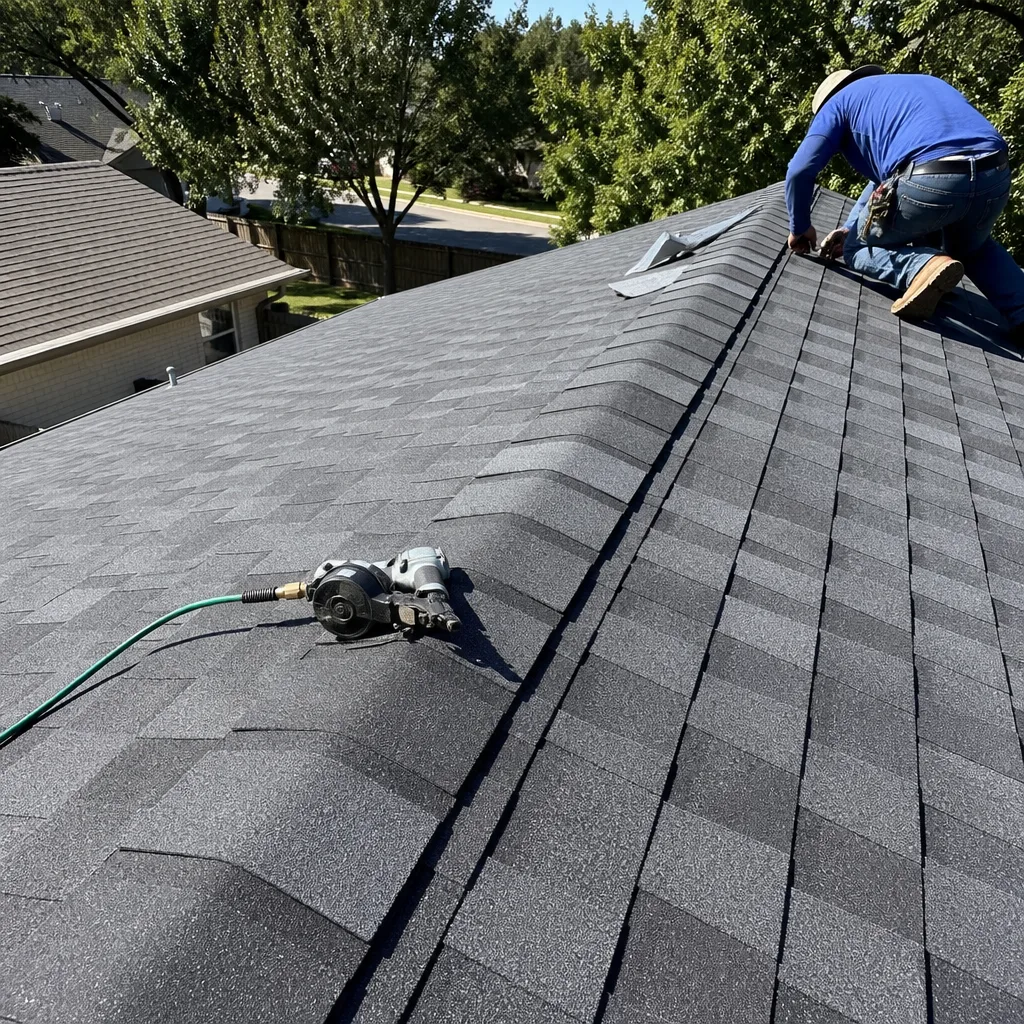
See the difference
 Before
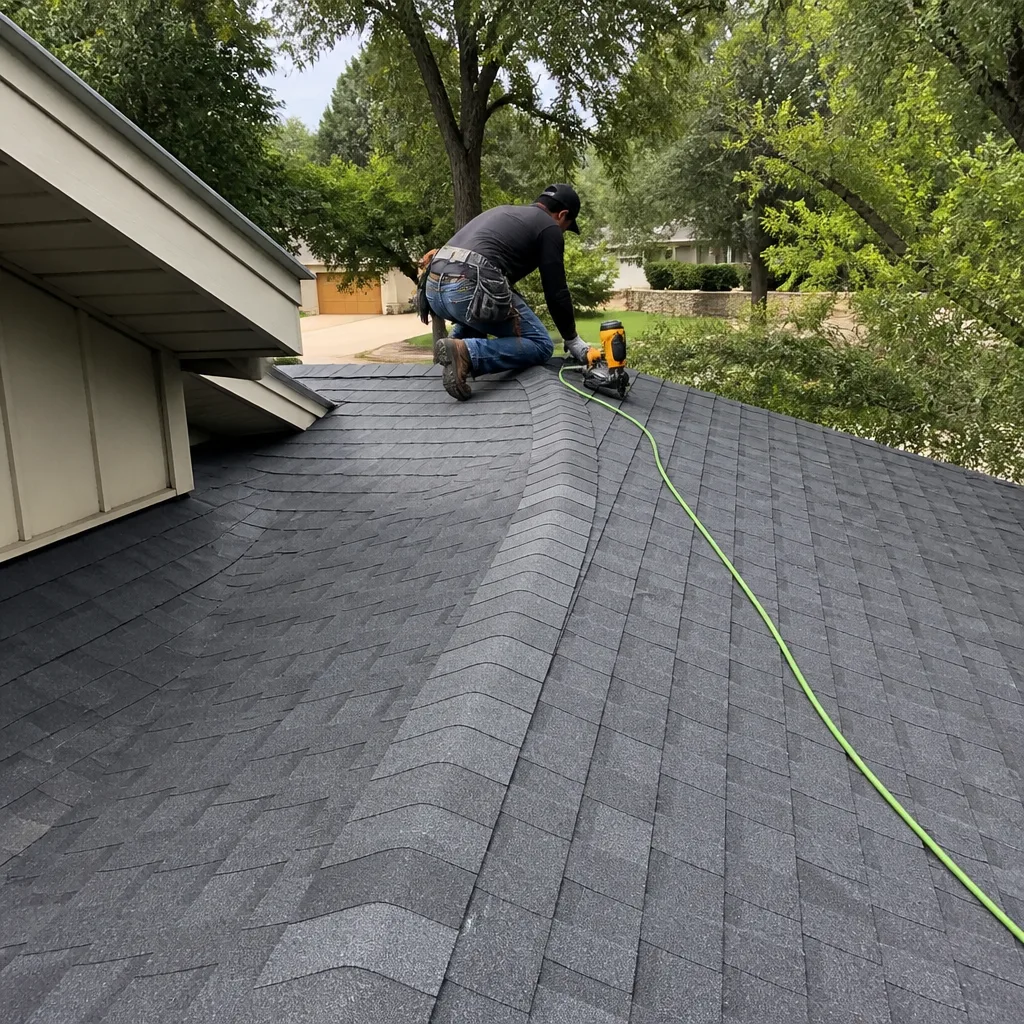 After
After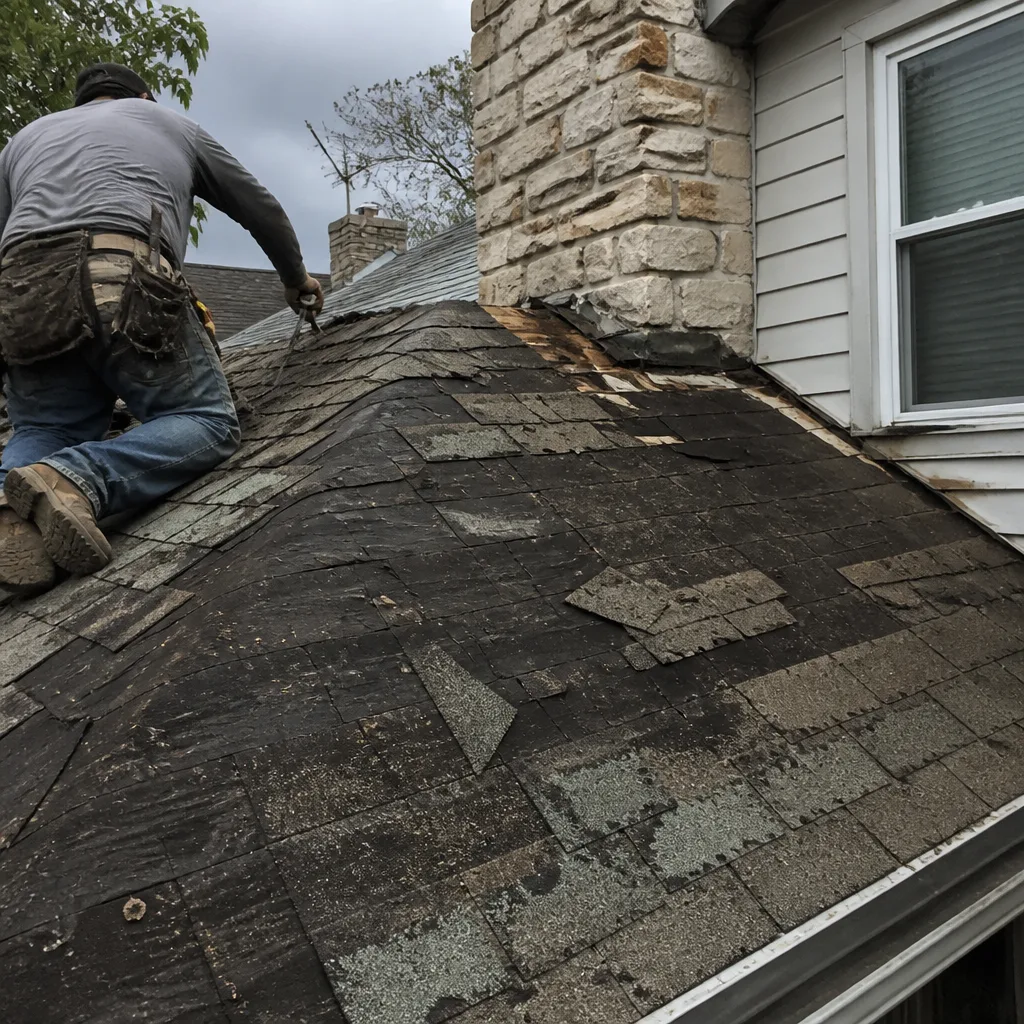 Before
 After
After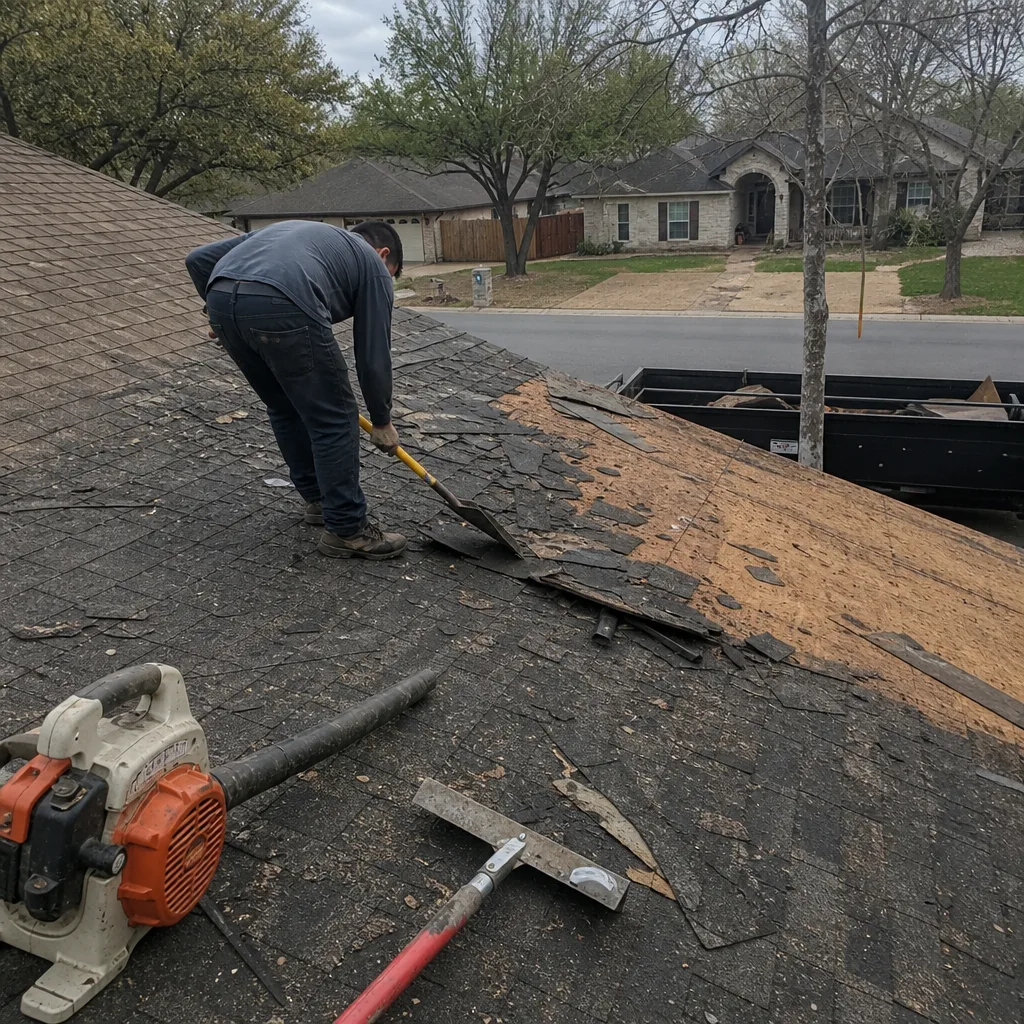 Before
 After
After