
Last updated October 17, 2026
 Metal roofing
 Architectural shingles
 Tile roofing
 GAF
GAF Owens Corning
 Flat & low-slope
Free roof inspection with deck photos before we talk money - GAF and Owens Corning certified installation
Seasonal Roofing Care for Austin: Year-Round Homeowner’s Guide
Austin’s roofs face a climate combination almost no national guide accounts for: sustained 100°F+ heat that softens sealants, followed by fast-moving spring hailstorms, followed by periods of drought that crack wood decking, all within a single calendar year. Most roofing advice written for Dallas or Houston misses what actually happens to a roof in the Hill Country corridor, where the sun beats harder and the storms arrive faster. This guide maps the real seasonal rhythm of roofing in Austin so you can spend less over a decade, not just get through the next rain. By the end, you’ll know when to look up, what to look for, and when a phone call beats a ladder.
Styles & brands we work with
Quick Answer
In Austin, roof care works best on a two-window rhythm: inspect and repair in February – March before the hail corridor activates, and again in October – November after leaf drop and before winter’s occasional freeze. Summer heat demands monitoring rather than constant action, and winter is the ideal time for small sealant and pipe boot fixes that prevent spring leaks. If you schedule two professional inspections per year in those windows, most major Austin roof failures become avoidable.
Table of Contents
- Why Austin Roofs Follow a Two-Window Rhythm, Not Four Seasons
- February – March: The Pre-Storm Inspection Window
- April – September: What Austin Heat Does to Asphalt Shingles
- October – November: Leaf Accumulation and the Underrated Fall Risk
- December – January: The One Winter Task Austin Skips
- How to Read Austin’s Hail Calendar and File Claims in the Right Order
- What Seasonal Roof Work Costs in Austin
- Common Mistakes to Avoid
- When to Call a Professional
- Frequently Asked Questions
- The Bottom Line
Why Austin Roofs Follow a Two-Window Rhythm, Not Four Seasons
Austin doesn’t have four equal seasons. It has two roof-stressing events separated by two windows of opportunity, and homeowners who understand that rhythm spend far less on roofing over a decade than those who treat maintenance as a once-a-year checkbox. The first stress event arrives each spring when the hail corridor between San Antonio and Waco activates and fast-moving storms pound shingles across Travis, Williamson, and Hays counties. The second arrives each summer when 30-plus consecutive days above 100°F bake asphalt shingles until the granules loosen and the sealant strips soften.
Between those two events sit the windows when work actually gets done well. Late winter offers cool, dry days with low humidity: perfect conditions for sealants to cure and crews to move safely across a roof. Late fall offers a second window after oak and cedar elm leaves have dropped but before the occasional January freeze makes materials brittle. Homeowners who set reminders for February and October get better workmanship, lower prices, and fewer emergency calls than those who wait until the roof announces itself with a leak. Here in Austin, the climate doesn’t wait for a convenient Saturday.
In our experience at Tilehurst Roofing Austin home to the day-to-day reality of Central Texas roofing, the homes that need the fewest repairs over a decade share one habit: they get looked at twice per year by someone who knows what Austin weather does to a roof. That’s the whole system, and the rest of this guide walks through what each window involves.
February – March: The Pre-Storm Inspection Window
Here’s the short version: in Austin, the six to eight weeks from early February through late March are your best chance to catch small problems before the spring hail season turns them into insurance claims. Flashing, pipe boots, ridge cap, and shingle sealant all degrade during winter’s sporadic rain and the previous year’s heat, and the hail that typically arrives in April and May will exploit every one of those weaknesses. A thorough visual inspection in late February costs little and prevents the most common Austin roof failure: slow, unnoticed water intrusion that becomes a soaked deck and a mold issue by June.
If you’re comfortable on a ladder (and only if you are, with a spotter and proper footing), here’s what to look for, in order of importance:
- Flashing around chimneys, skylights, and wall intersections. Look for lifted corners, cracked caulk, or rust. Flashing is the metal or rubber material that seals the transition between your roof and anything that pokes through it. Austin’s heat causes the underlying caulk to expand, contract, and eventually pull away.
- Pipe boots and vent collars. These are the rubber sleeves around the small pipes that exit your roof (usually plumbing vents). After a few Texas summers, the rubber cracks and splits at the top. Hold a flashlight at a shallow angle; if you can see light through the rubber, water can get through too.
- Ridge cap shingles. The cap shingles run along the peaks of your roof and take the most direct wind and sun. Look for missing tabs, curled edges, or cracks along the apex. In neighborhoods like Tarrytown and Crestview where homes have steeper slopes, wind uplift on the ridge is especially aggressive.
- Gutter and valley debris. Check the valleys (the V-shaped channels where two roof planes meet) and gutters for accumulated leaves, granules, and organic matter that holds moisture against the decking. In Hyde Park and Rosedale, where large oaks overhang many roofs, this is the single most common February finding.
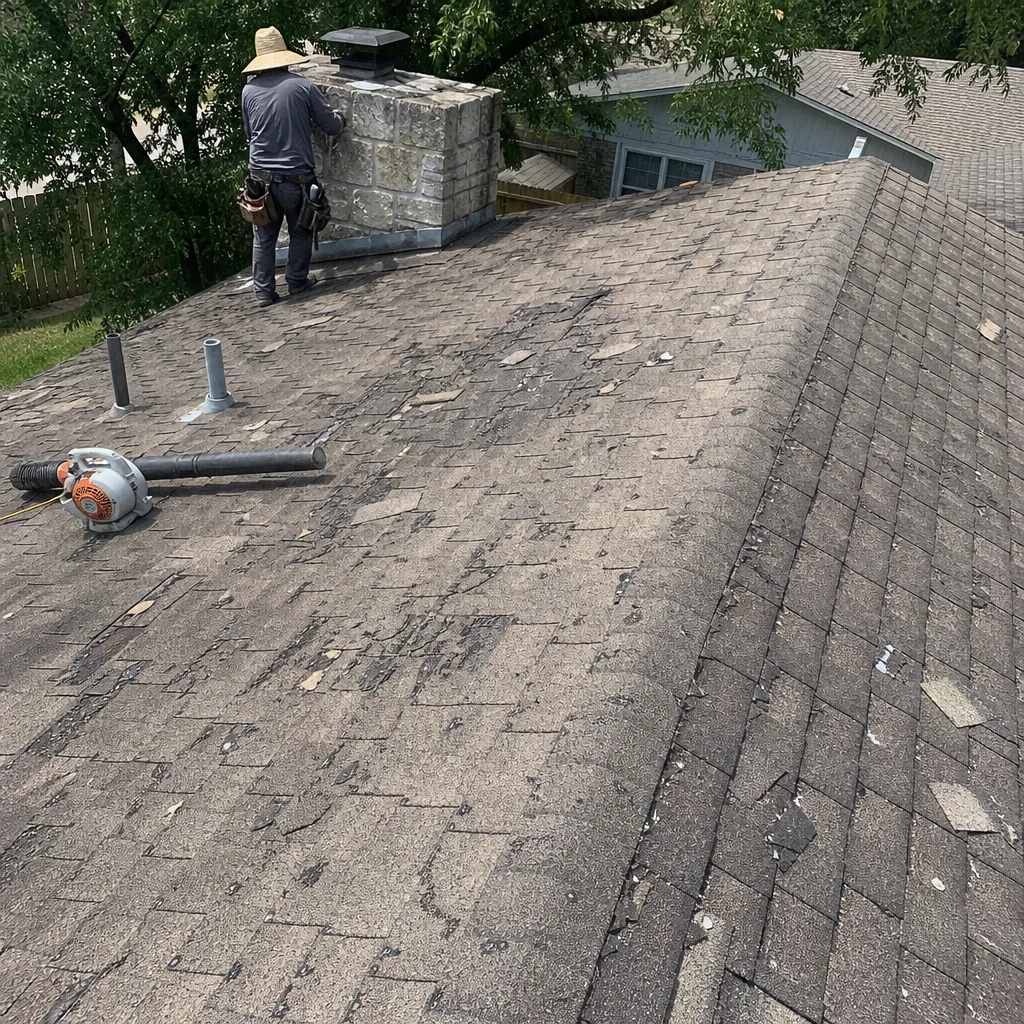
- Granule loss on the shingles themselves. Look at the shingles from the ground or from the ladder. If you see bare patches, a dark-gray color showing through, or excessive granules washing into the gutters, the shingles are nearing the end of their useful life and are far more vulnerable to hail.
If any of these items look questionable, a full inspection by a Roofing Company in Austin that knows the local code requirements is the right move before March turns into April. What you’re doing here is simple: closing the small gaps before the storm season opens them wider.
April – September: What Austin Heat Does to Asphalt Shingles
Direct answer: Austin’s summer heat doesn’t just wear shingles out; it changes their chemistry. Asphalt shingles are designed to shed granules slowly over 20 to 30 years, but sustained attic temperatures above 140°F accelerate granule loss by making the asphalt binder soft and sticky. When the top surface loses granules, the shingle’s UV protection is gone, and the remaining asphalt dries, cracks, and breaks. That’s why a 25-year shingle in a northern climate often becomes a 15-year shingle on a poorly ventilated Austin roof.
The mechanism is called thermal cycling, and it’s the hidden cost of Central Texas summers. Your roof heats to 160°F or more by mid-afternoon, then cools to 75°F by midnight. That daily expansion and contraction cycle, repeated 100 times per summer, slowly breaks the adhesive seal between shingles. Once that seal breaks, shingles lift, wind gets underneath, and the next thunderstorm does the rest.
Three factors determine how fast heat damages your specific Austin roof:
- Attic ventilation. Ridge vents, soffit vents, and powered or passive roof vents allow the superheated air to escape. A poorly ventilated attic can run 30°F to 40°F hotter than a well-ventilated one. That temperature difference doesn’t just shorten shingle life; it also raises your cooling bills and can cook your HVAC ductwork.
- Roof color and material. Lighter-colored shingles and certain tile or metal options reflect more solar energy than dark asphalt. In East Austin and Mueller, where homes face full sun with few mature shade trees, lighter materials measurably reduce surface temperatures. GAF, CertainTeed, and Owens Corning all make reflective shingle lines designed for exactly the kind of heat we get in Austin.
- Tree canopy. A mature oak or pecan tree that shades the roof during peak sun hours can reduce surface temperature by 20°F or more. But the trade-off, as we’ll cover in the fall section, is that the same tree drops leaves and holds moisture against the roof in October.
What can you do during summer? Not much that involves climbing onto a 160°F surface, which is dangerous for both people and shingles. The practical summer tasks are: monitor from the ground for any shingles that lift during thunderstorms, keep gutters clear of August’s surprise downpours, and if you see granule loss or cracked shingles, schedule repairs for October rather than August. Shingle sealants don’t cure well in extreme heat, and a repair done in October will outlast one done in July. If you need a Roof Repair in Austin during the summer months, a good contractor will still do it correctly, but the materials appreciate cooler conditions just as much as the crew does.
October – November: Leaf Accumulation and the Underrated Fall Risk
Most Austin homeowners think of fall as the calm season. It isn’t. Austin’s fall risk is quiet, slow, and destructive: oak and cedar elm leaves pile up in roof valleys, behind chimneys, and inside gutters, where they hold moisture against the roof deck for weeks longer than most people realize. That trapped moisture softens the plywood decking, promotes mold growth on the underside of the deck, and accelerates rot around fascia boards and rafter tails. In neighborhoods like Barton Hills, Westlake, and Lost Creek, where heavy tree canopy meets steep roof pitches, leaf accumulation in October is the single most common cause of roof decking replacement we see all year.
The damage isn’t immediate. A few leaves that dry out between rains cause no harm. But when leaves pack into a valley and then three inches of rain falls in October (a regular occurrence in Austin), that organic matter becomes a sponge that keeps moisture pressed against the deck for days. Over one season, that’s usually fine. Over three or four autumns, that’s how a small section of decking rots through, and suddenly a $300 gutter cleaning becomes a $3,000 decking repair.
Here’s the October routine that prevents the problem:
- Clear all gutters and downspouts after the first major leaf drop. In Austin, the first significant drop usually happens in late October, sometimes as late as mid-November after a cold front. Don’t guess: check the gutters after the first front that drops nighttime temperatures below 45°F.
- Remove leaf accumulation from valleys and behind chimneys. A leaf blower from the ground works for accessible areas. For steeper sections, a garden hose with a spray nozzle from a stable ladder can flush debris out of the valleys. Never walk on a leaf-covered roof; leaves are slicker than they look.
- Trim branches that hang over the roof. The best way to keep leaves off the roof is to not have branches over the roof. A six-foot clearance from the roof edge reduces both leaf accumulation and the risk of branch damage during spring windstorms.
- Inspect for any summer heat damage that is now safe to repair. October is when shingle sealant cures properly, crews can work safely, and repair prices in Austin typically dip below their spring peak.
The fall window is also the right time to look at whether your roof’s overall condition warrants a Roof Replacement in Austin before the following spring’s hail season rather than after it. A full replacement scheduled for October or November gives the new roof a full winter and spring to settle before summer’s heat returns.
December – January: The One Winter Task Austin Skips
Ask any Austin homeowner what winter roof maintenance they do, and most will say “nothing, because we don’t get snow.” That’s the mistake. Austin’s winter months may be mild, but they matter for one specific reason: winter is the best time to check pipe boots and flashing seals because it’s the one window when rooftop work is comfortable, materials behave predictably, and nothing is actively failing. Then cedar pollen season arrives in January and February, and suddenly the small projects you skipped become urgent.
Here’s the logic. Austin winters rarely freeze, which means the pipe boots on your roof have no snow load or ice dam to accelerate their failure. But they do have the previous summer’s damage: cracked rubber from six months of UV exposure, dried-out sealant around the base of the pipe, and potential hairline gaps in the flashing where the pipe meets the roof deck. Those small gaps don’t leak during a dry December. They leak during the first heavy rain of March, which in Austin often coincides with the start of cedar pollen season, when half the city is congested and roof leaks are the last thing anyone wants to deal with.
What to check in December or January:
- Pipe boots and vent collars: look for cracks, brittleness, or separation from the pipe. A $30 boot replaced in January prevents a $800 ceiling repair in April.
- Flashing sealant: check the bead of sealant around chimneys, skylights, and wall intersections. Austin’s heat thins it, and winter’s rain finds the gaps.
- Attic ventilation: a quick attic check on a cold morning for condensation or moisture on the underside of the roof deck can reveal ventilation problems before they become mold problems in summer.
- Dry rot on fascia and rafter tails: winter’s lower humidity makes damaged wood easier to spot. If you see dark streaks or soft spots on the boards along the roofline, address them now.
The other reason to do winter maintenance: contractor availability. February is the calmest month of the roofing year in Austin, which means faster scheduling, more attention to detail, and often better pricing than the April – May rush. A simple Roof Repair in Austin done in January takes a day. The same repair in April might take two weeks to schedule and cost more, because you’re now competing with every hailstorm victim in the metro.
How to Read Austin’s Hail Calendar and File Claims in the Right Order
Direct answer: Austin’s highest hail probability runs from mid-March through early June, with a secondary window in September and October, and the right sequence after a storm is (1) document visible damage immediately, (2) schedule a professional inspection before filing a claim, and (3) file the claim with documented findings in hand. Filing the claim first, then finding out the damage was old and pre-existing, is the most common and most preventable mistake Austin homeowners make after a hailstorm.
Statistically, the hail corridor that stretches from Kerrville through Austin and up to Waco produces its most active storms in April and May. Hailstones in this corridor frequently reach 1 to 1.5 inches in diameter, and stones of that size can crack shingles, dent flashing, and puncture pipe boots. The problem for homeowners is that hail damage often looks invisible from the ground. A shingle can be functionally destroyed by hail impact while still looking fine from the driveway. The granules knock loose, the fiberglass mat beneath bruises, and water intrusion begins slowly over the next several months.
Here’s the right sequence after a significant hailstorm passes over your home:
- Document what you can see from the ground within 24 hours. Photograph any dented gutters, damaged screens, or visible shingle damage. Note the date and approximate time of the storm.
- Call for a professional storm inspection within the first week. A trained inspector looks for hail impact marks (bruises, granule loss, cracks) that are invisible from the ground. This inspection should be documented in writing with photos.
- Review the findings before contacting your insurance company. If the inspector finds recent hail damage consistent with the storm, you now have a factual basis for the claim. If the inspection finds only aging and prior wear, you can address those issues directly without involving insurance.
- File the claim with the inspection report in hand. Insurance adjusters respond better to specific, documented findings than to “I think my roof might be damaged.” You’re also better positioned if the initial adjuster’s assessment differs from the inspection.
- Get a written repair or replacement price from a contractor after the adjuster approves the scope. In Austin, repair pricing after a major hail event can vary widely. A written, itemized price protects you from the “storm chaser” dynamic of inflated post-storm pricing.
One note about storm chasers: after any major hail event in Austin, out-of-town roofing companies arrive within days. Some do fine work. Many do not, and they leave town before any guarantee can be honored. If the company has no local address, no local phone number, and no way to reach them after the storm, think twice. The roof isn’t the place to save money by skipping the diligence.
What Seasonal Roof Work Costs in Austin
Here’s the pragmatic part: what you should expect to pay for common seasonal roof work in Austin, with real dollar ranges. These are local Austin market prices, informed by what we see across the city from Round Rock to Buda to Lakeway.
| Work Item | Typical Austin Price Range | Typical Timing |
|---|---|---|
| Full roof inspection (visual, documented) | $0 – $250 | Often free with repair |
| Gutter cleaning (single-story, typical home) | $120 – $300 | November or March |
| Pipe boot replacement (one boot) | $150 – $350 | Any season |
| Flashing repair (chimney or wall joint) | $250 – $600 | Any season |
| Minor shingle repair (few shingles, spot fix) | $200 – $550 | October preferred |
| Valley flashing replacement | $400 – $1,200 | Any season |
| Full asphalt shingle roof replacement (average Austin home) | $11,000 – $24,000 | October – March preferred |
| Roof decking repair (per 4×8 sheet replaced) | $90 – $180 per sheet | Any season |
Two things drive seasonality in Austin roofing prices more than anything else: demand spikes after hail events, and the heat itself. Repair work scheduled for October through March typically costs 10% to 20% less than the same work scheduled in April through June, simply because there’s less competition for crews and materials cure better in mild conditions. The best roofing material for your specific home is a genuine question, and it’s worth getting real answers. Tilehurst Roofing Austin works with material options from seven leading manufacturers, including Boral, GAF, CertainTeed, and Owens Corning, so the product recommendation fits your home’s pitch, shade, and budget rather than whatever happens to be in the truck. No two Austin roofs face identical conditions, and no two material choices should be identical either.
Common Mistakes to Avoid
- Waiting until the first leak to inspect. In Austin, by the time water shows up on your ceiling, the damage has usually been underway for months. The roof leak you notice in April often began as a failed pipe boot in August or September of the previous year.
- Filing an insurance claim before getting an independent inspection. A pre-claim inspection tells you whether the damage is recent and storm-related or simply age and wear. Filing first, then discovering the damage was pre-existing, leaves you with a denied claim and a more expensive policy.
- Ignoring the attic. Most Austin homeowners never look at the underside of their roof deck, yet that’s where ventilation problems, condensation, and early decking rot all show up first. A five-minute attic check in winter and summer can catch issues months before they become visible from outside.
- Hiring the first post-storm door-knocker. After any major hail event, out-of-town crews flood Austin with door-to-door offers. Some are legitimate; many are not. Verify any contractor has a local physical presence, a local phone number, and a documented guarantee before signing anything.
- Delaying fall gutter cleaning because the gutters “look fine from the ground.” Gutters that look clear from the driveway can be completely packed at the downspout or around a corner. Check them from above, not from below.
- Repairing in peak summer when it’s avoidable. Sometimes a repair can’t wait, and that’s fine. But if a small fix can safely wait until October, the sealants cure better, the crew works more carefully, and the price is usually lower.
- Assuming a new roof needs no maintenance. New roofs fail too, especially in their first year, when installation defects show up under real weather stress. A free inspection in the first 12 months after installation is the cheapest insurance a new roof ever gets.
When to Call a Professional
Call a professional when the job involves heights, heat, or uncertainty. If you’re not comfortable on a ladder, don’t climb one. If the roof is steep, wet, or leaf-covered, don’t walk it. If you see water stains on the ceiling, wet insulation in the attic, or daylight through the roof boards, the problem is already structural and needs trained eyes. And if a storm just passed over your home with hail, get an inspection before you call your insurance company. Tilehurst Roofing Austin offers free estimates in Austin, and every inspection includes a written, documented report you can use for insurance or simply to plan next steps. Call (254) 540-7345 and a live person answers, any hour, any day.
Frequently Asked Questions
Most seasonal roof inspections in Austin cost between $0 and $250, with many roofing companies offering inspections at no charge when a repair or replacement follows. The inspection that matters is one that includes a written, photographed report, not a vague “looks fine” from a salesperson. Call (254) 540-7345 for a free estimate and we’ll tell you exactly what we find, in writing, before any work is discussed.
October through March is the best window for roof repair in Austin because temperatures are mild, sealants cure reliably, and contractor demand is lower than in the spring storm season. February is especially good: it’s before the hail corridor activates but after winter’s worst has passed, and crews are generally available with short notice. For an exact repair quote, call (254) 540-7345, estimates are free.
No. Austin hail damage often takes months to show visible signs because the impact bruise is on the underside of the shingle, where it can’t be seen from the ground. The functional damage, though: the waterproofing layer is broken, and water will find it eventually. That’s why a professional storm inspection within a week of a significant hail event is the only reliable way to know whether your roof was damaged. Call (254) 540-7345 after the next storm and we’ll check it properly.
Twice per year at minimum: once after the major fall leaf drop in late October or November, and once after spring’s oak pollen and flowering debris in April or May. Homes with heavy tree canopy in neighborhoods like Westlake, Barton Hills, or Lost Creek may need three or four cleanings per year. Clogged gutters in Austin don’t just affect the roof, they also lead to foundation issues when water overflows and pools near the slab.
Only if the contractor finds damage beneath the surface that wasn’t visible during the initial estimate, which is common during decking repairs after repeated Austin hail seasons. The right way to handle this is to insist on a written price before work begins, with a clear notation of what happens if hidden damage is found. Tilehurst Roofing Austin gives you a written price before any work starts, every single time, and that price doesn’t change unless you approve the change in writing. Call (254) 540-7345 for an exact quote, estimates are free.
Yes, late fall through early spring is the best time for a roof replacement in Austin. Cooler temperatures allow asphalt shingles to seal properly, crews work faster and more safely, and you avoid the post-storm rush of April through June when demand peaks and scheduling gets tight. If you’re considering a full Roof Replacement in Austin, call (254) 540-7345 and we’ll help you plan the timing, materials, and budget.
The Bottom Line
Austin’s roof care rhythm is simple once you see it: inspect and repair in February through March before the hail corridor activates, monitor during the brutal summer months but wait to act until October, clean gutters and valleys after the fall leaf drop, and use the mild winter window for the small sealant and pipe boot fixes that prevent spring leaks. Two professional inspections per year, placed in those two windows, will catch nearly every preventable problem before it becomes an emergency. The roofs that fail in Austin are the ones that get ignored until the water shows up. The roofs that last are the ones that get looked at, twice a year, by someone who knows exactly what Central Texas weather does to a roof. That’s the whole system. If you need a Roofing Company in Austin that works on this rhythm, call (254) 540-7345 for a free estimate, and a live person will answer, any hour, any day.
Written by Greg Holloway, Owner at Tilehurst Roofing Austin, serving Austin since 2000.
See the difference
 Before
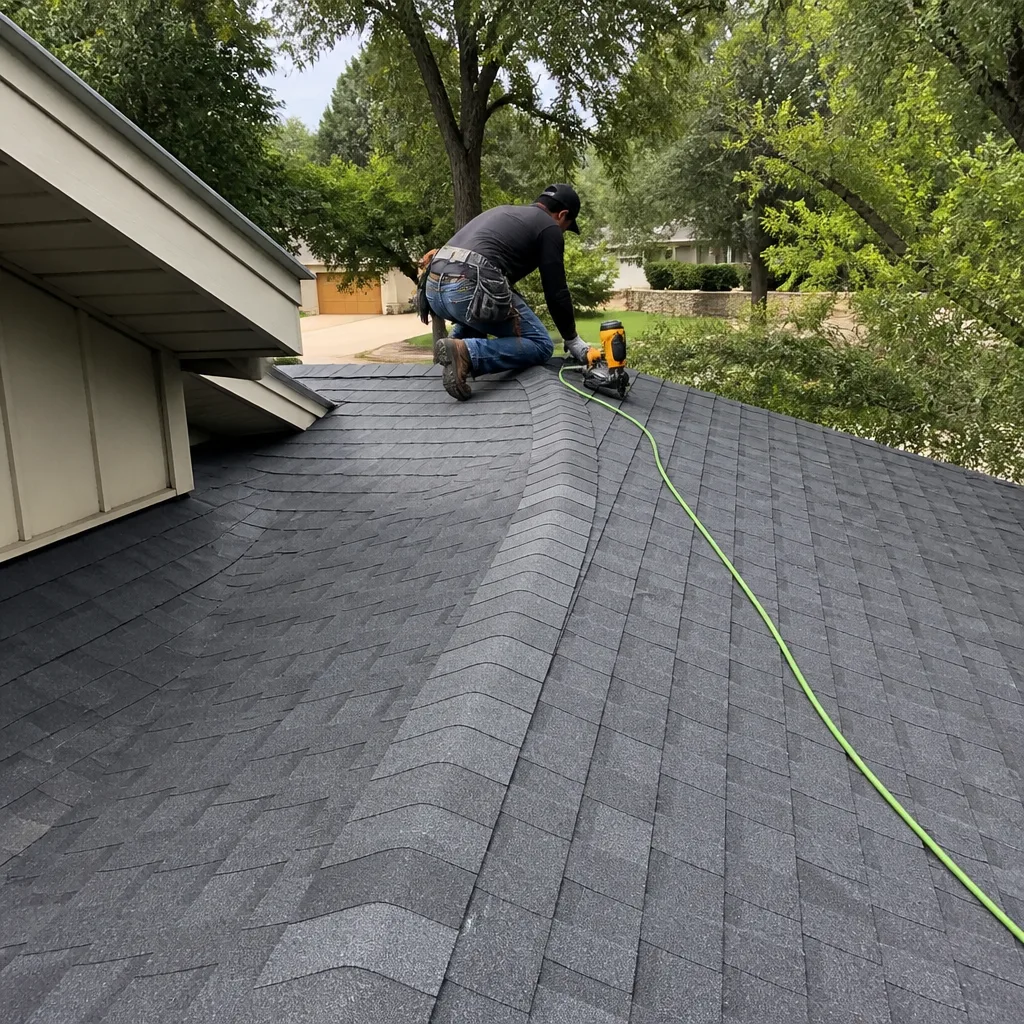 After
After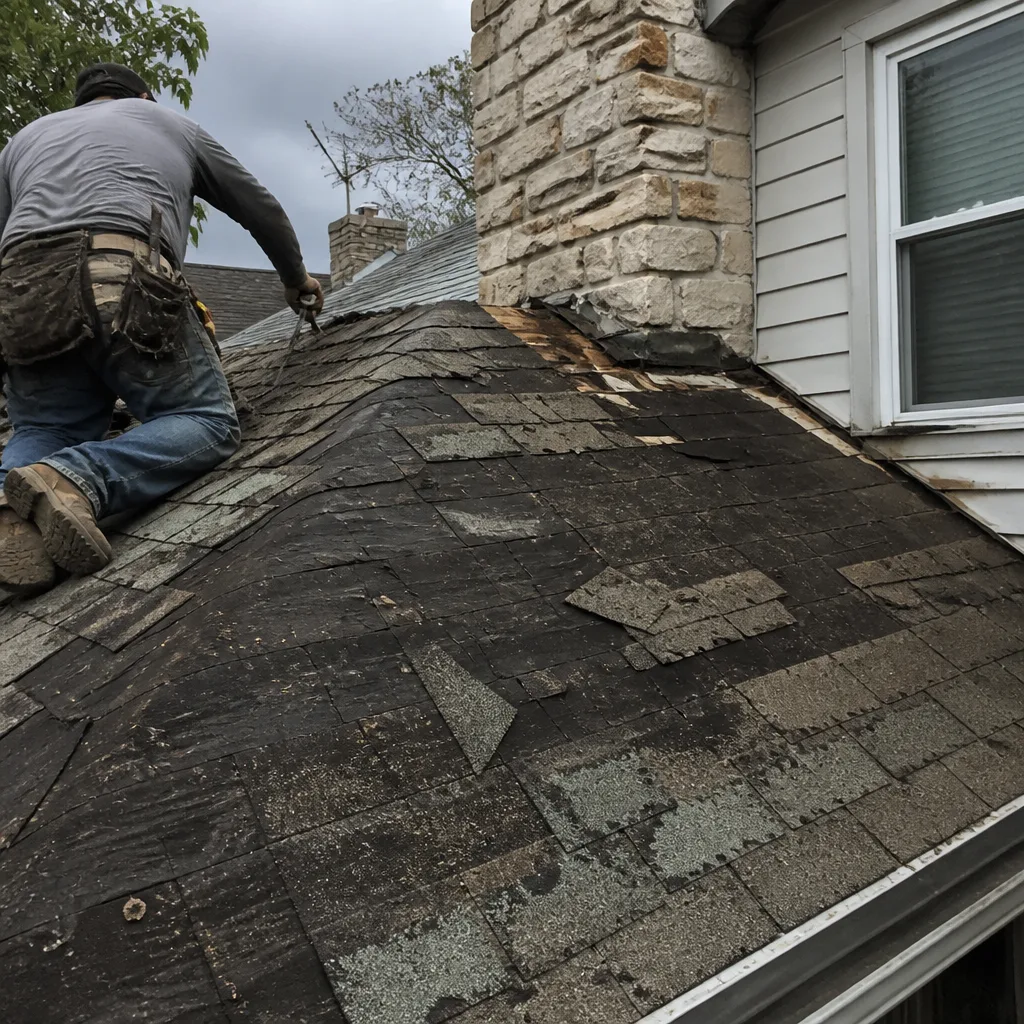 Before
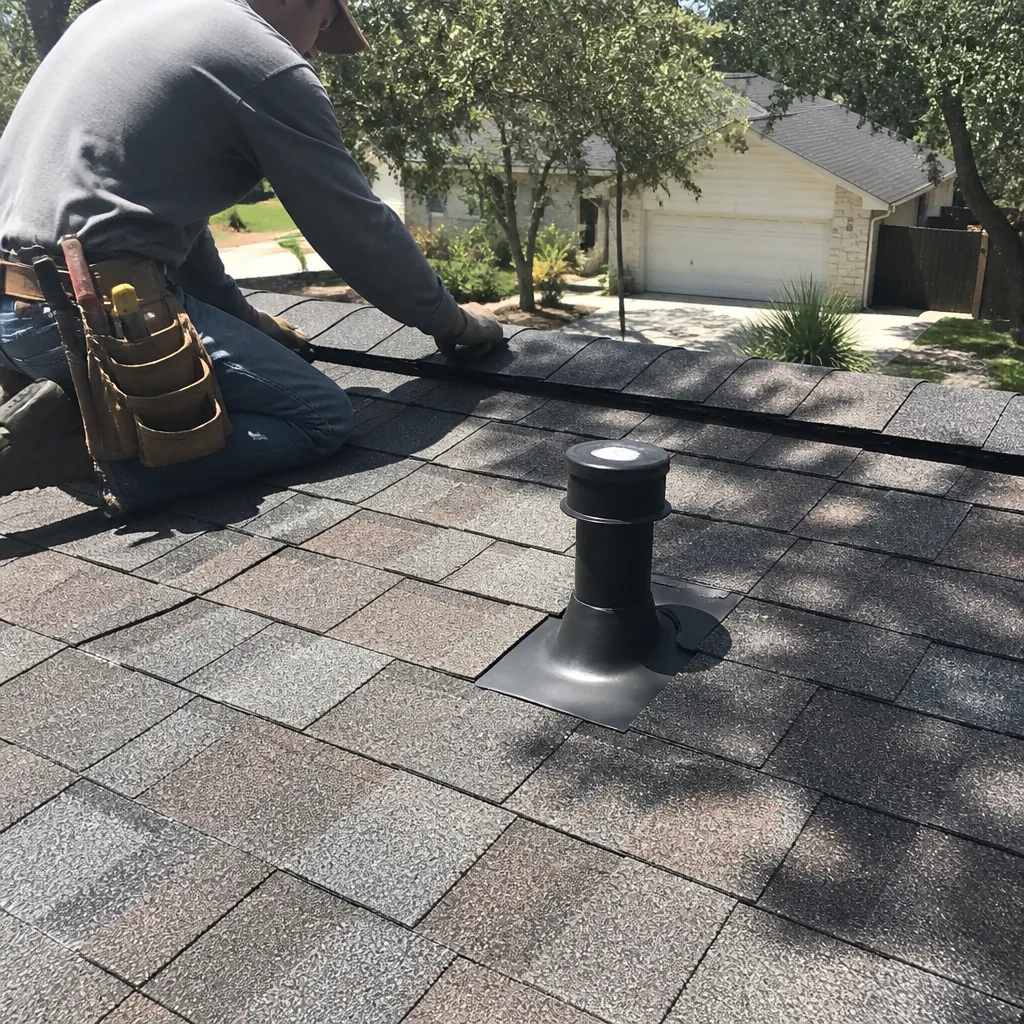 After
After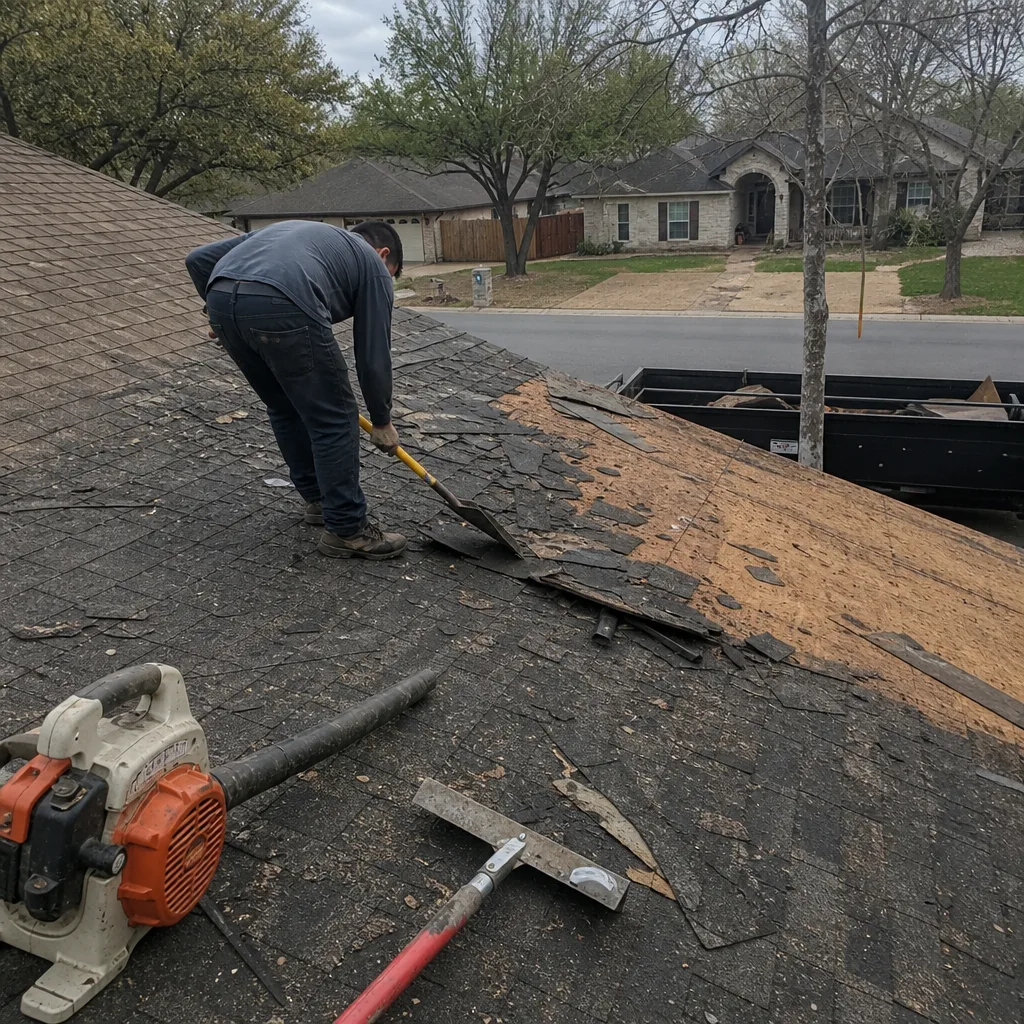 Before
 After
After