
Last updated October 17, 2026
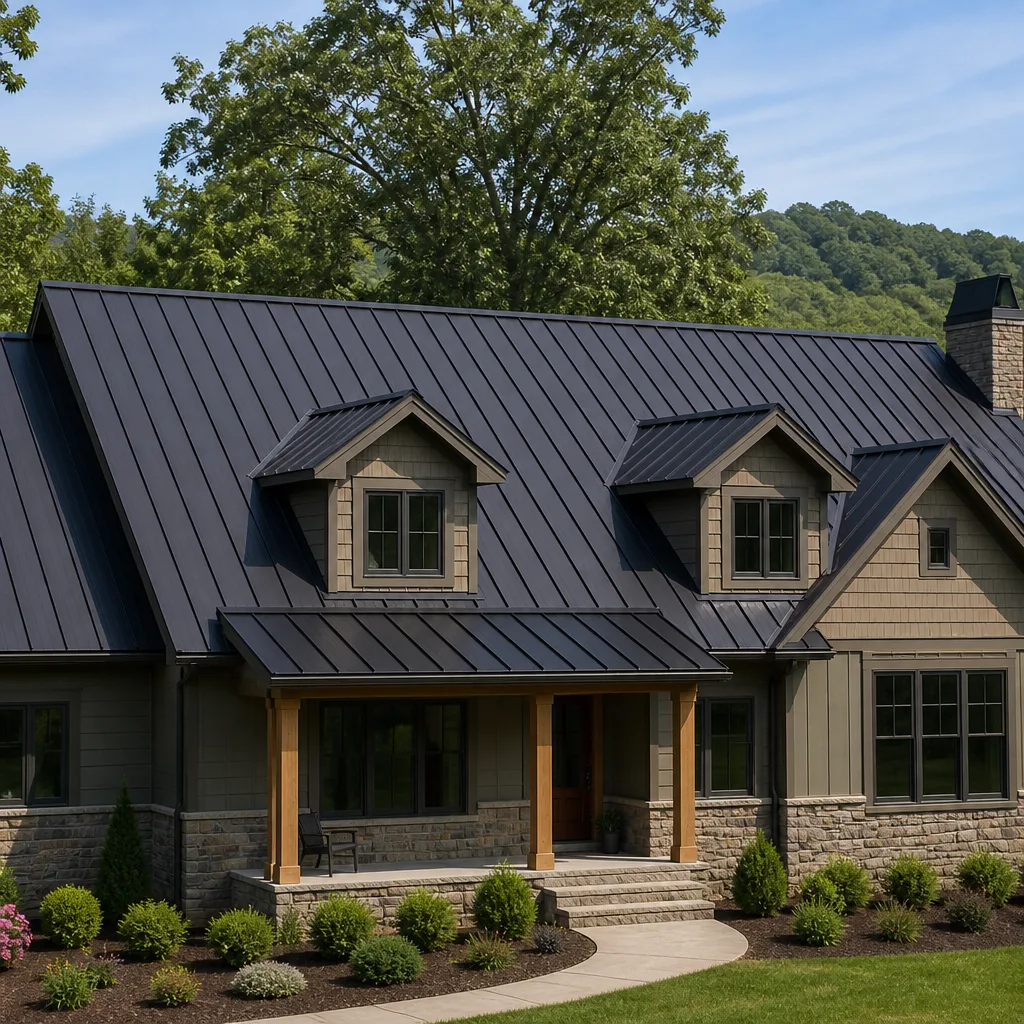 Metal roofing
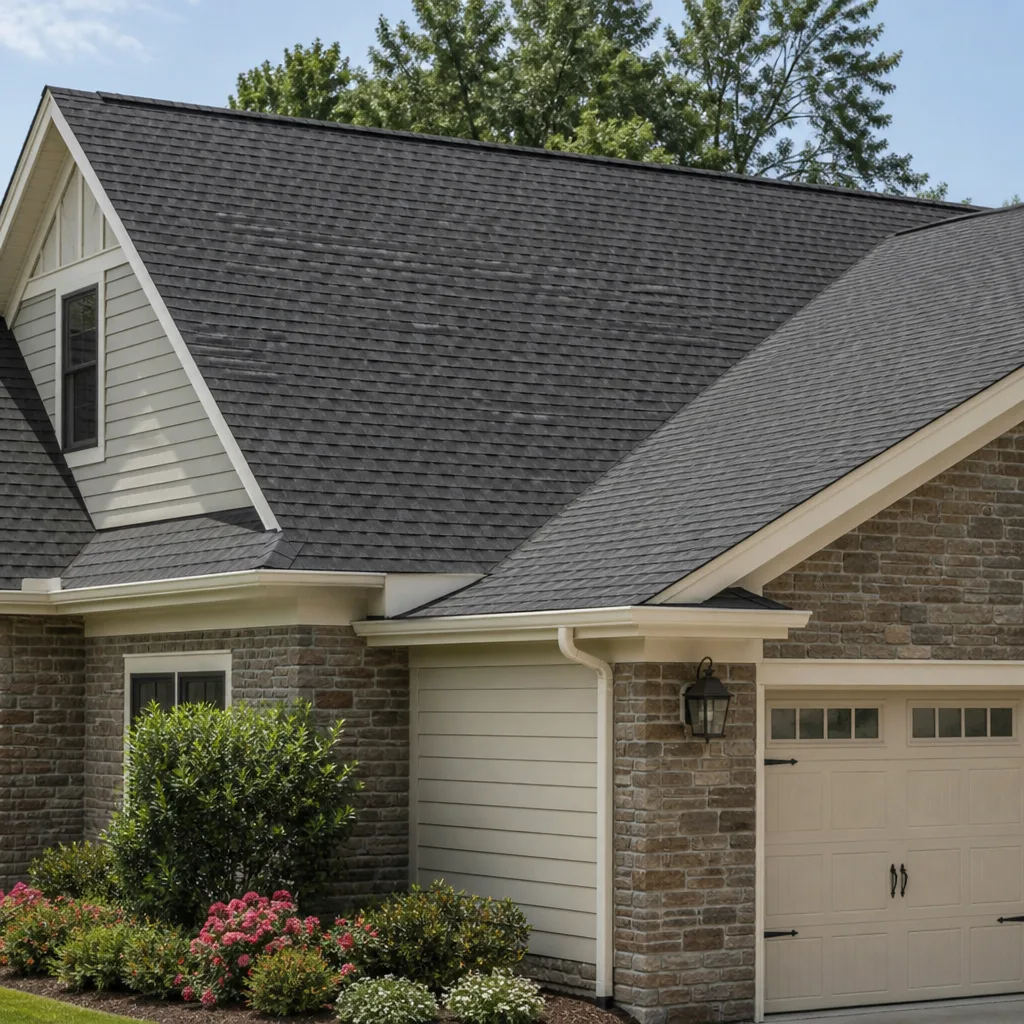 Architectural shingles
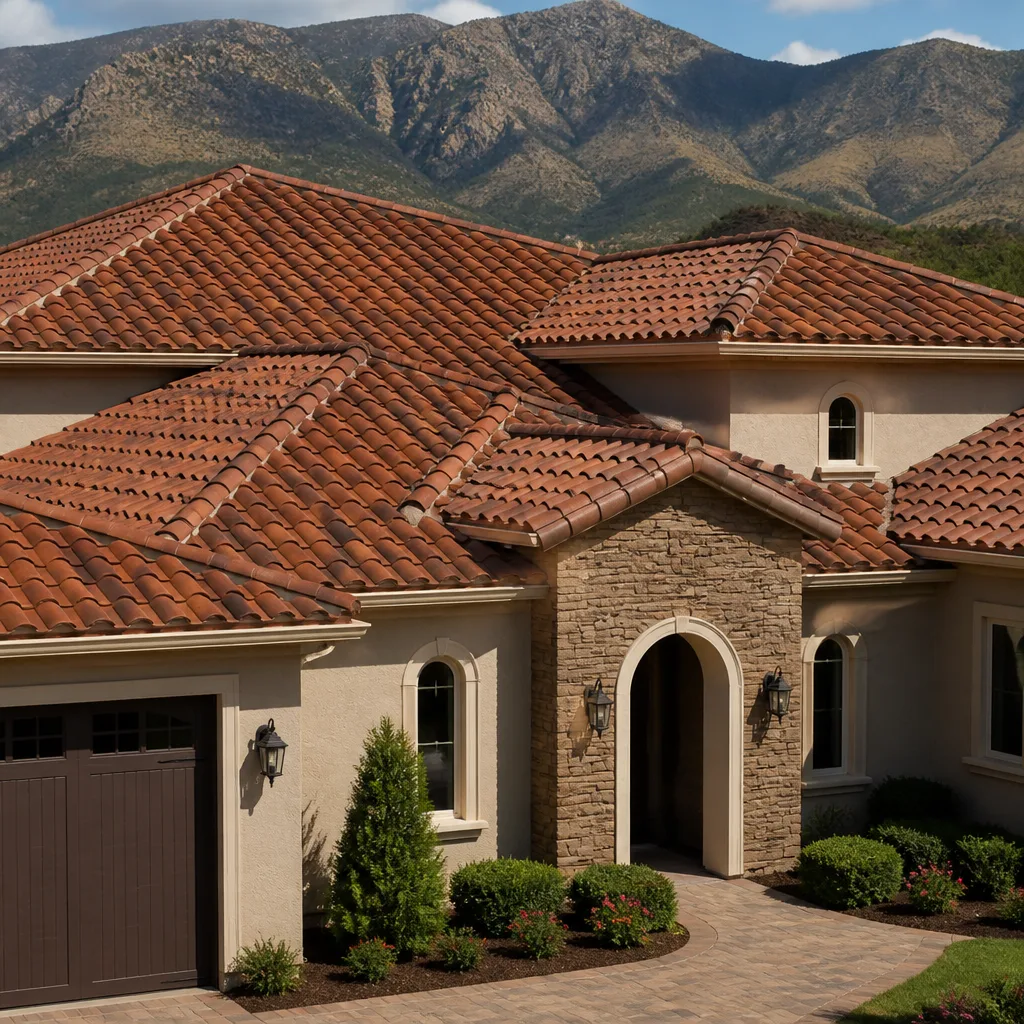 Tile roofing
 GAF
GAF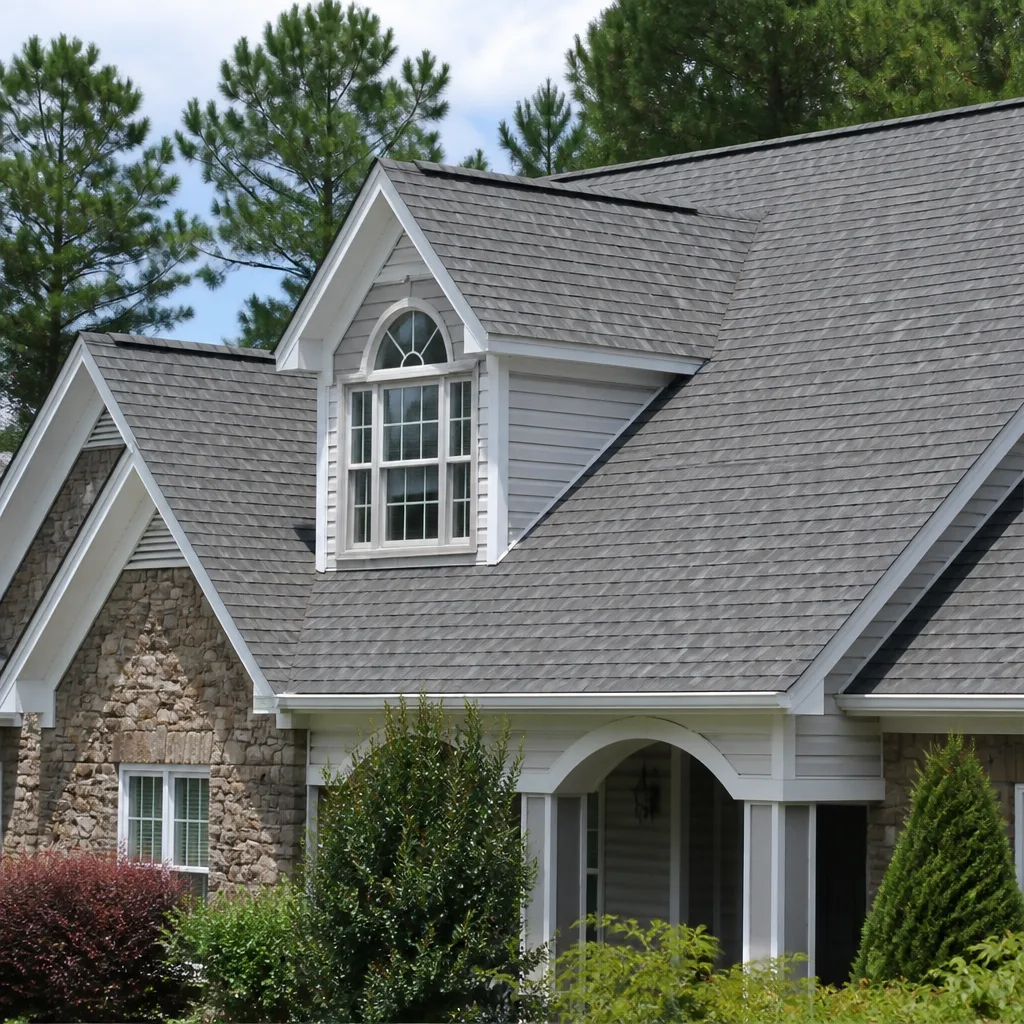 Owens Corning
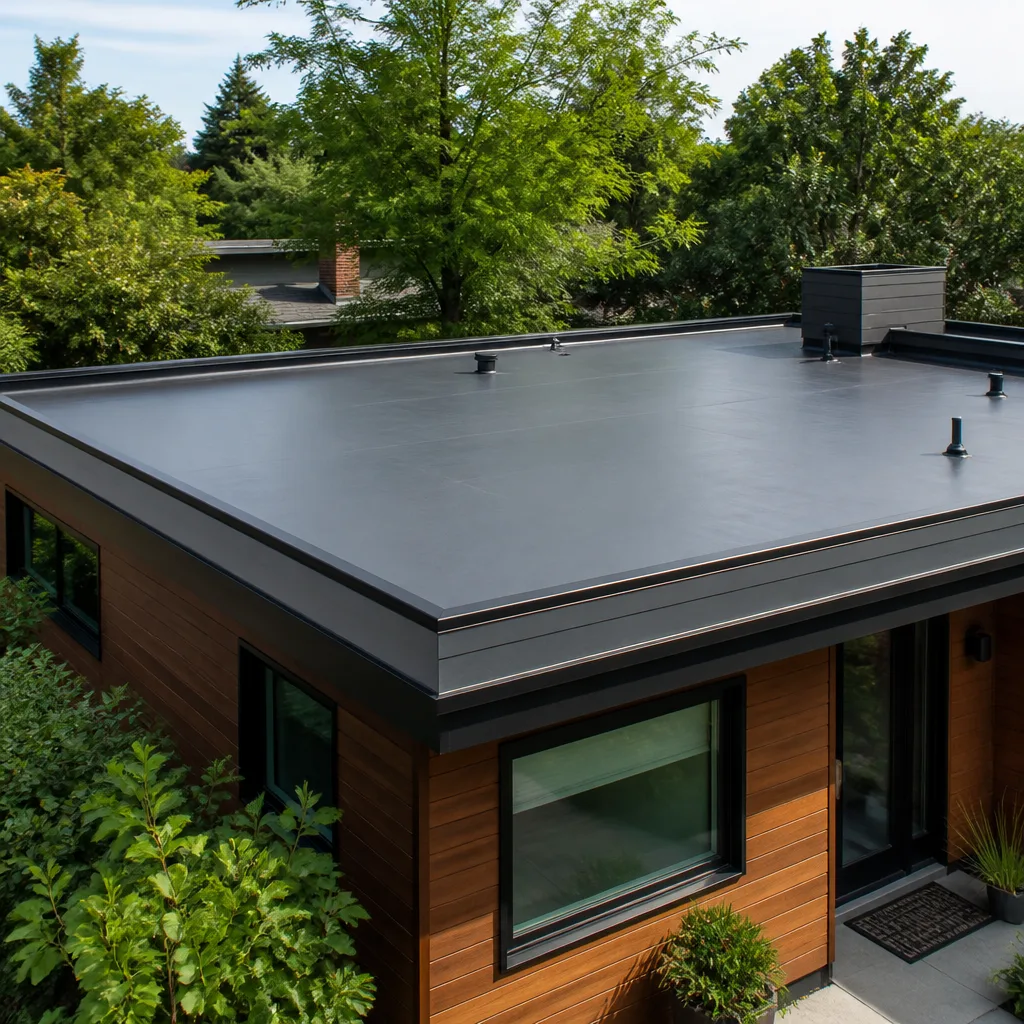 Flat & low-slope
Free roof inspection with deck photos before we talk money - GAF and Owens Corning certified installation
How to Hire a Roofing Contractor in Austin: A Step-by-Step Guide
In the 72 hours after a hailstorm rolls through Austin, more roofing contracts get signed than in the entire previous month. That urgency is manufactured, and it costs local homeowners millions every year in overpriced bids and underbuilt roofs. The Texas Department of Insurance has documented out-of-state crews arriving in Austin neighborhoods within a day of severe weather, going door to door with clipboards and a pitch that sounds reasonable until you read the fine print. This guide gives you a repeatable process for hiring a roofing contractor in Austin, one that protects you from the door-knockers without slowing you down when you actually need a new roof.
Quick Answer
To hire a roofing contractor in Austin, verify their Texas license number, ask for a written bid with material specs by manufacturer and product line, confirm who performs the work (employees or subcontractors), check their Travis County permit history, and never sign an Assignment of Benefits without reading every line. A legitimate Austin roofer will put pricing, timelines, and warranty terms in writing before asking for a signature. Check out our Roofing Company Maintenance Checklist for Austin Homeowners if you already have a bid in hand.
Styles & brands we work with
Table of Contents
- The First Phone Call: Questions That Separate Local Roofers from Storm Chasers
- Verifying a Texas Roofing License in Under Two Minutes
- Reading a Bid Line by Line: How to Spot the Lowball
- What a Written Contract Must Include Before You Sign
- The Assignment of Benefits Warning: When to Say No
- Checking a Roofer’s Reputation Beyond Google Stars
- Choosing Materials: Seven Manufacturers, Not One House Brand
- Common Mistakes to Avoid
- When to Call a Professional
- Frequently Asked Questions
The First Phone Call: Questions That Separate Local Roofers from Storm Chasers
Most Austin homeowners start their search by calling three or four numbers from Google. The first phone call tells you more about a roofing contractor than their website ever will, because you’re listening for specific answers, not just availability. Storm chasers, the crews that follow hail from out of state, typically fail this screening within ninety seconds. A local roofing company in Austin answers these questions without hesitation.
Ask these six questions on the first call, and write down the answers:
- “What’s your Texas roofing license number?” A licensed contractor recites it from memory or offers it immediately. A storm chaser stumbles, changes the subject, or claims that “registration is different in Texas than other states” and that it doesn’t matter. It does matter.
- “What’s your physical address in Austin, or within an hour of Austin?” You want a business address, not a P.O. box in a neighboring state. If the address they give you traces to a UPS store or a vacant lot, end the call.
- “Who will actually be on my roof, your employees or subcontractors?” Many Austin roofing companies use subcontractors, and that’s not automatically disqualifying. But you need to know the names and license status of any sub who will touch your roof. A roofer who gets defensive about this question is hiding a labor arrangement you don’t want.
- “Will you provide a written line-item bid before I agree to anything?” The correct answer is yes, always, without conditions. Anyone who insists on a “verbal agreement” or a deposit before producing a written bid is not a contractor; they are a sales operation.
- “How do you handle permitting in the City of Austin?” Roof replacements in Austin require a permit through the Development Services Department. A legitimate contractor says “we pull the permit ourselves and include the fee in the bid.” A storm chaser says “you handle that with the office” or “we don’t usually bother with those out here.”
- “What’s your warranty process if the roof leaks in six months?” Listen for specifics: how do they log a warranty claim, how fast do they respond, who does the repair. Vague answers mean the warranty is marketing, not a real commitment.
We’ve answered these same questions in Austin for a long time, and here’s what the good calls sound like from the roofer’s side: a Texas license number given instantly, a street address you can drive past, a clear statement that the bid is written before any work starts, and no pressure whatsoever.
Verifying a Texas Roofing License in Under Two Minutes
Texas does not license roofers at the state level the way it licenses electricians and plumbers. What it does have is a registration and voluntary certification system, and a number of municipalities, including Austin, that require additional local registration. This gap is exactly what out-of-state storm chasers exploit. They show up claiming “Texas certification” when what they hold is a registration certificate that took a form, a fee, and no exam.
Here’s the two-minute verification process we recommend to every Austin homeowner:
- Go to the Texas Department of Licensing and Regulation (TDLR) website. Search the roofer’s name or the company name under the Roofing Contractor registration lookup. Every legitimate roofing contractor performing work in Texas must be registered here. If the name doesn’t appear, do not hire them. Period.
- Check the registration type. Look for the words “certified” versus “registered.” A registered contractor has met basic requirements. A certified contractor has passed an exam and demonstrated additional competency. Both are legal, but certified indicates more training.
- Check the City of Austin’s permit search tool. The Austin Development Services Department maintains a searchable permit database. Type in the contractor’s name and see how many roofing permits they’ve pulled in Austin in the last three years. A healthy history means they do real work here. A blank record is a red flag.
- Confirm the name matches. Insurance certificates, licenses, and bids should all show the same company name and the same responsible party. If the bid lists one company and the permit is pulled under another, you’re dealing with a broker, not a contractor.
This entire process takes less time than brewing a pot of coffee. The contractors who fail it are the ones who were going to fail you in other ways, too.
Reading a Bid Line by Line: How to Spot the Lowball
The cheapest bid in Austin is rarely the best value. It’s usually the bid that leaves something out, and the something left out is almost always a material, a step, or a labor cost that the contractor plans to recover later through a change order. Our Roofing Cost Breakdown: The Austin Homeowner’s Reference for 2026 shows how to read a roofing bid like someone who has seen the tricks.
A complete bid looks like this:
- Tear-off and disposal: The bid specifies whether the old shingles are removed (a full tear-off) or whether new shingles are laid over the old ones (a reroof). The City of Austin allows reroofing over a single existing layer in some cases, but a proper job on an older home usually requires tear-off. The bid should state which one you’re paying for.
- Underlayment: The bid names the specific product, not just “felt” or “synthetic.” The underlayment is the water-resistant layer between your decking and your shingles. In Austin’s climate, where flash floods and wind-driven rain are common, cheap underlayment is a false economy. Look for a named synthetic product with a stated weight or thickness.
- Drip edge: The metal flashing installed along the roof edges that keeps water from wicking back under the shingles. A bid that omits drip edge is a bid that cuts a corner. Drip edge is code-required in Austin.
- Flashing: The metal pieces around chimneys, skylights, vents, and wall intersections. The bid should specify whether existing flashing is being reused or replaced. Reused flashing on an older roof is a leak waiting to happen.
- Shingle manufacturer and product line: Not just “architectural shingles.” The bid should name the manufacturer (we install Owens Corning, IKO, Atlas, and Tamko, among others) and the specific product line within that brand. Manufacturer names matter because warranty coverage follows the product.
- Decking replacement: The plywood or OSB under the underlayment. Most bids include a certain amount of decking replacement as a base allowance (usually 2-4 sheets), with a stated per-sheet price for additional damaged decking discovered during tear-off. If the bid doesn’t mention decking at all, that cost will be a surprise later.
- Permit fee: The bid either includes the City of Austin permit fee as a line item or states that the homeowner handles it separately. If neither appears, ask.
When you compare three bids side by side, compare them line by line against this list. A bid that’s $4,000 cheaper is usually cheaper because it’s missing $4,000 worth of something you actually need.
What a Written Contract Must Include Before You Sign
The contract is the document that protects you. In Austin roofing, a verbal promise is worth exactly nothing when there’s a dispute. Here’s what a legitimate written contract includes, and what we include in every single contract we write:
- Start date and completion window. The contract should state a specific date or date range for when work begins and a realistic window for completion. “As soon as we can get to it” is not a date. In Austin’s spring storm season, reputable roofers are busy, and an honest contractor tells you that upfront rather than overpromising and showing up three months late.
- Material specifications by manufacturer and product line. The contract repeats the exact materials from the bid, with no generic substitutions. If you signed for GAF Timberline HDZ shingles, the contract says GAF Timberline HDZ, not “comparable architectural shingle.”
- Payment schedule. The contract states when payments are due: typically a deposit (often 10-25% in Austin, though some contractors work on net terms), a progress payment, and a final payment upon completion and final inspection. Be wary of any contractor demanding more than 50% upfront. In Texas, a contractor who asks for full payment before starting is a warning sign.
- Warranty terms in plain language. The contract spells out what the workmanship warranty covers, how long it covers it, and what happens if a repair is needed during the warranty period. If the language is dense or refers to “standard industry warranty,” ask for the actual terms in writing.
- Scope of work. Every step the contractor will perform, from tear-off to final cleanup, is listed. This is your protection against the “that wasn’t in the scope” conversation later.
- Permit responsibility. The contract states who pulls the City of Austin permit and who pays the fee.
- Cleanup and haul-away. The contract states that the work site will be cleaned, nails picked up, and old materials hauled away. In Austin, this matters because roofing nails in a driveway are a flat-tire machine.
Read the contract before you sign it. Read it again after you’ve had a cup of coffee. Any contractor who rushes you through the contract is not protecting your interests. At Tilehurst Roofing Austin, the written price is in your hands before any work starts, every single time. If a contractor won’t put it in writing, don’t hire them.
The Assignment of Benefits Warning: When to Say No
An Assignment of Benefits, or AOB, is a document that transfers your insurance claim rights to the contractor. Once you sign an AOB, the contractor can negotiate directly with your insurance company, collect payment directly from your insurer, and in many cases, bill you for anything the insurance company doesn’t cover. After major Austin hailstorms, we’ve watched door-knockers push AOBs on homeowners who haven’t even spoken to their adjuster yet. The Texas Department of Insurance has issued consumer alerts about exactly this practice.
There are legitimate uses for an AOB. If you’re dealing with a contractor you’ve vetted thoroughly, and the AOB is presented after you’ve had an adjuster inspect the damage and after you understand your policy coverage, it can streamline the claims process. The contractor handles the paperwork, negotiates with the insurer, and gets paid directly for the work.
But in Austin, after a major storm, the AOB is often presented within 24 hours of impact, before an adjuster has visited, before you know your deductible, and before you understand what your policy covers. The storm chaser who shows up with an AOB and a hard sell is asking you to sign away your most important negotiating rights at exactly the moment you’re least prepared to evaluate the document.
Here’s the rule that keeps you safe: Never sign an AOB presented at your door within days of a storm. Tell the contractor you’ll review the document after your insurance adjuster has inspected the property and after you’ve compared bids. A legitimate contractor will accept that answer. A storm chaser will leave and never call back.
Checking a Roofer’s Reputation Beyond Google Stars
Google reviews are useful, but in Austin they’re also easily gamed. A contractor with 500 five-star reviews may have bought half of them or incentivized them with discounts. A contractor with 20 reviews may be the best roofer in your neighborhood, just bad at asking for feedback. Here’s how to check reputation in ways that can’t be faked:
- Travis County permit history. We mentioned this above, but it bears repeating. Look up the contractor’s name in the City of Austin permit database. A roofer with dozens of Austin permits pulled over several years is doing real, inspected work. A roofer with no permits is either new, unlicensed, or working under someone else’s license.
- BBB complaint records. The Better Business Bureau tracks complaints, and not just unresolved ones. Look at the complaint history: how many complaints has the contractor received, what were they about, and how were they resolved? A contractor with zero complaints is either exceptional or new. A contractor with complaints that were resolved professionally is often a safer bet than one who’s never had a complaint filed.
- Call their references and ask the one question everyone forgets. When you ask for references, contractors hand you their three happiest customers. That’s fine, call those people. But ask the question that cuts through the happy-talk: “Did the final price match the written bid exactly, and if not, what changed?” You’ll learn more from that answer than from twenty minutes of pleasant conversation.
- Drive past a current job site. Ask the contractor where they’re working right now in Austin. Drive past. Look at the site. Is it clean? Are there tarps covering the landscaping? Do the workers look professional? A roofer’s job site in progress is the most honest advertisement they have.
- Check for local community ties. Does the contractor sponsor a Little League team in your part of Austin? Do they show up in local chamber of commerce listings? Community involvement isn’t proof of quality, but it’s evidence that the contractor plans to be in Austin for a while. Storm chasers don’t sponsor local teams because they’re not local.
Choosing Materials: Seven Manufacturers, Not One House Brand
When a roofing contractor only offers one shingle brand, you’re not choosing materials; you’re accepting what the contractor gets the best wholesale deal on. That might be a fine product, but it’s not a real choice. In Austin, where hail, UV exposure, and wind all test a roof differently depending on your home’s orientation, tree coverage, and neighborhood, material selection matters more than most homeowners realize.
We install from seven major manufacturers: GAF, CertainTeed, Owens Corning, IKO, Atlas, Tamko, and Boral. That’s not a marketing list; it’s a practical range. Each manufacturer has product lines suited to different priorities:
- Owens Corning shingles are widely available in Austin and offer excellent hail-impact options in their higher-end lines, which matters if your home is in a hail-prone corridor like the Hill Country edge of the city.
- IKO products are known for their color consistency and dimensional profile, a good fit for homeowners who care as much about curb appeal as weather performance.
- Atlas shingles have strong wind ratings that hold up well in the open, gust-prone neighborhoods of east Austin where there’s less tree cover.
- Tamko offers solid mid-range architectural shingles that strike a practical balance between cost and durability for Austin’s climate.
The point isn’t that one brand is always the right choice. The point is that your contractor should be able to explain why a particular product line fits your particular roof, your budget, and your neighborhood’s exposure. If the answer is “this is what we install,” you’re not getting a recommendation; you’re getting a default.
We tell Austin homeowners to think about materials this way: the shingle you choose is doing the same job whether it costs $110 per square or $180 per square. The difference is how long it does that job and how well it holds up to the specific weather patterns of your part of town. A roof on a shaded lot in Tarrytown faces different stress than a roof on an exposed lot in Mueller. The material should match the conditions, not the other way around.
Common Mistakes to Avoid
- Hiring the first contractor who knocks on your door after a storm. The most motivated roofer after a hailstorm is often the one with the most to gain and the least local accountability. Always get bids from at least three contractors, and verify each one.
- Paying more than a reasonable deposit upfront. A large upfront payment is a red flag in Austin. It’s a sign that the contractor can’t afford to buy materials, which means they may also be unable to afford the labor or the cleanup.
- Signing a contract without a written scope of work. A verbal description of “a new roof” protects you from nothing. The written scope is what you hold them accountable to.
- Not confirming who pulls the permit. In Austin, the permit is the legal record that the work happened. If the contractor doesn’t pull a permit, and problems arise later, you have less legal recourse.
- Choosing the lowest bid without comparing line items. The $4,000 savings on a lowball bid usually comes out of your pocket later, either through change orders or through a roof that fails earlier than it should.
- Skipping the reference check. Two phone calls to the contractor’s references would catch most horror stories before they become your horror story. Ask the question about whether the final price matched the bid.
- Signing an AOB without reading it. This is the single most expensive mistake Austin homeowners make after storms. The AOB transfers your rights. Read every line before you sign.
When to Call a Professional
Some roofing situations are clearly DIY: none of them. Working on a roof in Austin, with its steep pitches, extreme summer heat, and sudden storms, is genuinely dangerous. Falls from roofs account for a significant share of construction fatalities in Texas every year. If you see damaged shingles, water stains on your ceiling, granules collecting in your gutters, or flashing that’s pulled away from the chimney, call a professional. If you’re not sure whether what you’re seeing is a problem, call too. Tilehurst Roofing Austin offers free estimates in Austin, and we’ll tell you honestly whether the issue needs immediate attention or can wait. Call (254) 540-7345 to schedule your free estimate.
Frequently Asked Questions
In Austin, an asphalt shingle roof replacement on a typical 1,800-2,200 square foot single-story home generally runs between $9,000 and $16,000, depending on the tear-off scope, decking condition, material selection, and roof pitch. Higher-end materials like metal, tile, or certain impact-rated shingles push the price up from there. Call (254) 540-7345 for a written line-item quote specific to your home, free of charge.
Yes, the City of Austin requires a permit for roof replacement, and the permit must be pulled before work begins. A legitimate roofing contractor handles the permit as part of the job. The permit ensures the work will be inspected for code compliance, which protects you if problems develop later.
Thank them, take their card, and close the door. Then verify their Texas registration online, check their Austin permit history, and get competing bids before deciding. Legitimate local roofers in Austin don’t typically go door to door after storms; storm chasers do. You have time to make a good decision after a hailstorm, usually months, while the door-knocker’s urgency is manufactured.
Hail damage often shows up as small round dents in shingles, granules collecting in gutters or at downspouts, or bruising that’s not visible from the ground. In Austin, hail stones as small as one inch in diameter can cause damage that shortens a roof’s life. A professional inspection from the roof surface is the only reliable way to know. Tilehurst Roofing Austin provides free roof inspections.
It usually works better to get an initial roof inspection first so you know what you’re dealing with, then contact your insurance company to start the claim, and then meet with the adjuster on site. Once you know what your policy covers, you can get accurate bids. The roofer you hire should be willing to meet the adjuster at your home and walk through the damage together.
Never sign any document, especially an Assignment of Benefits, presented at your door within days of a storm by someone who hasn’t been vetted. That single signature can tie your insurance payout to a contractor you barely know, and reversing it is difficult. If you’re not sure what you’re signing, don’t sign it. Call (254) 540-7345 and ask us for a second opinion on any document or bid.
The Bottom Line
Hiring a roofing contractor in Austin is a decision you can make carefully without making it slowly, and our more guides & resources can help. The process we’ve laid out here takes a few hours of phone calls and research, and it’s the difference between a roof that lasts 25 years and a legal headache that lasts longer. Verify the license, read the bid line by line, insist on a written contract, check the permit history, and never let a door-knocker rush you into signing something you haven’t read. We built Tilehurst Roofing Austin on the belief that the price should be in your hands before the work starts, and the guarantee should be in writing before the crew leaves. Those standards aren’t exceptional; they’re the minimum a homeowner should expect.
Roof repair in Austin is what we do every day. Roof replacement in Austin is the bigger decision, and this guide exists to make that decision simpler. If you’re ready for a written estimate, call us at (254) 540-7345. A live person answers, 24 hours a day, seven days a week. See our Tilehurst Roofing Austin home page for more about how we work.
Written by Greg Holloway, Owner at Tilehurst Roofing Austin, serving Austin since 2000.
See the difference
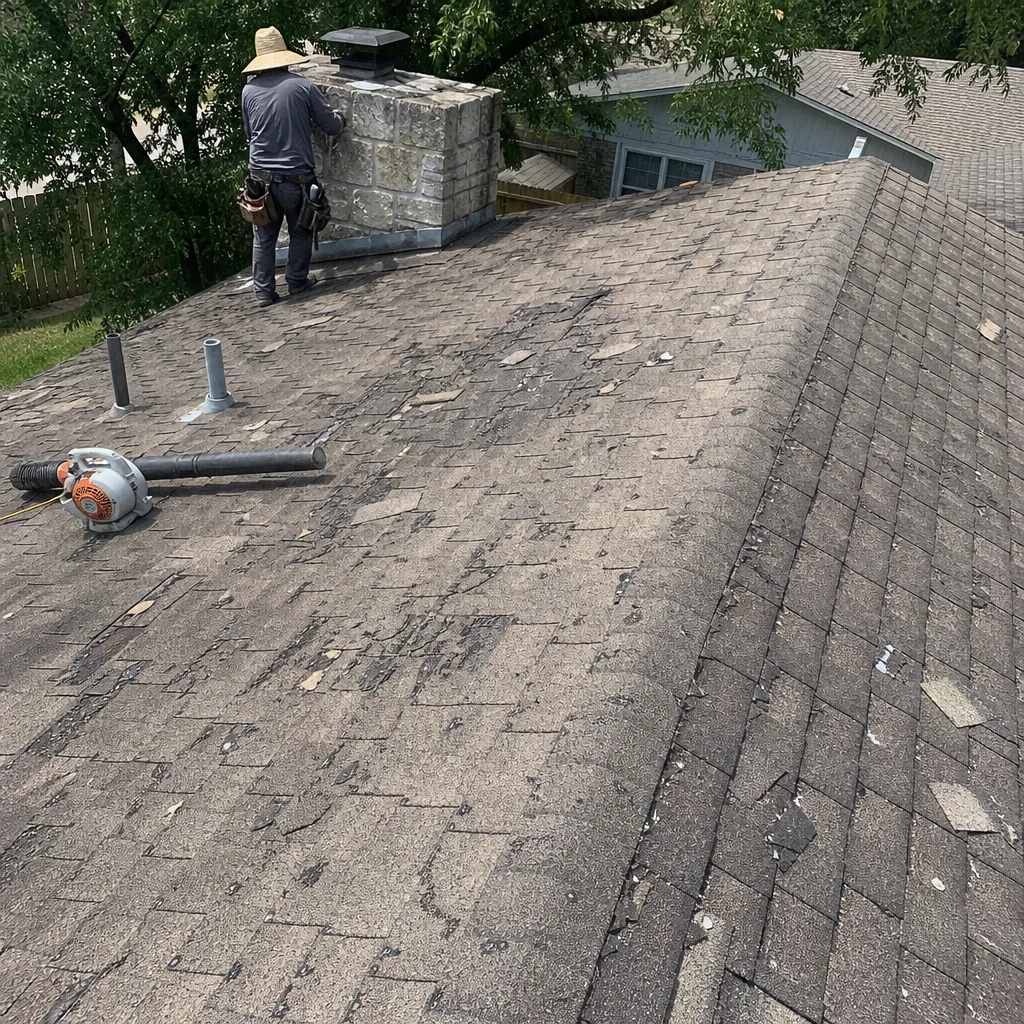 Before
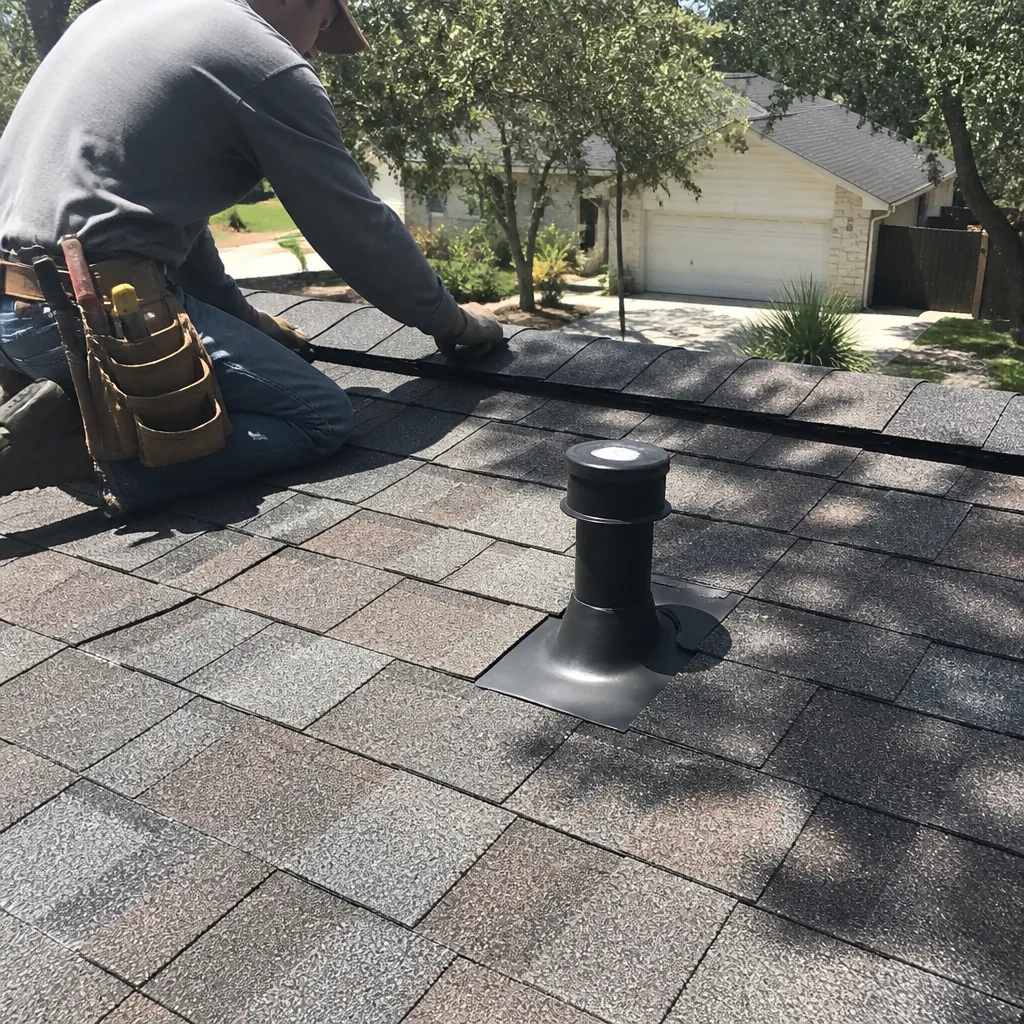
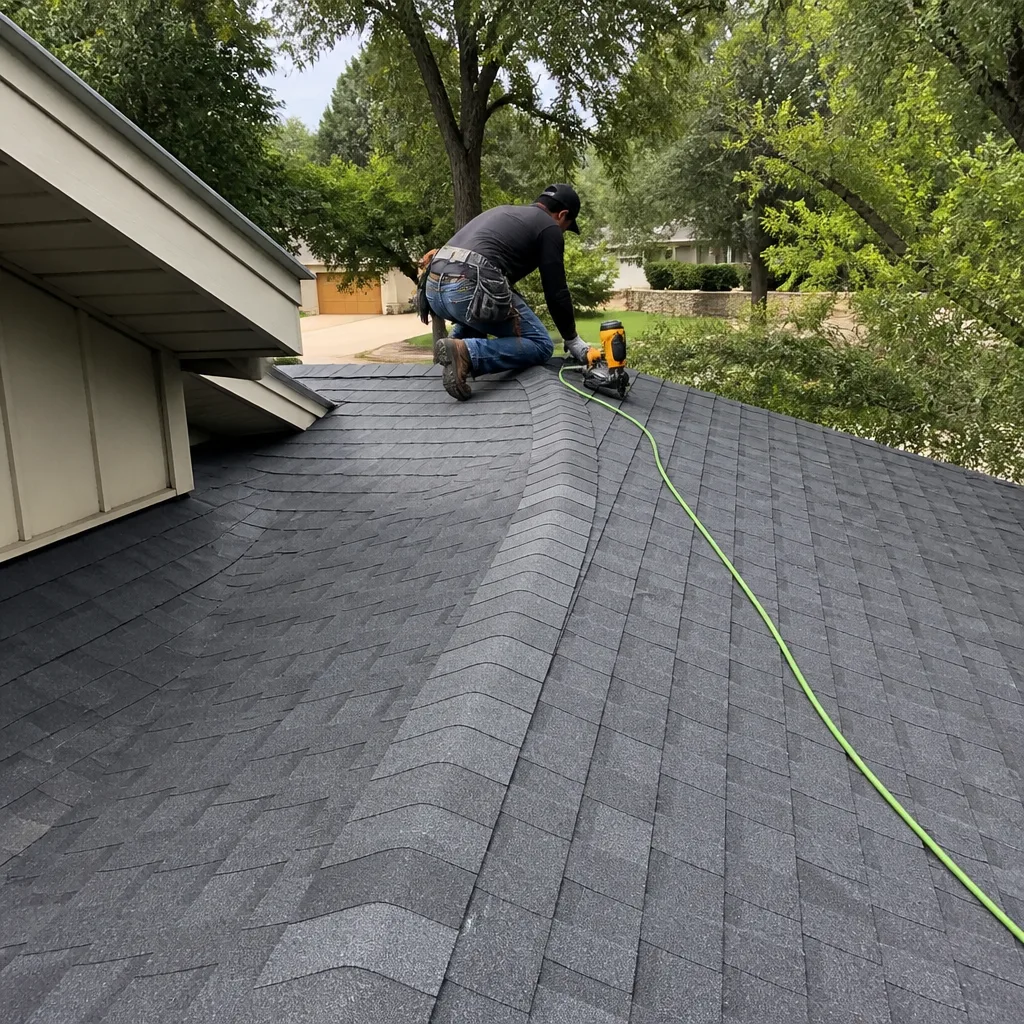 After
After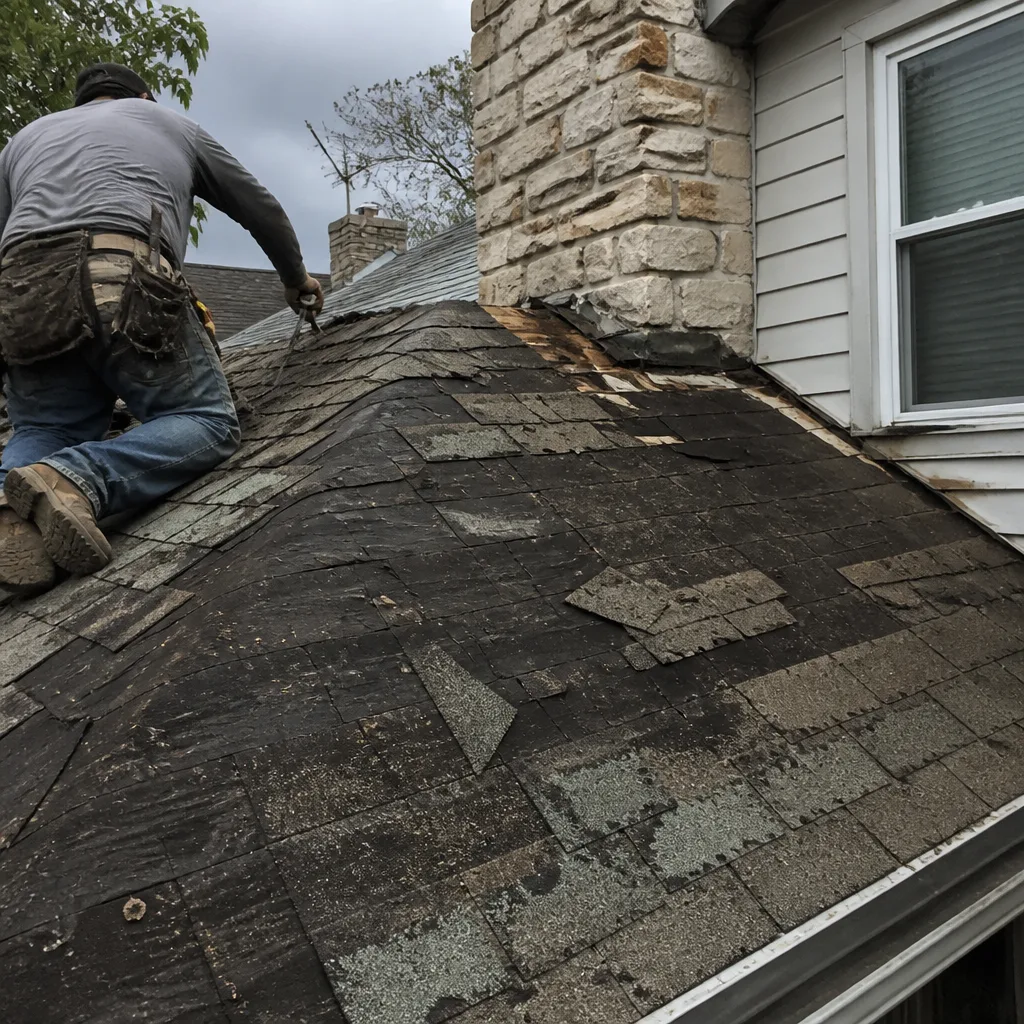 Before
 After
After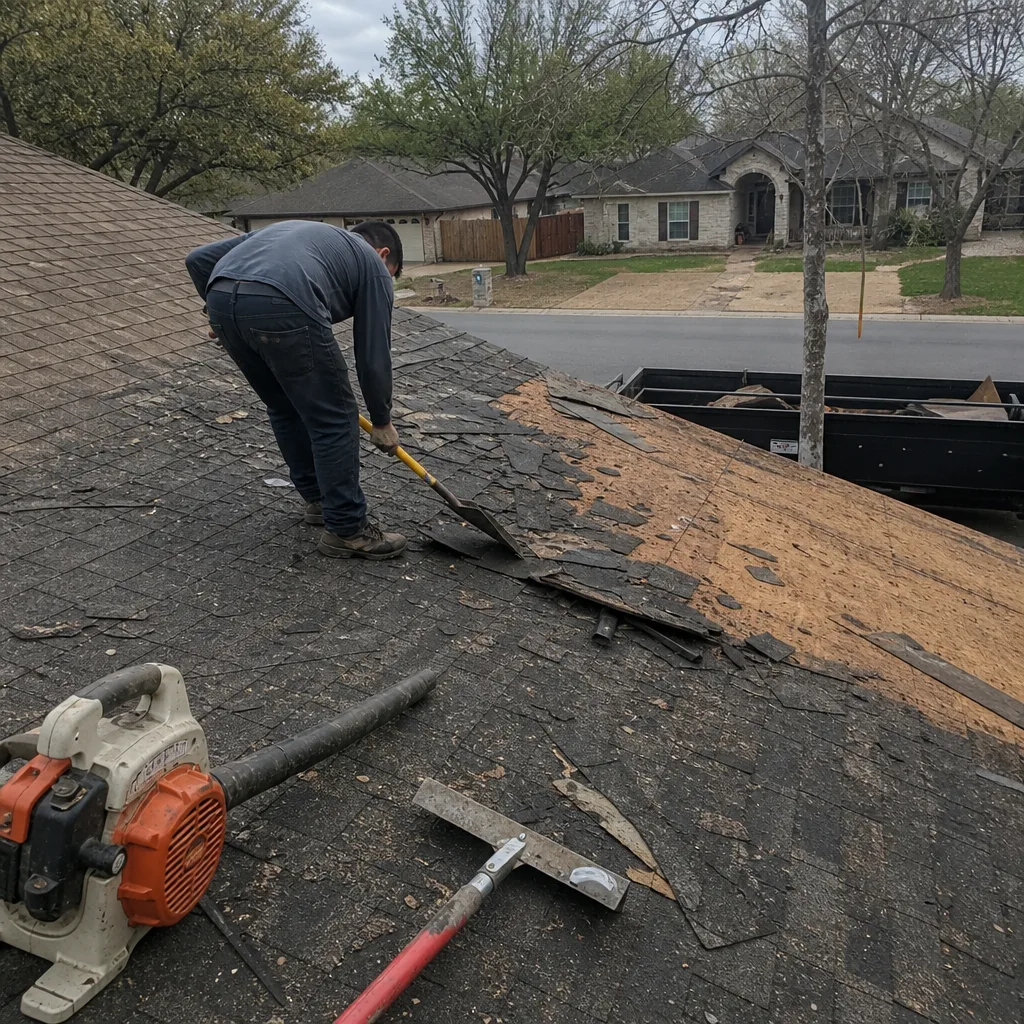 Before
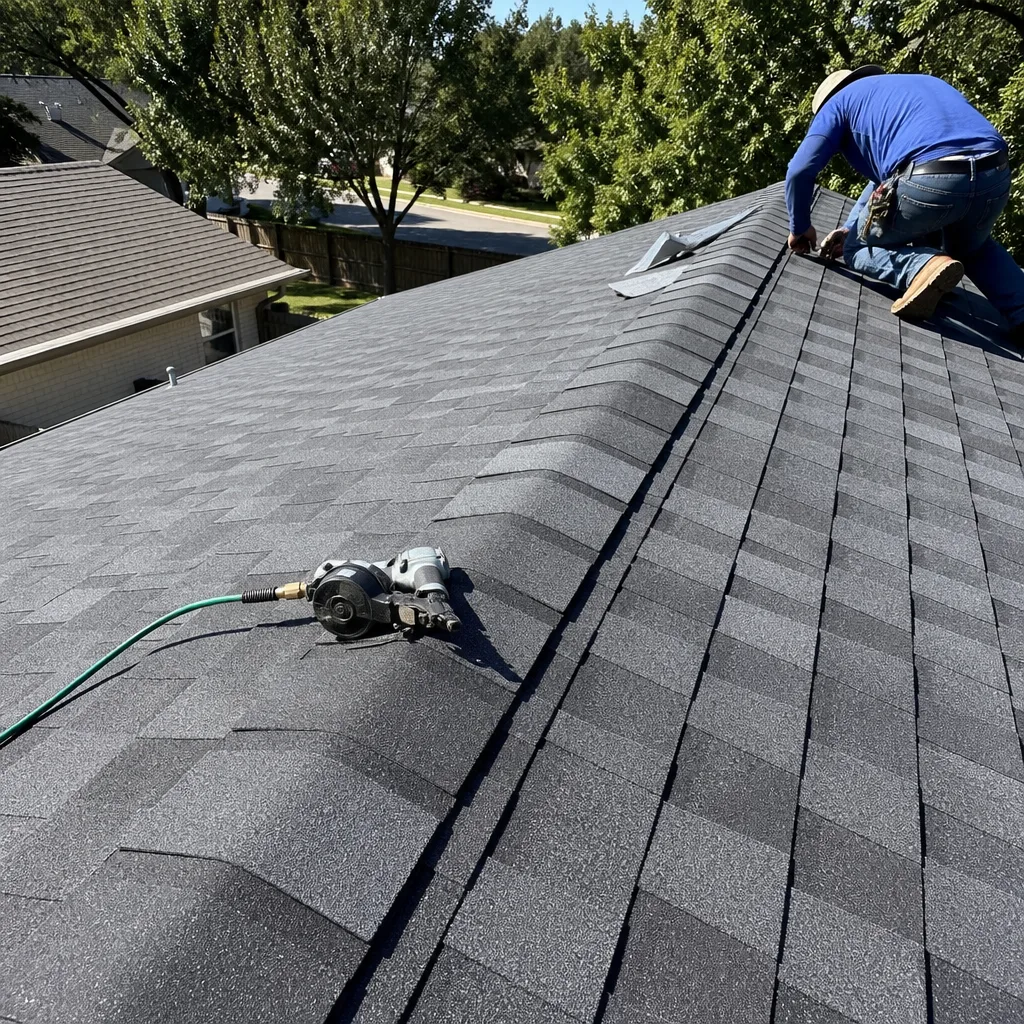 After
After