
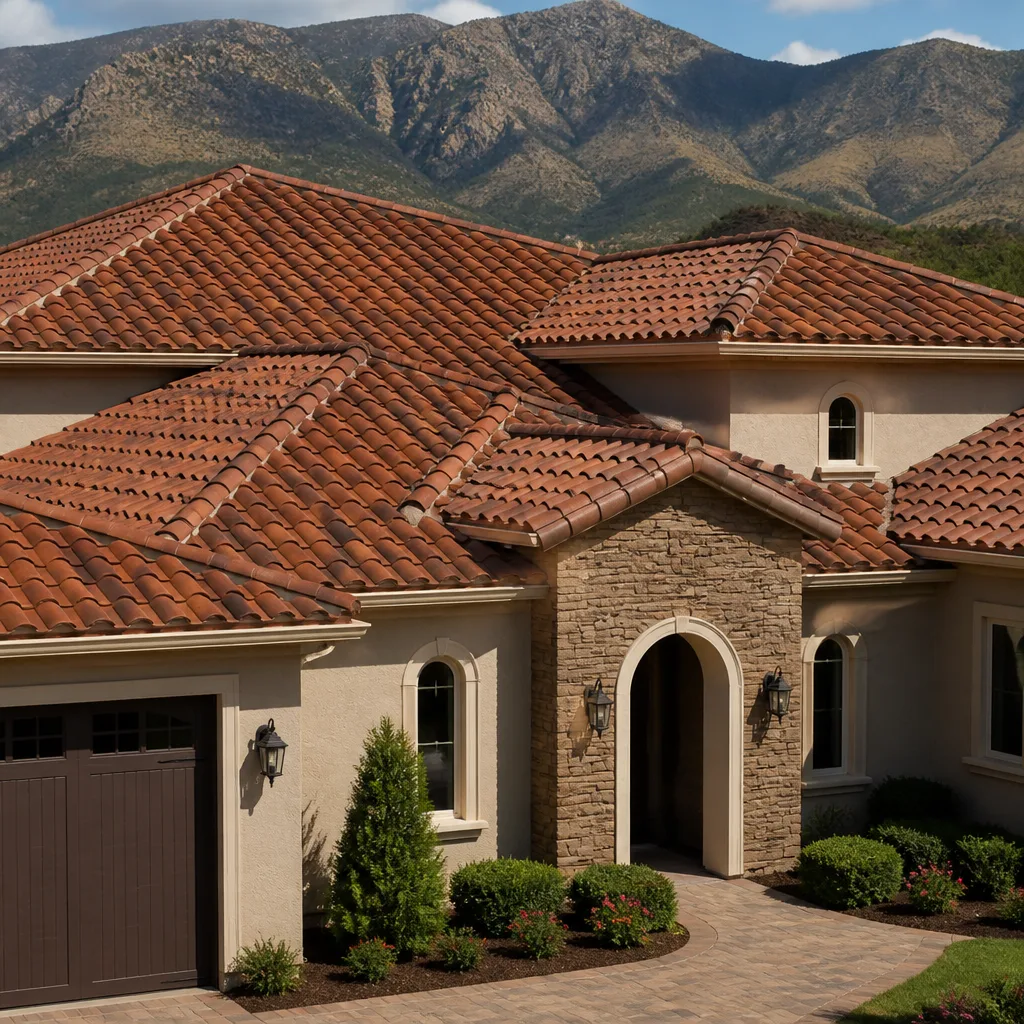
 Tile roofing
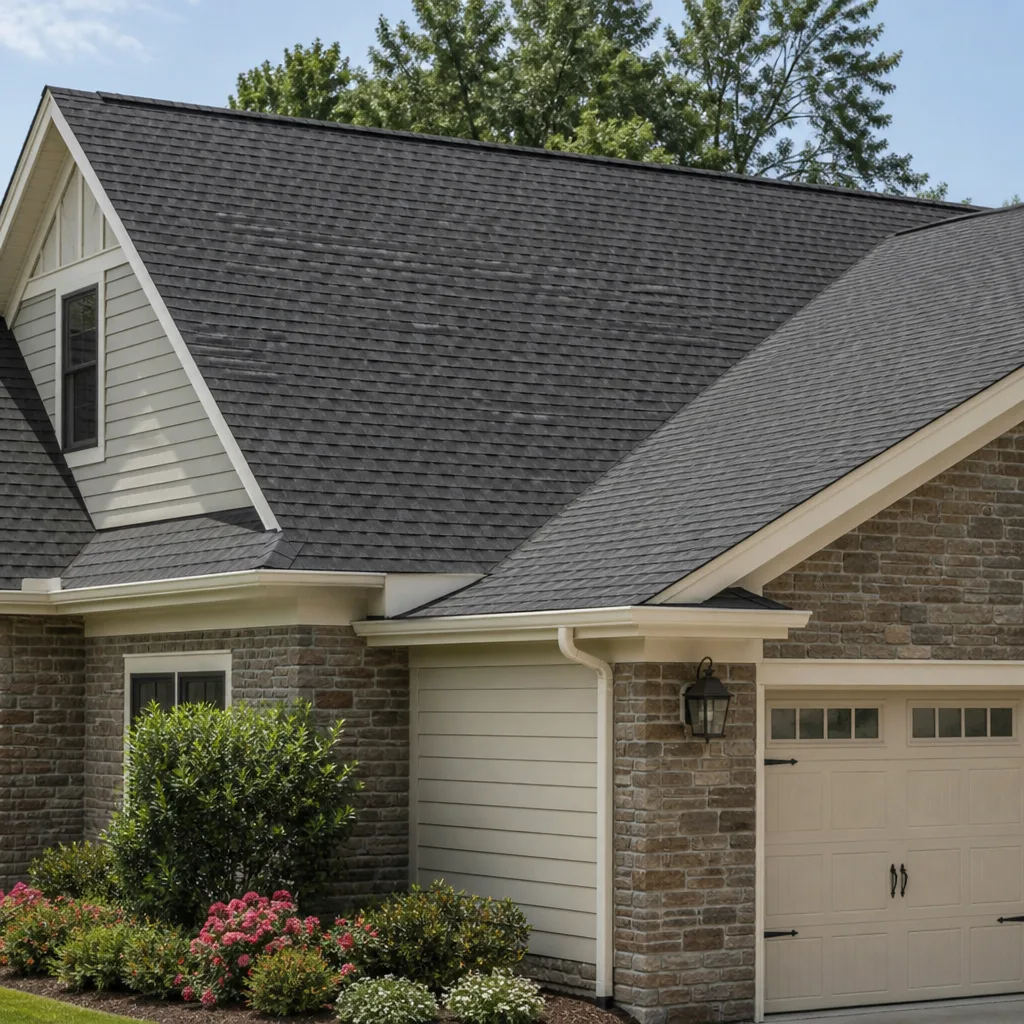 Architectural shingles
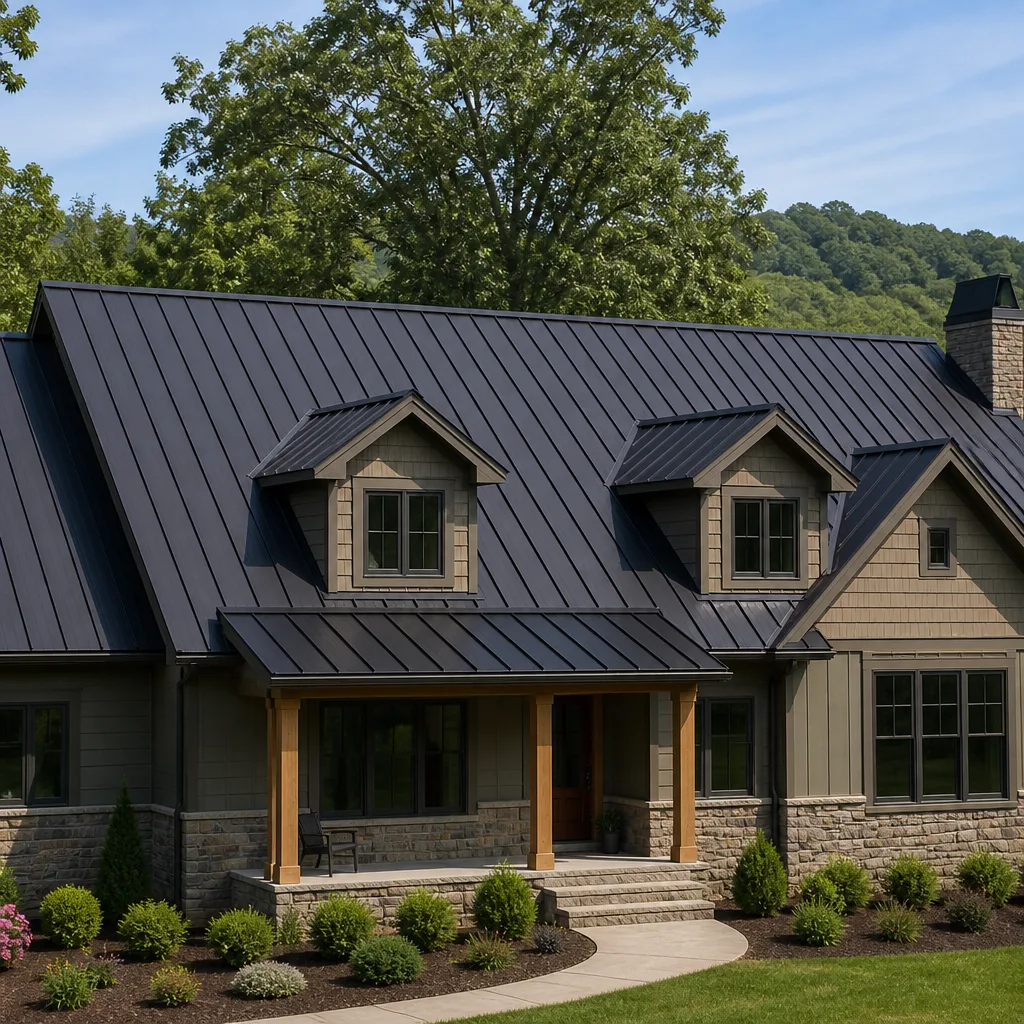 Metal roofing
 GAF
GAF Owens Corning
 Flat & low-slope
Free roof inspection with deck photos before we talk money - GAF and Owens Corning certified installation
GAF Flashing Replacement: The Austin Owner’s Guide
GAF flashing replacement in Austin typically runs $275 to $650 installed, depending on the penetration type and how many layers of roofing we have to work through. We keep common GAF-compatible flashing sizes on the truck, so most single-penetration swaps happen same-visit once we’re on site. Most Austin homeowners find out their flashing failed the way you’d expect: a brown stain on the ceiling after a hard rain, or water beading around a skylight during one of those March downpours that seems to come at the wall sideways.
Flashing is the metal or synthetic material that seals the joints where your roof meets something vertical, like a chimney, vent pipe, skylight, or wall. When it fails, water gets in. Not a lot at first. Just enough to rot decking and ruin drywall before you ever see the evidence. On GAF systems specifically, flashing failure usually isn’t the membrane itself. It’s the sealant bond between the flashing and the surrounding shingles, or corrosion at the base where standing water sits longer than it should.
Which GAF Models This Applies To
GAF flashing components are generally matched to the roof system, not one specific shingle line. That means the same flashing used on Timberline HDZ is often used on Timberline UHDZ, Camelot II, and Glenwood, as long as the roof pitch and decking are compatible. The thing to watch for is the difference between standard pipe boots and GAF’s Master Flow line, which includes taller collars for high-wind zones. Austin sits in a wind region where those taller collars matter more than most people think, especially on homes near the Balcones Escarpment or anywhere west of MoPac where gusts come down the Hill Country slopes.
We’re an independent roofing company. We install GAF products and stock GAF-compatible flashing, but we’re not affiliated with the manufacturer and don’t speak for them. When replacement flashing comes up, we walk you through the OEM versus quality aftermarket choice plainly. GAF-branded flashing runs a few dollars more per piece and keeps your system warranty paperwork tidy. Quality aftermarket flashing, sized correctly and installed with the right sealant, performs just as well in our experience, and we’ve put plenty of it on roofs across Austin with no callbacks. The honest answer is that your roof doesn’t care what logo is stamped on the metal. It cares that the collar is the right height, the base is the right width for the pipe, and the sealant is applied like it’s supposed to be.
Identifying your existing flashing takes about sixty seconds if you can safely see it. Pipe boot flashing will have a rubber collar that stretches around the pipe; the size is usually molded into the rubber. Chimney and wall flashing is sheet metal, and the thickness matters more than the brand, 26-gauge is standard for residential work in this area. Skylight flashing is model-specific, which is the one place we always insist on the manufacturer’s part or a certified equivalent.
Styles & brands we work with
Signs Your GAF Flashing Replacement Is Failing
- Water stains on the ceiling or walls directly below a vent pipe, chimney, or skylight. This is the classic first sign. Water follows the pipe or framing down, so the stain usually appears within a few feet of the penetration. By the time you see it, the flashing has been leaking for a while.
- Granules from the shingles collecting in the gutter near a pipe or chimney. When flashing fails, water runs under the shingles around it and breaks down the asphalt. Granules wash down the roof and settle in the gutter directly below the penetration. It’s a detail most people miss, but it’s one of the earliest telltales we look for.
- Daylight visible through the attic around a vent pipe. If you can see light coming in around the pipe where it penetrates the roof deck, the flashing collar is torn or pulled away. In an Austin attic in summer, that gap is also letting in the same humidity that makes the whole house work harder.
- Caulk or sealant around the flashing base that’s cracked, peeling, or shrinking away. The Texas sun is hard on sealant. UV exposure breaks it down in three to five years in our climate, faster on south-facing and west-facing roof planes. Once the sealant is gone, the flashing is just sitting there, and water finds its way underneath.
- Rust or corrosion at the base of the flashing. Metal flashing lasts a long time, but not forever. Standing water, which happens when debris piles up behind a chimney or when gutters are neglected, accelerates rust. Once corrosion eats through the metal, the flashing is done and needs replacement, not patching.
See the difference
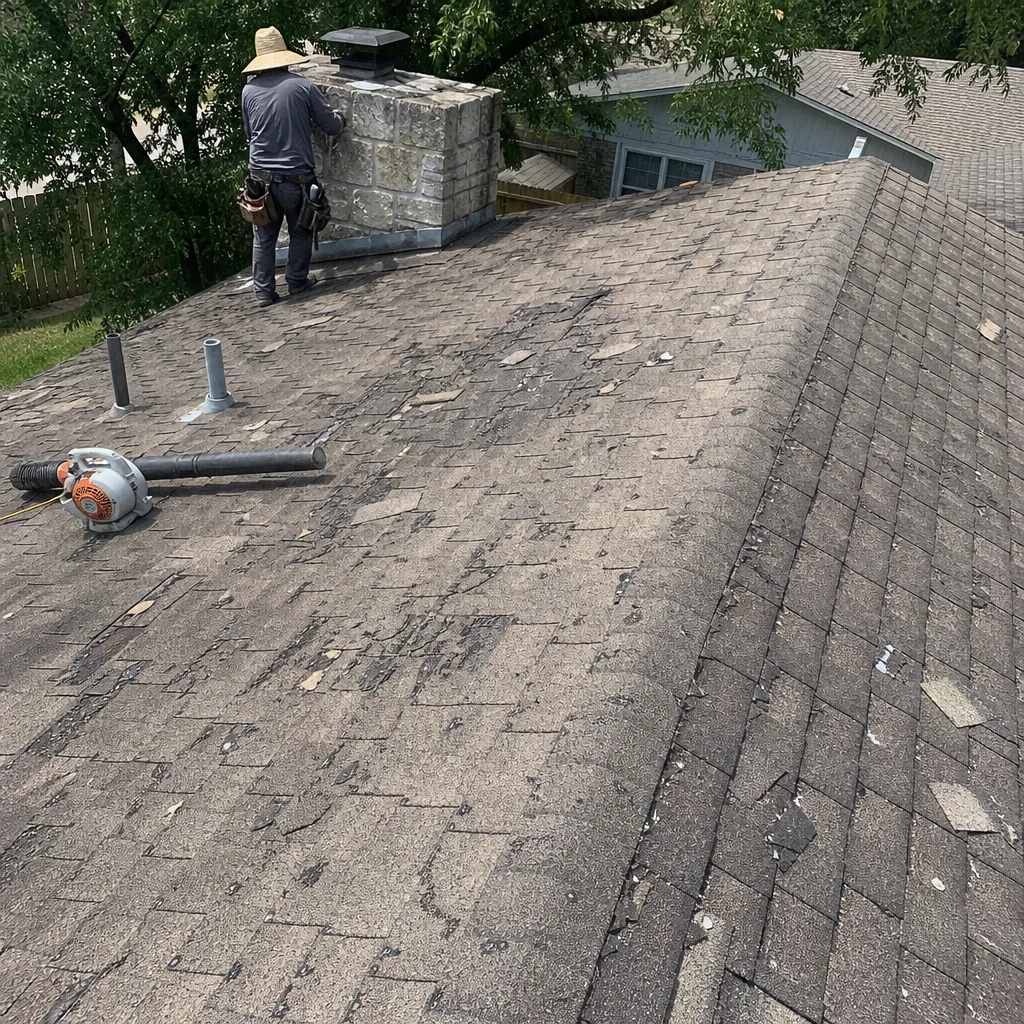 Before
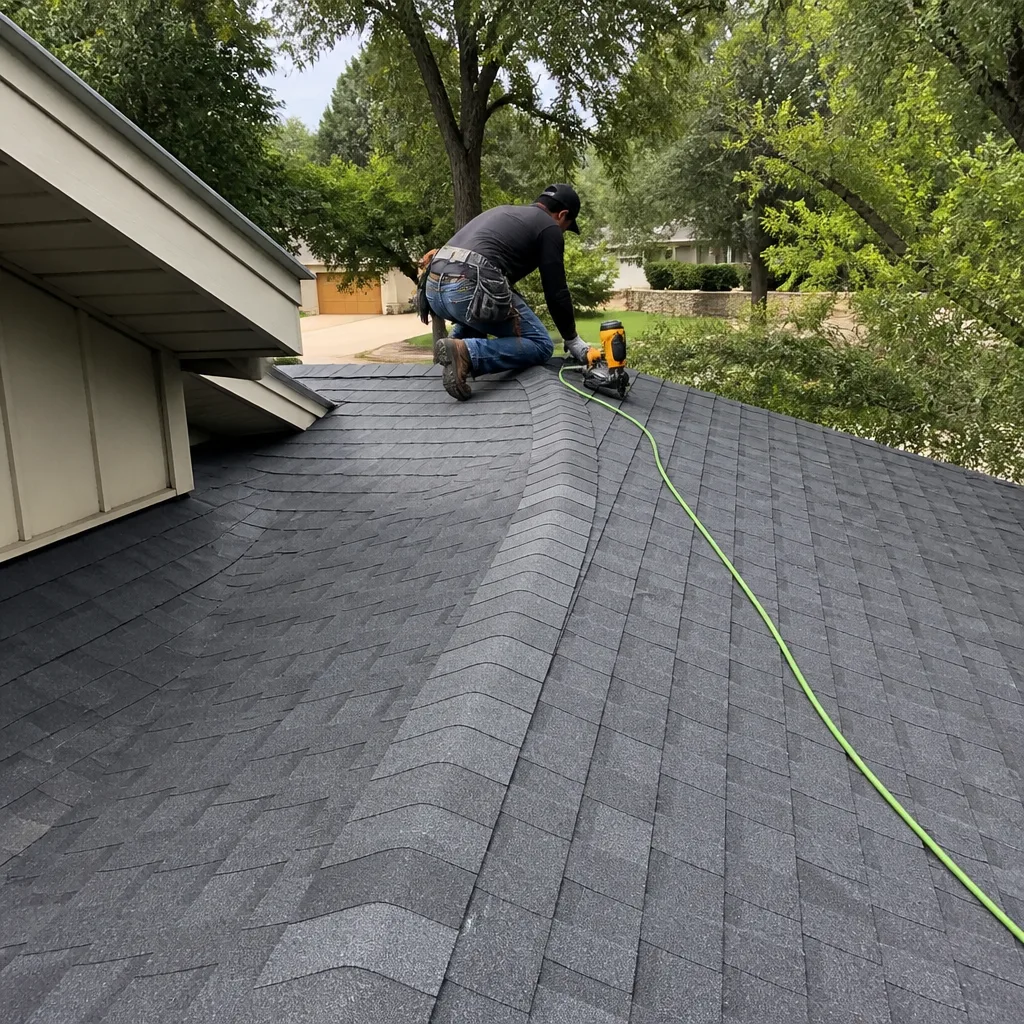 After
After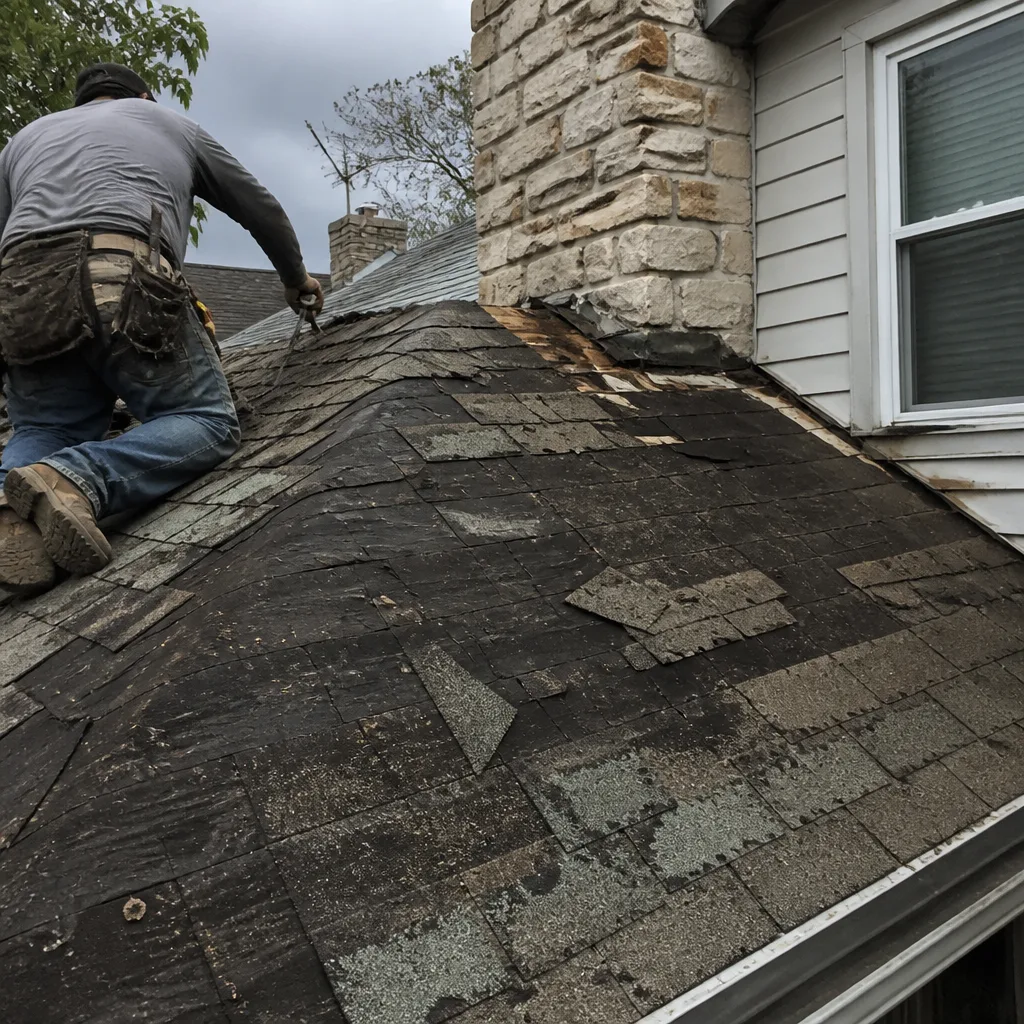 Before
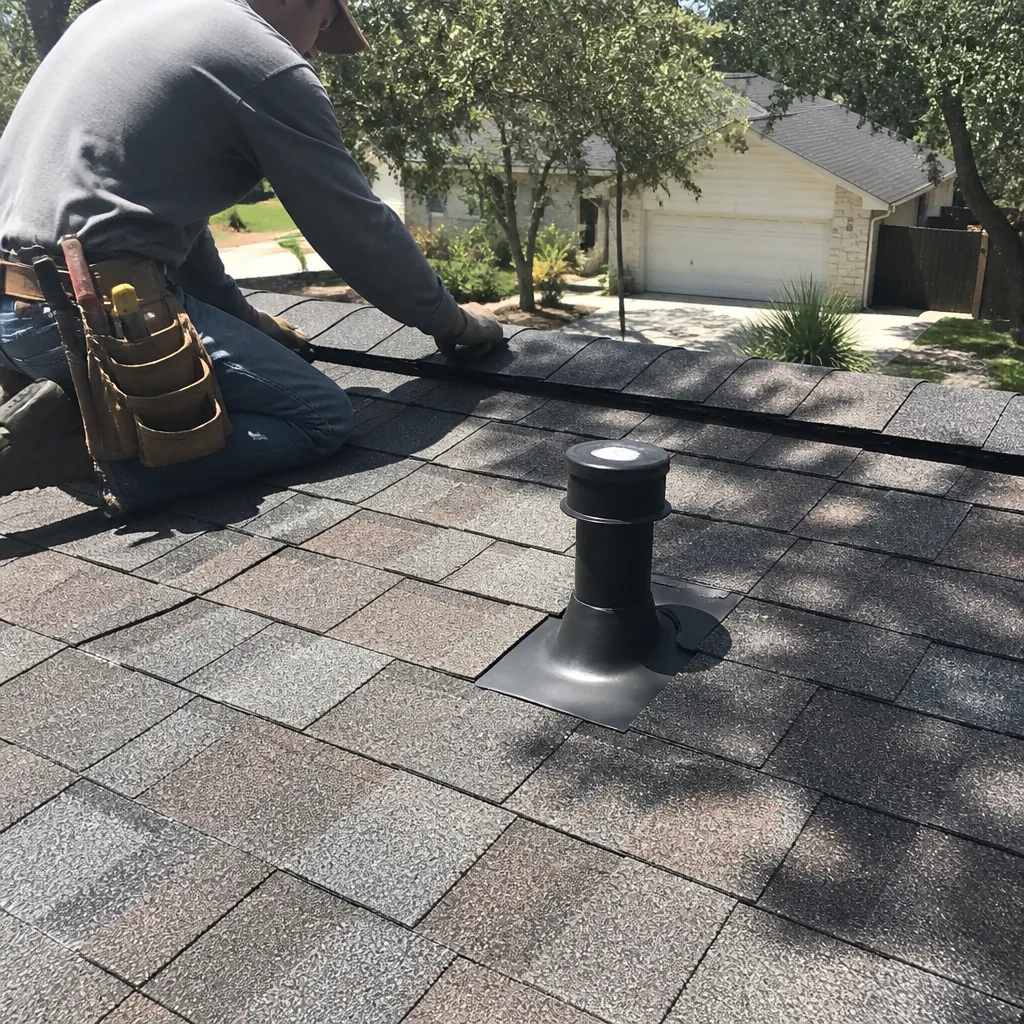 After
After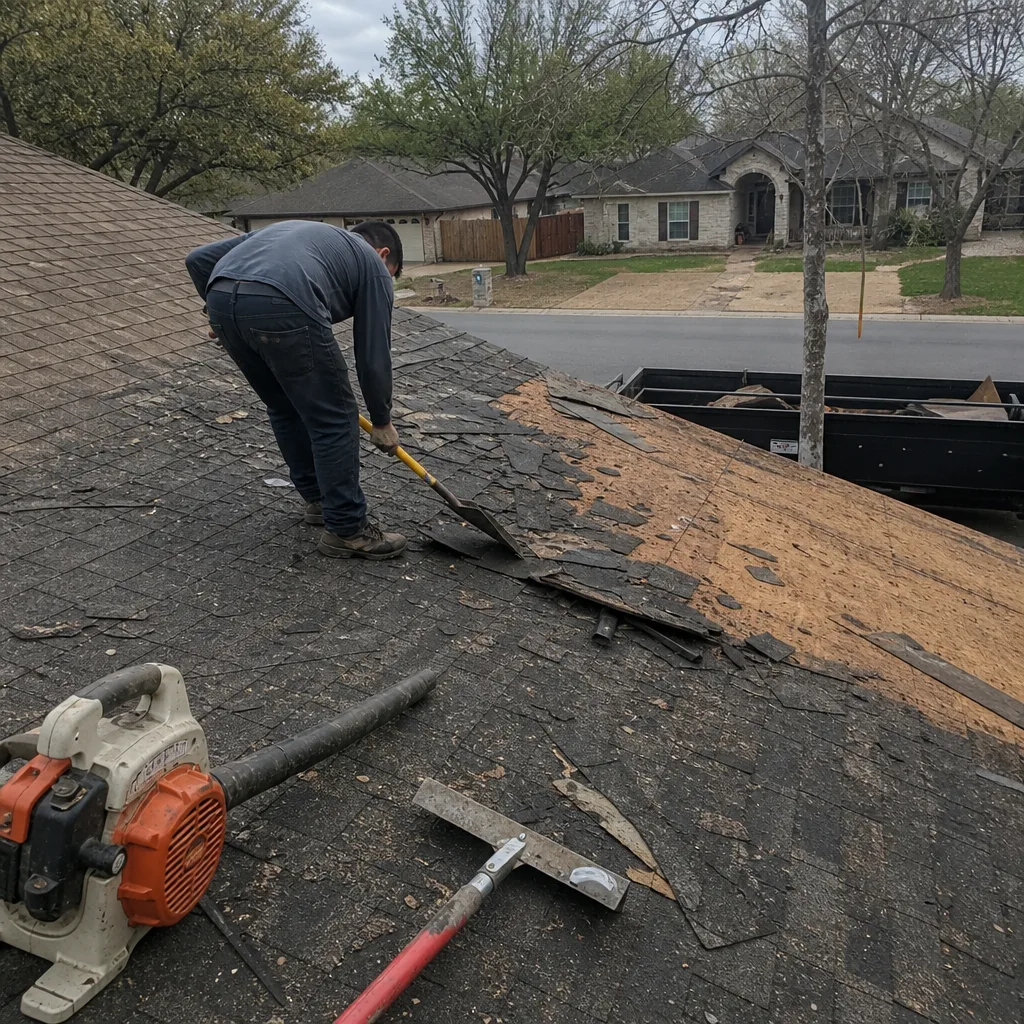 Before
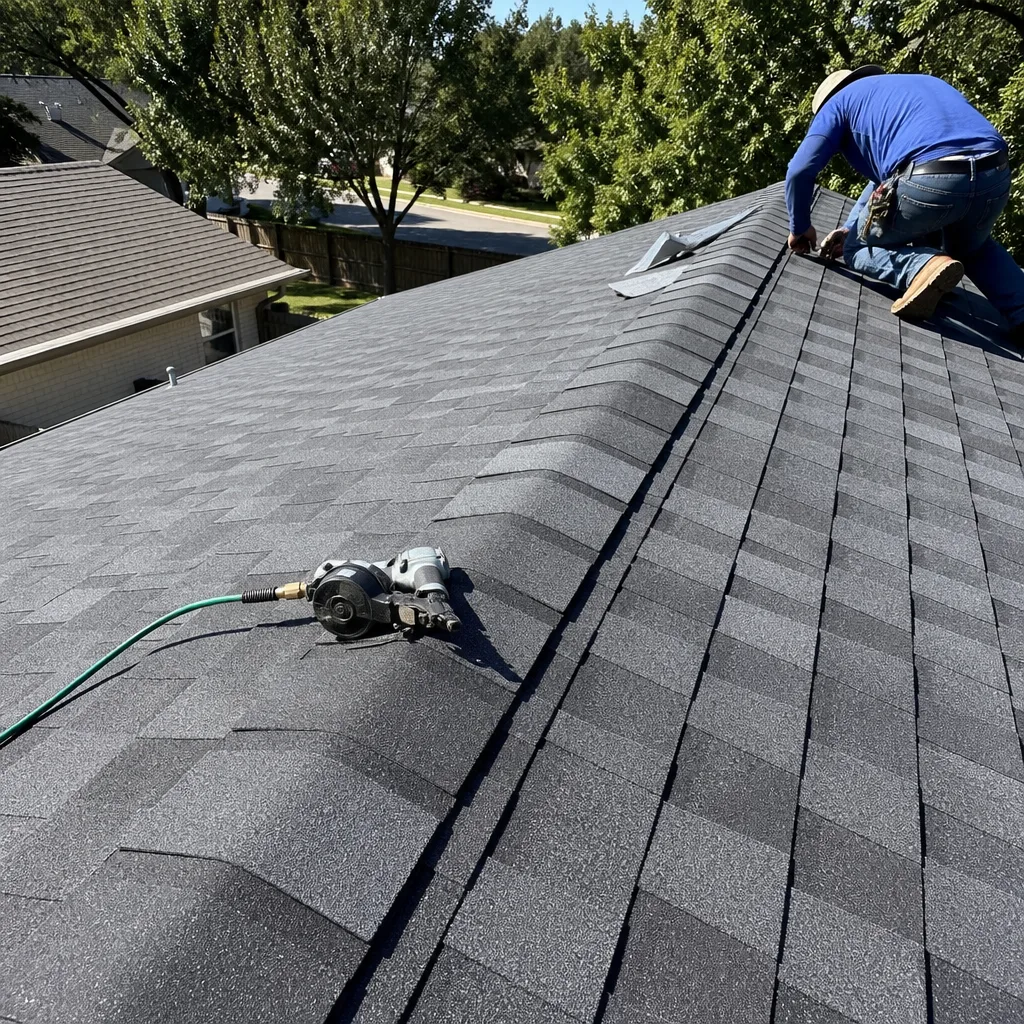 After
AfterReplacement Cost & What’s Included
Here’s the price picture for GAF flashing replacement in Austin. Most pipe boot flashing replacements run $275 to $425 installed. Chimney flashing is the more involved job and typically lands between $450 and $650, sometimes more if the masonry needs re-pointing first. Skylight flashing is the one to brace for: $375 to $600 installed, and that’s before we touch the skylight itself.
| Flashing Type | Installed Price Range (Austin) | Typical Job Time |
|---|---|---|
| Pipe boot (single penetration) | $275 – $425 | 1 – 2 hours |
| Chimney flashing (standard size) | $450 – $650 | 3 – 5 hours |
| Skylight flashing (per unit) | $375 – $600 | 2 – 4 hours |
| Wall / step flashing (per section) | $350 – $550 | 2 – 4 hours |
Every quote we write includes the flashing, sealant, any shingles that need to be lifted and re-set, labor, and cleanup. The written price you get before work starts is the price you pay when the job is done. No change orders because we “found something else.” If we find something else, we talk to you about it before doing a single thing, and you decide. The work is covered by our 365-Day Done Right Promise, and we put that in writing before the crew leaves the property.
DIY or Call Us?
Replacing flashing on a low-slope single-story roof is something a capable homeowner can do with a pry bar, roofing nails, and the right sealant. But here’s the part most YouTube videos don’t show: the shingles around the flashing have to be lifted carefully without tearing, the old sealant has to be removed completely, and if the decking underneath has already started to rot, you’re going to be looking at a repair that goes way beyond a $40 pipe boot. On steep roofs, second-story roofs, or any roof in Austin in July and August, the risk of a fall is real, and a slip on a metal roof or weathered cedar shake is not something to learn about the hard way.
If you want to inspect your flashing from the ground or from a ladder you can tie off, go ahead. Look for cracked sealant, rust, and lifted shingles. But if you see any of the signs above, call us at (254) 540-7345. We’ll come out, tell you what we see, and hand you a written price before any work starts. Tell me the roof, I’ll tell you the price – no surprises once we’re up there.
FAQs
In Austin’s climate, flashing lasts 20 to 30 years on average, but the sealant bond around it typically fails in 5 to 10 years. The metal itself holds up; the sealant and rubber collars break down first under UV exposure and thermal expansion. If your roof is approaching 15 years old in this area, it’s worth having the flashing inspected even if nothing looks wrong from the ground.
Small sealant gaps can sometimes be re-sealed, but by the time flashing is leaking enough to show a stain indoors, the underlying seal has usually failed in multiple places. Patching works as a short-term stopgap occasionally. Replacement is the repair that lasts. Call (254) 540-7345 and we’ll tell you which one applies to your roof after we look at it.
Most single-penetration flashing replacements are done in one to two hours. Chimney and skylight flashing runs half a day. Either way, the goal is the same: water stays out, and we leave the property cleaner than we found it.
Yes. We carry common GAF-compatible pipe boot sizes, step flashing, and sealant on the truck, plus equivalent parts from Owens Corning and CertainTeed. That means most flashing replacements in Austin happen same-visit, not “we’ll order it and come back next week.”
When you’re dealing with a leak, every day of waiting is another day of water working through your decking. Call us at (254) 540-7345 for a free estimate. You’ll get a written price, an honest assessment, and a live person on the phone. That’s the way it should work.
Written by Greg Holloway, Owner, Tilehurst Roofing Austin at Tilehurst Roofing Austin, serving Austin and nearby areas.