
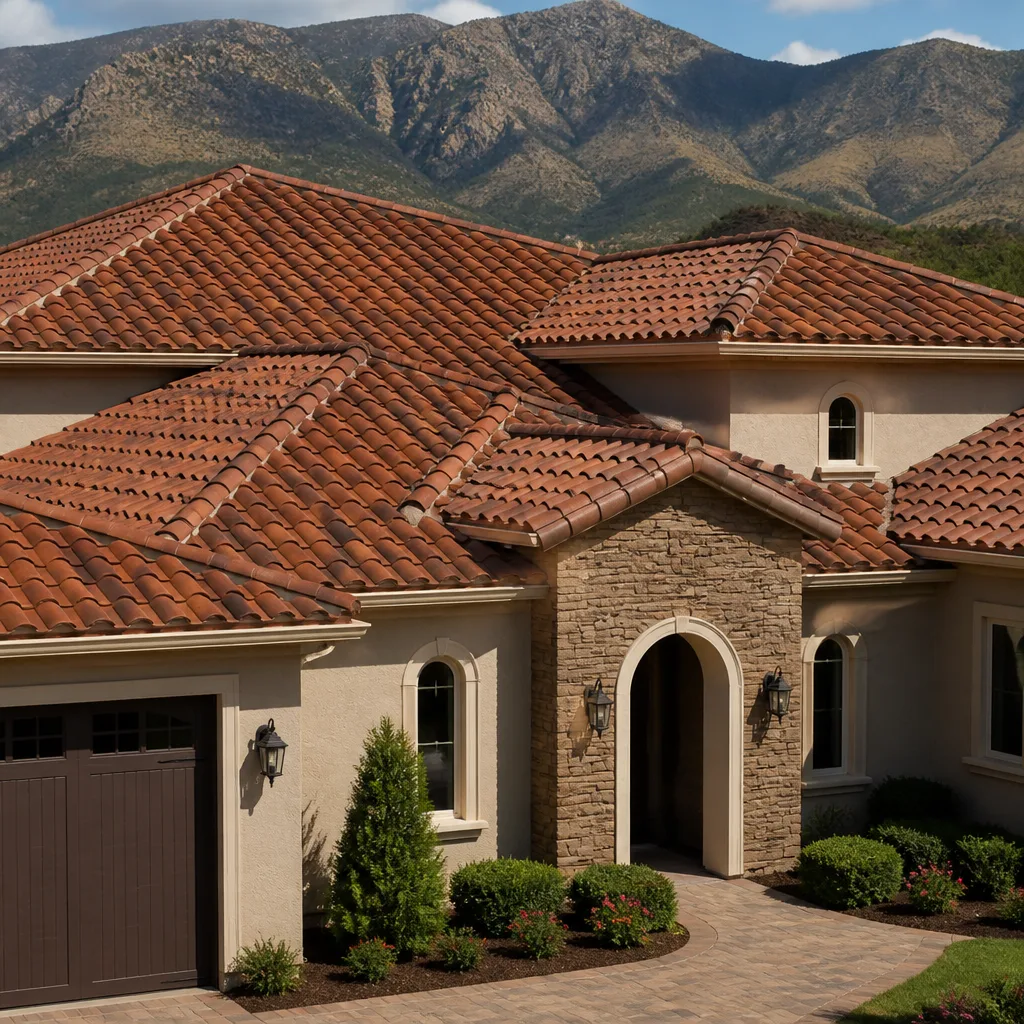
 Tile roofing
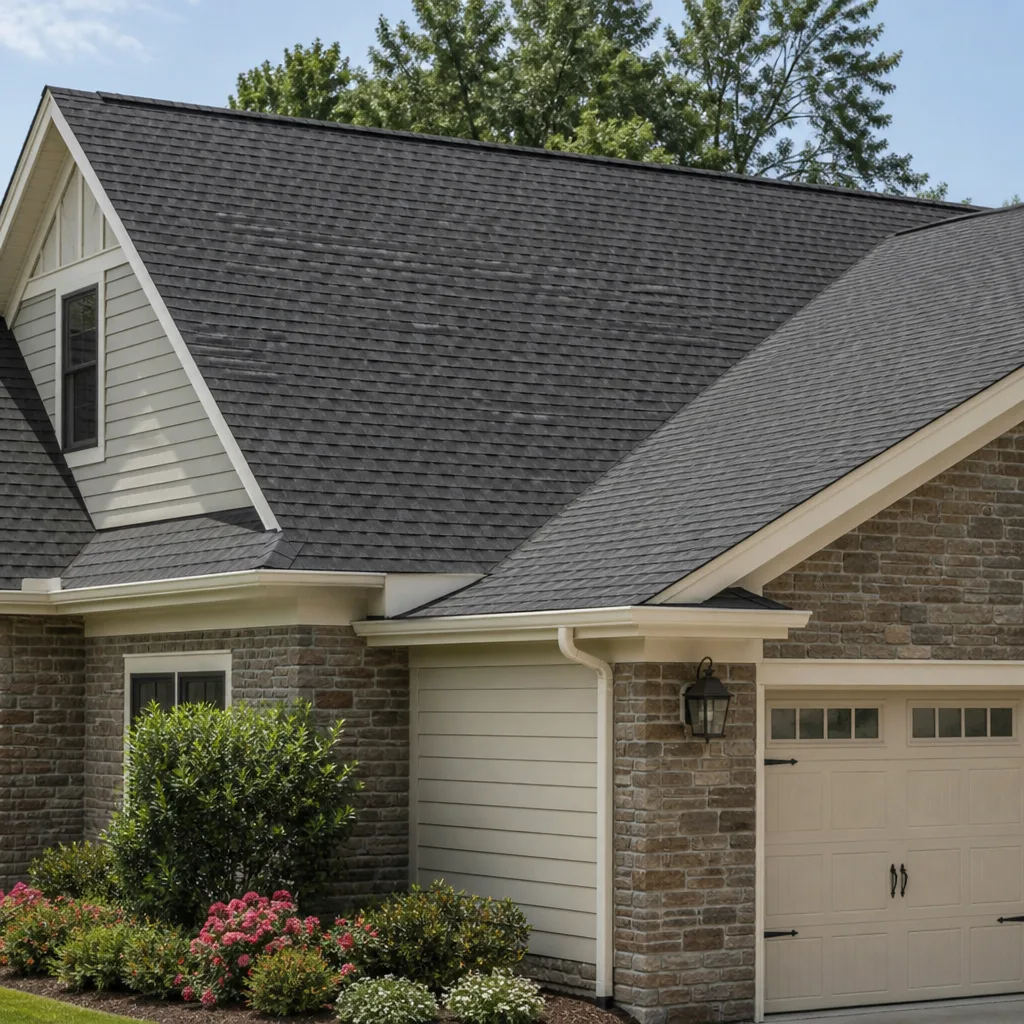 Architectural shingles
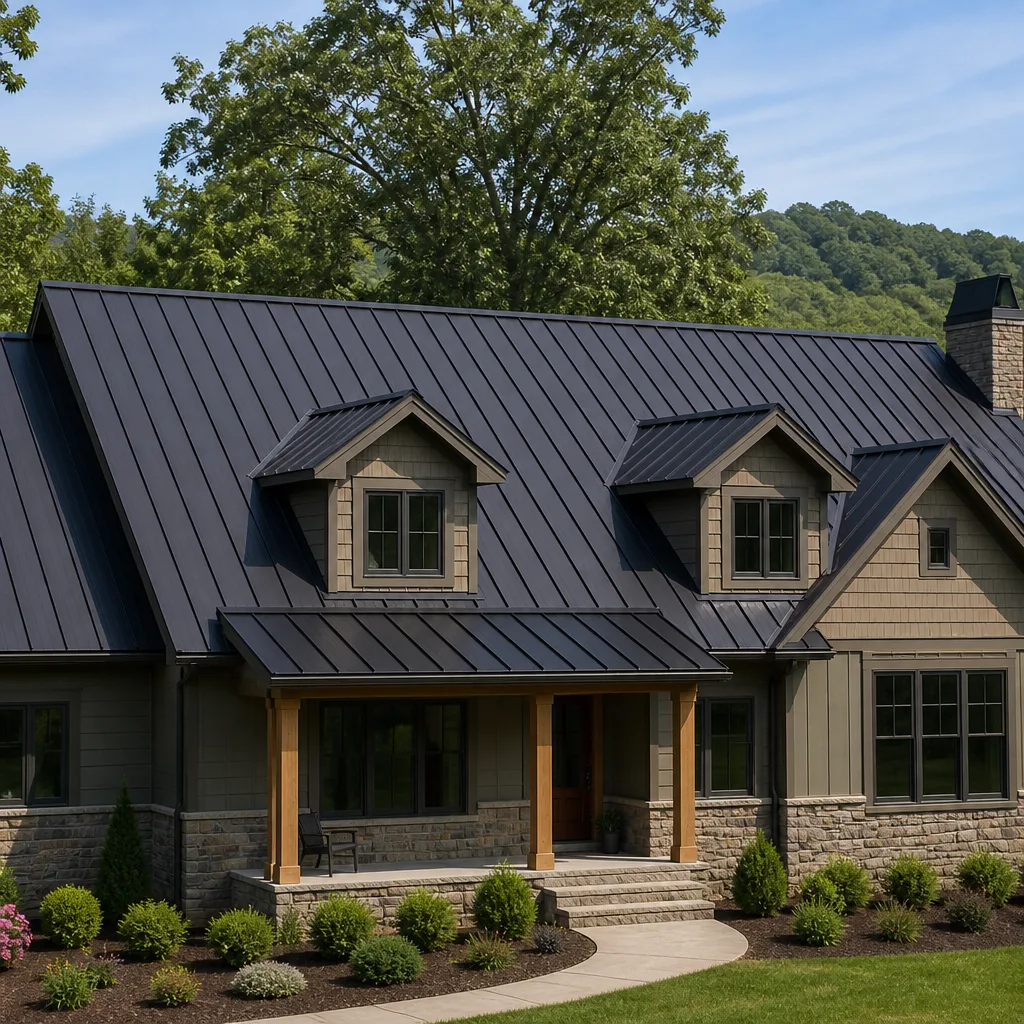 Metal roofing
 GAF
GAF Owens Corning
 Flat & low-slope
Free roof inspection with deck photos before we talk money - GAF and Owens Corning certified installation
CertainTeed Ridge Vent Installation: The Austin Owner’s Guide
Tilehurst Roofing Austin stocks and installs CertainTeed ridge vent systems, and a full ridge vent replacement on a typical Austin single-family home runs $650 to $1,400 installed depending on roof length and access. We usually complete the job in one day, and we keep CertainTeed’s standard roll-out ridge vents plus the compatible end caps and connectors on our trucks. Most homeowners discover their ridge vent has failed the hard way: a mystery attic spike in July, shingle granules in the gutter, or a roof that simply won’t cool down no matter how high the AC runs.
If you’re reading this with a CertainTeed product already on the roof and something has gone wrong, here’s the straight picture: ridge vents are the least mechanically complex part of a roof, but they get hammered by Texas sun and wind more than almost any other component. When they fail, the fix is rarely a patch. It’s a clean replacement, done once, with the right product matched to what’s already up there.
Which CertainTeed Models This Applies To
We work with the full CertainTeed ridge vent line you’re likely to see on Austin homes: the ShingleVent II series, the Filtered Ridge Vent, and the Rigid Roll Vent. Each one has a different profile and fastening pattern, and they are not interchangeable with one another. The ShingleVent II is a roll-out product that comes in 20-foot sections and sits low against the roofline. The Filtered Ridge Vent adds a woven filter fabric that keeps wind-driven rain and insect entry down while still letting heat escape. The Rigid Roll Vent is a semi-rigid segmented design that handles curved or unusual ridge lines better than the flat rolls.
The compatibility gotcha we see most often in Austin: a homeowner buys a replacement section at a big-box store, but the new piece doesn’t sit flush because the original was installed over a specific width of cut slot. CertainTeed’s ridge vents are engineered for specific slot widths, usually 2 to 2.5 inches, and if your roof deck was cut too wide or too narrow during the original install, the replacement will never seat properly on a DIY swap. We measure the existing slot, confirm the vent profile, and match it before we cut anything. As an independent installer, we’re not affiliated with CertainTeed, but we install their products daily and keep OEM parts, not generic knockoffs, for these systems.
Styles & brands we work with
Signs Your CertainTeed Ridge Vent Installation Is Failing
- Attic temperature climbs even with soffit vents clear. A ridge vent’s whole job is passive air exchange. When the vent is crushed, blocked, or the cap shingles have sealed shut over the exhaust ports, the attic stops breathing. In Austin’s heat that means a 130-degree attic instead of a 110-degree one, and your AC eats the difference.
- Shingle granules are accumulating in the gutters near the ridge. CertainTeed ridge cap shingles take the brunt of UV exposure at the peak. Once they start shedding granules heavily, the vent underneath is exposed to wind and debris, and the seal that kept water out is compromised.
- Water staining appears on ceiling drywall near interior peak walls. Ridge vents fail at the cap shingle seal, the connector joints, or the end caps. Austin storms push rain nearly sideways, and a lifted end cap will funnel water straight through the slot cut in the decking.
- You can see daylight through the ends of the vent. Properly installed end caps should be tight and visually clean. Gaps mean the vent is no longer doing its job as an exhaust port; it’s become a direct opening for driven rain and embers.
- The vent mat is visibly flattened or disintegrating. CertainTeed’s roll-out vents use a plastic-matrix or fiber-matrix core. After a decade of Texas sun and raccoon traffic, that matrix can collapse, pinching the air channel closed. It still looks like a vent from the street, but it’s doing nothing.
One or two of these symptoms means get an inspection. Three or more means plan for replacement before the next heavy rain cycle. Ridge vents don’t recover once the structure is compromised.
See the difference
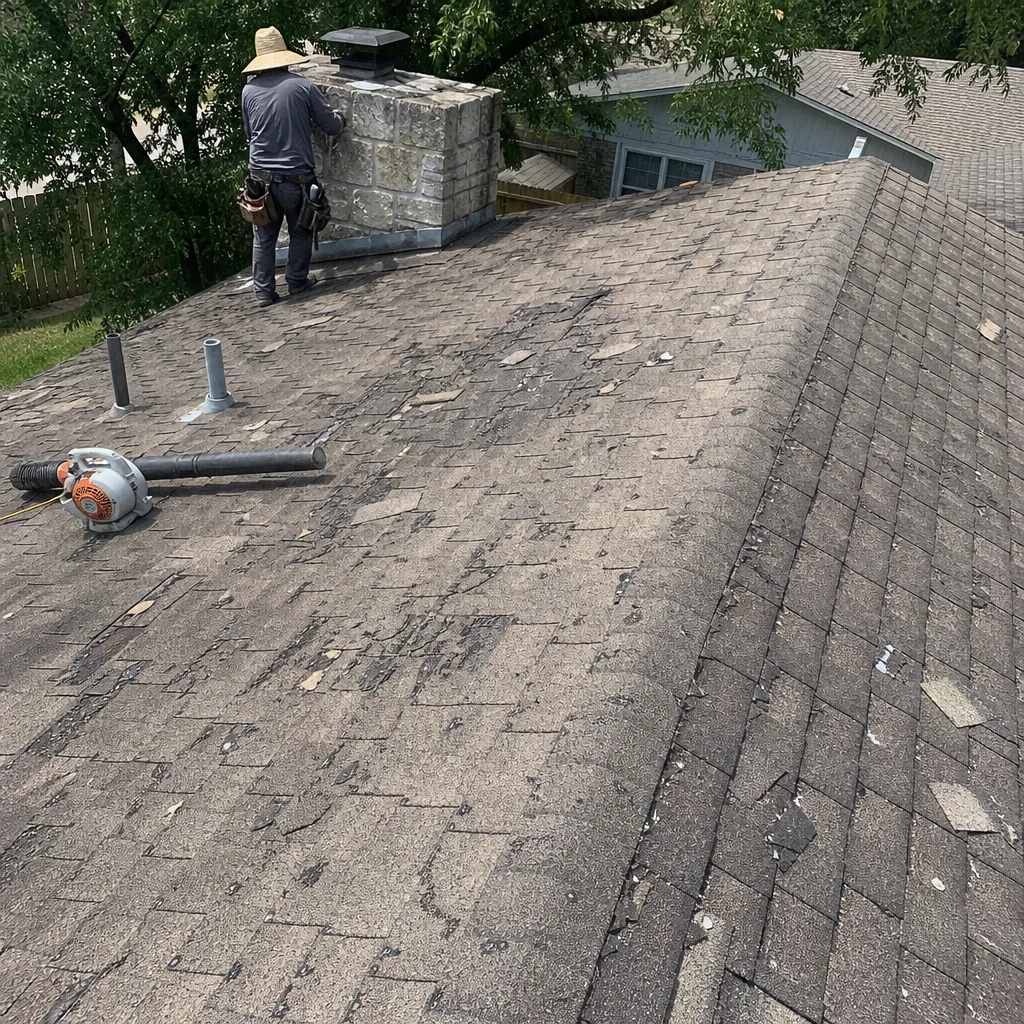 Before
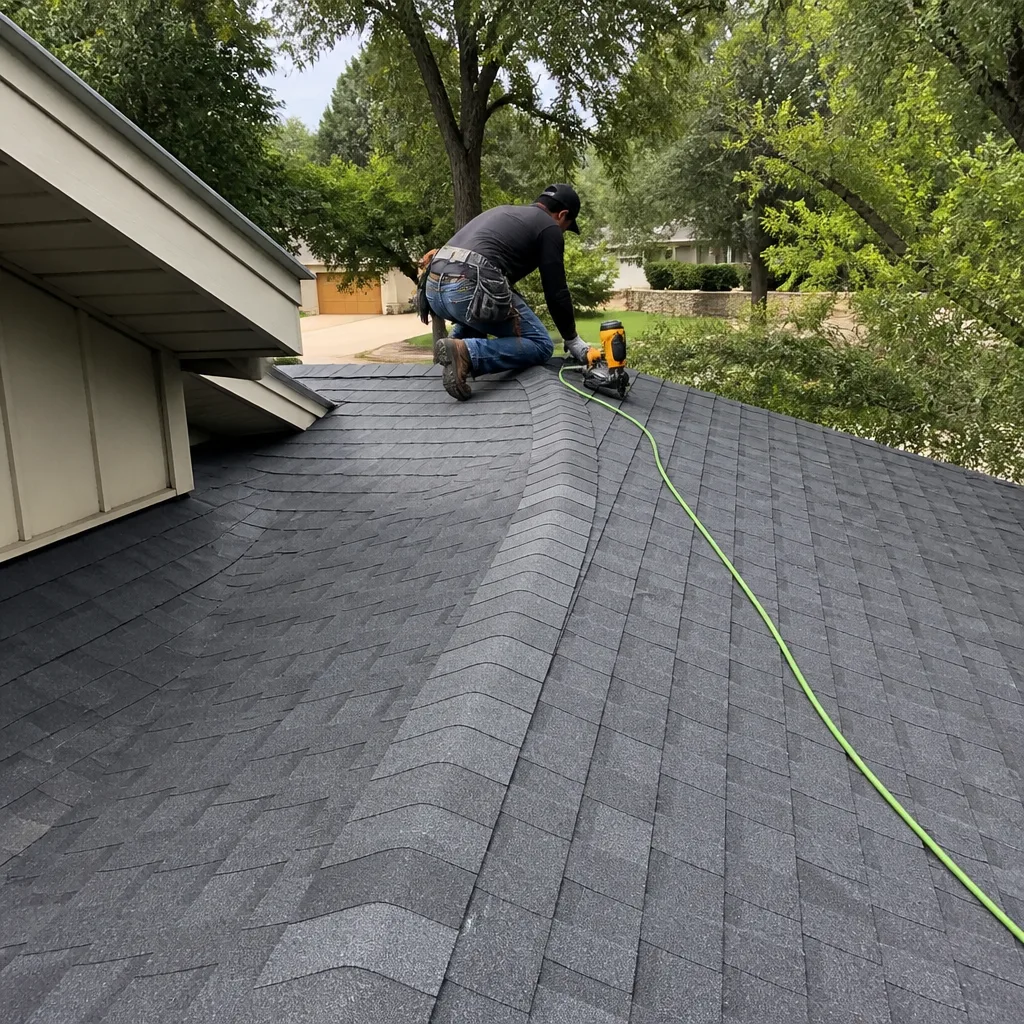 After
After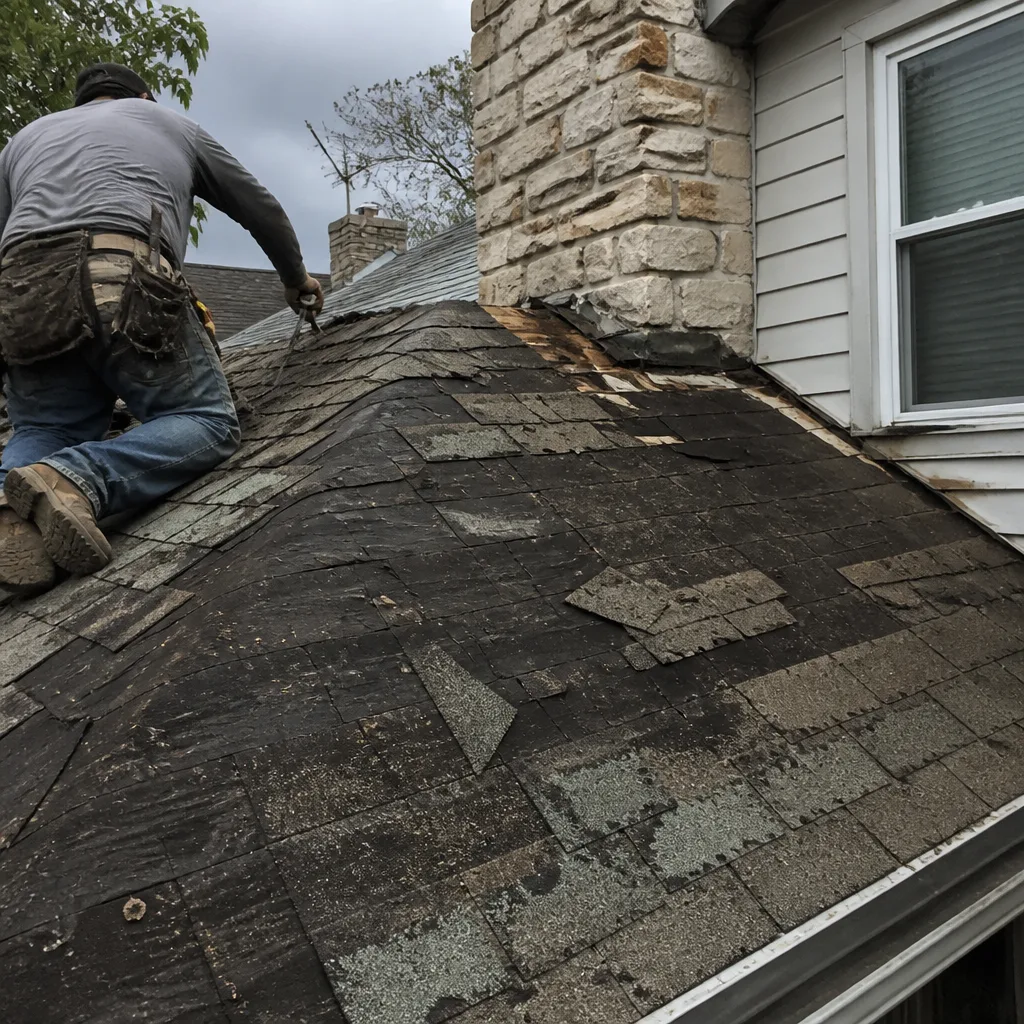 Before
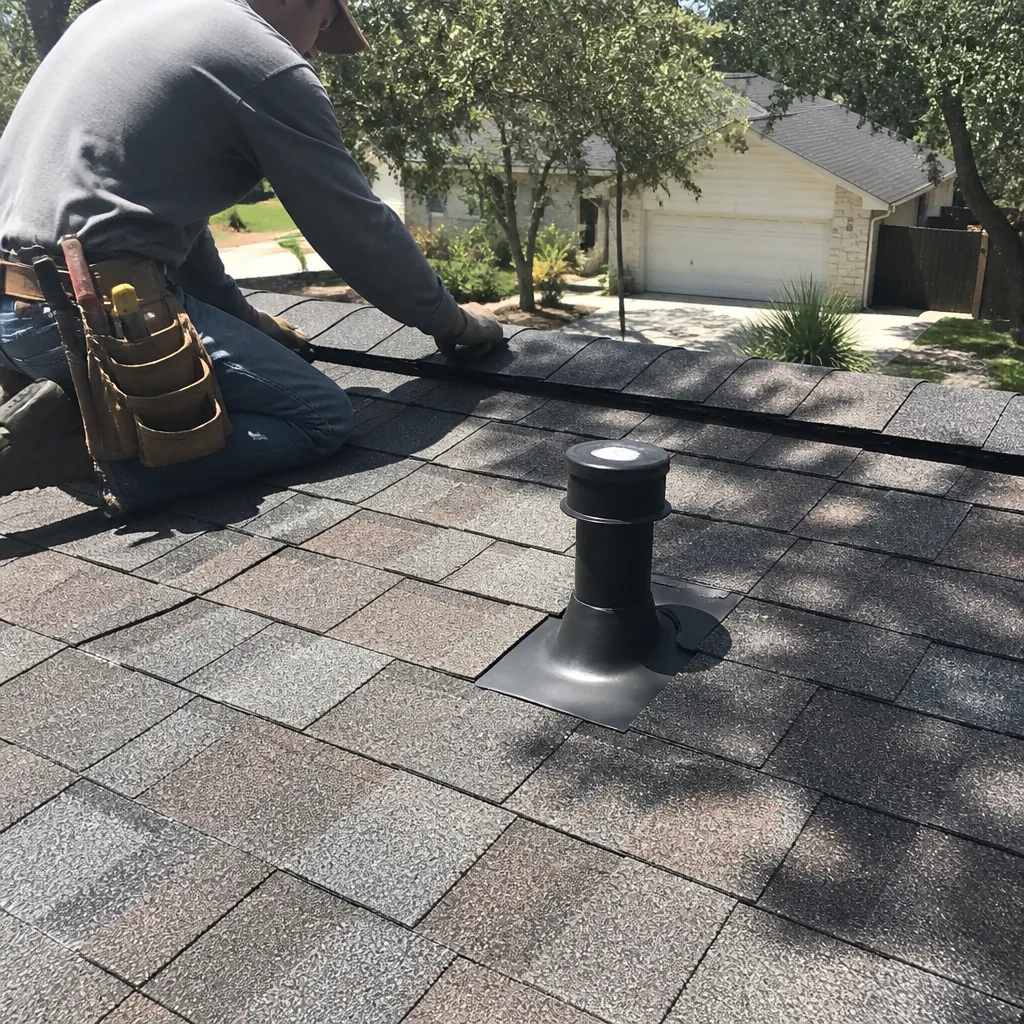 After
After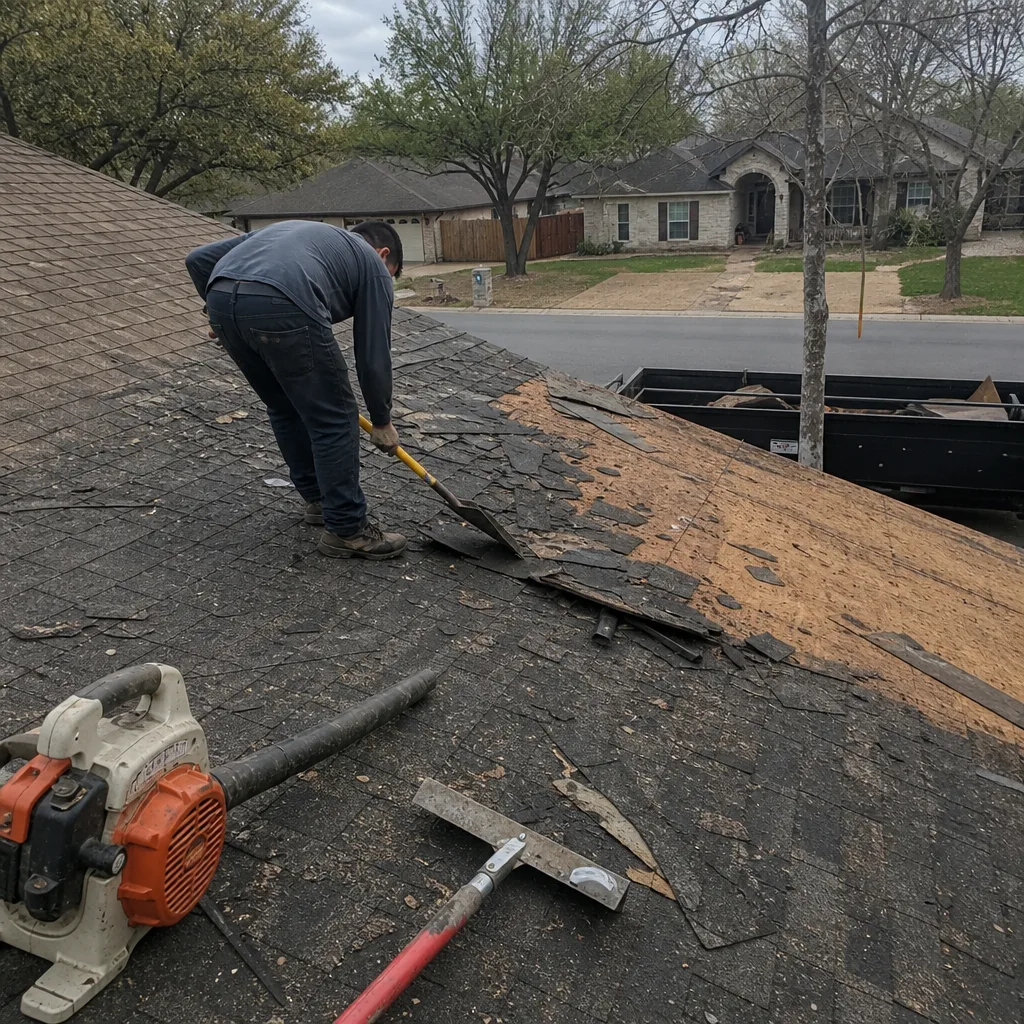 Before
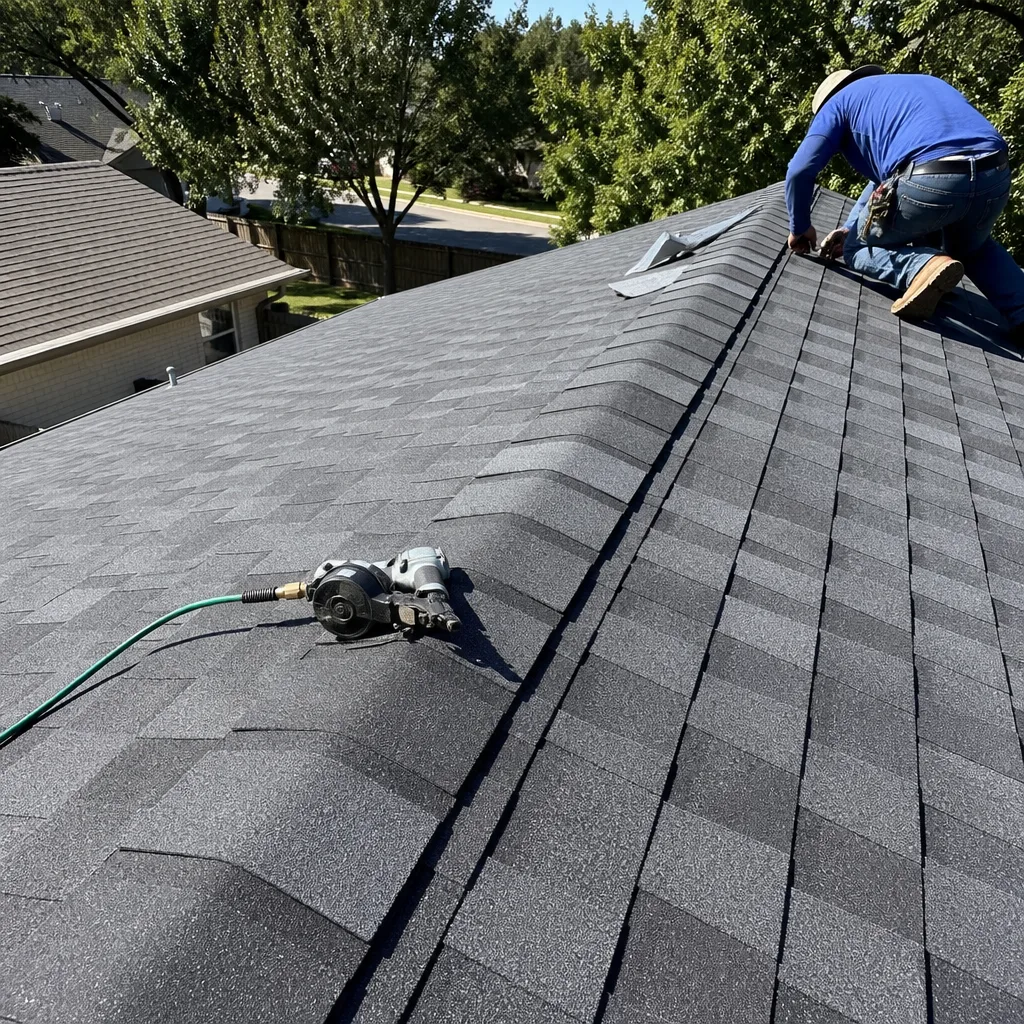 After
AfterReplacement Cost & What’s Included
In Austin, expect to pay between $650 and $1,400 for a complete CertainTeed ridge vent replacement on a standard single-family home. The range comes down to three things: ridge length, roof pitch and access difficulty, and whether the decking at the existing slot needs to be re-cut to match the correct CertainTeed spec. A single-story ranch with an 8/12 pitch and a 40-foot ridge might come in at the low end. A two-story with a 12/12 pitch, a steep backside, and 60 feet of ridge will run higher.
The price we write includes everything: removal of the old vent and cap shingles, inspection and correction of the slot width, installation of the new CertainTeed vent, new cap shingles where needed, end caps, and full cleanup with magnetic nail sweep. We don’t add a trip charge, a fuel surcharge, or a “ridge access fee.” You get a written price before any work starts, and the whole job is covered by our written guarantee. If the vent fails inside the guarantee period, we come back and fix it at no charge under the 365-Day Done Right Promise. That’s not a premium add-on. It’s the floor.
DIY or Call Us?
You can safely inspect a few things from the ground or with a ladder: look for missing cap shingles, check for visible end-cap gaps, and feel whether the vent material is crumbling where you can reach it. That’s the extent of what we’d recommend for a homeowner. The moment the job involves pulling cap shingles, cutting decking, or walking the ridge line, the risk profile changes. A roof isn’t a place to learn on the fly, and a misaligned slot cut is how you turn a $900 vent replacement into a $4,000 decking repair plus a leak in the living room ceiling.
If you want to know whether this is worth doing yourself, call us and describe what you’re seeing. Greg Holloway will give you a straight read on it, no obligation, and if it’s something simple we’ll tell you that too. Our number is (254) 540-7345.
FAQs
A properly installed CertainTeed ridge vent lasts 10 to 15 years in Austin before the cap shingles degrade enough to warrant replacement. The vent mat itself can hold up longer, but the cap shingles are what take the UV punishment, and once they go, the vent underneath gets compromised. If your vent is over a decade old and you’re seeing granule loss, plan for replacement sooner rather than later.
Small end-cap gaps and a few missing cap shingles can be repaired, and we do those spot fixes regularly. But a crushed or deteriorated vent mat cannot be repaired; it has to be replaced. If the mat is collapsed in sections, replacing only part of it leaves a weak joint that fails quickly. Call (254) 540-7345 and we’ll tell you honestly which category your roof falls into.
For a standard Austin home, we complete a full CertainTeed ridge vent replacement in under a day. Most jobs are done in three to five hours from the first ladder to the final magnet sweep. The only common delay is if we find decking damage at the slot that needs to be corrected, which adds time and a material cost we’ll show you before cutting.
We stock CertainTeed ShingleVent II rolls, end caps, and connectors on our trucks, along with compatible products from GAF and Owens Corning when a different profile matches the existing roof better. Most Austin homes get same-trip availability. If your roof needs something unusual, we can usually have it from a local supplier within a day or two.
Written by Greg Holloway, Owner, Tilehurst Roofing Austin at Tilehurst Roofing Austin, serving Austin and nearby areas.