
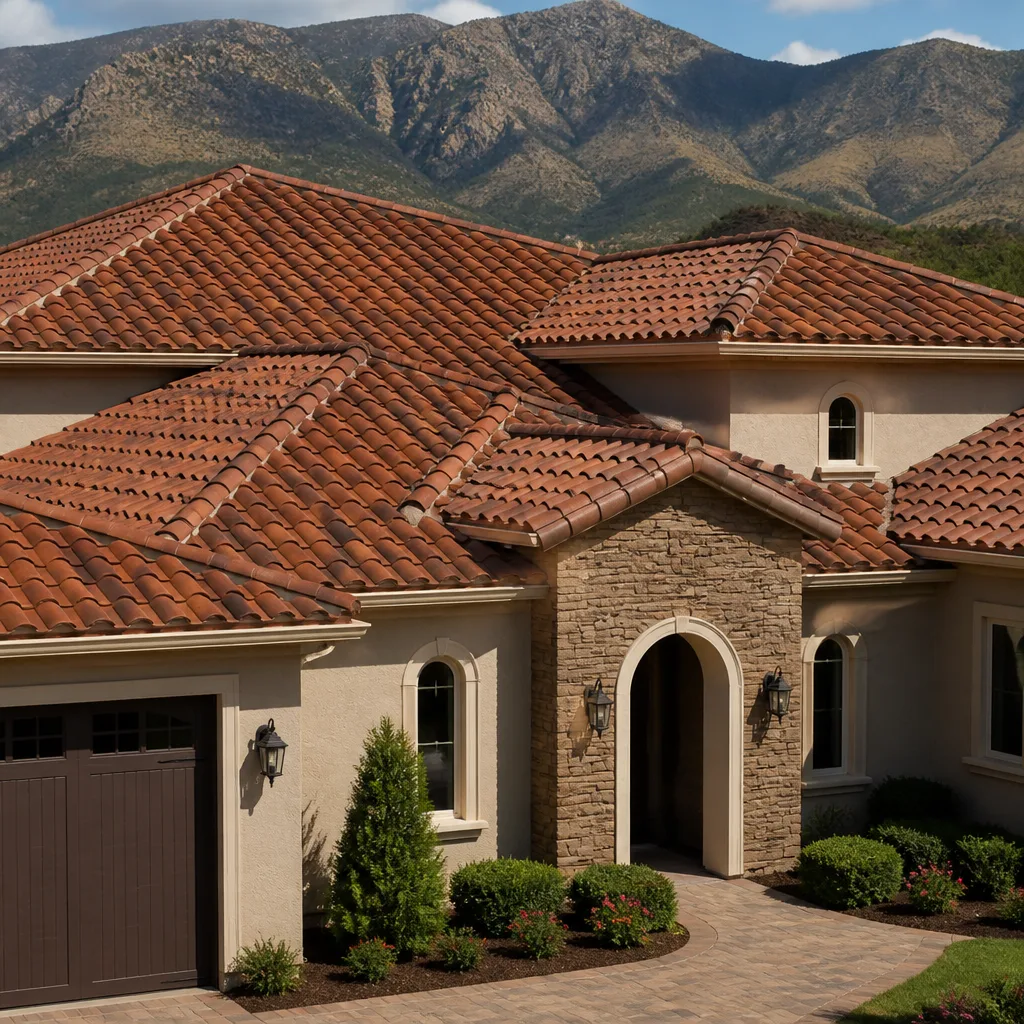
 Tile roofing
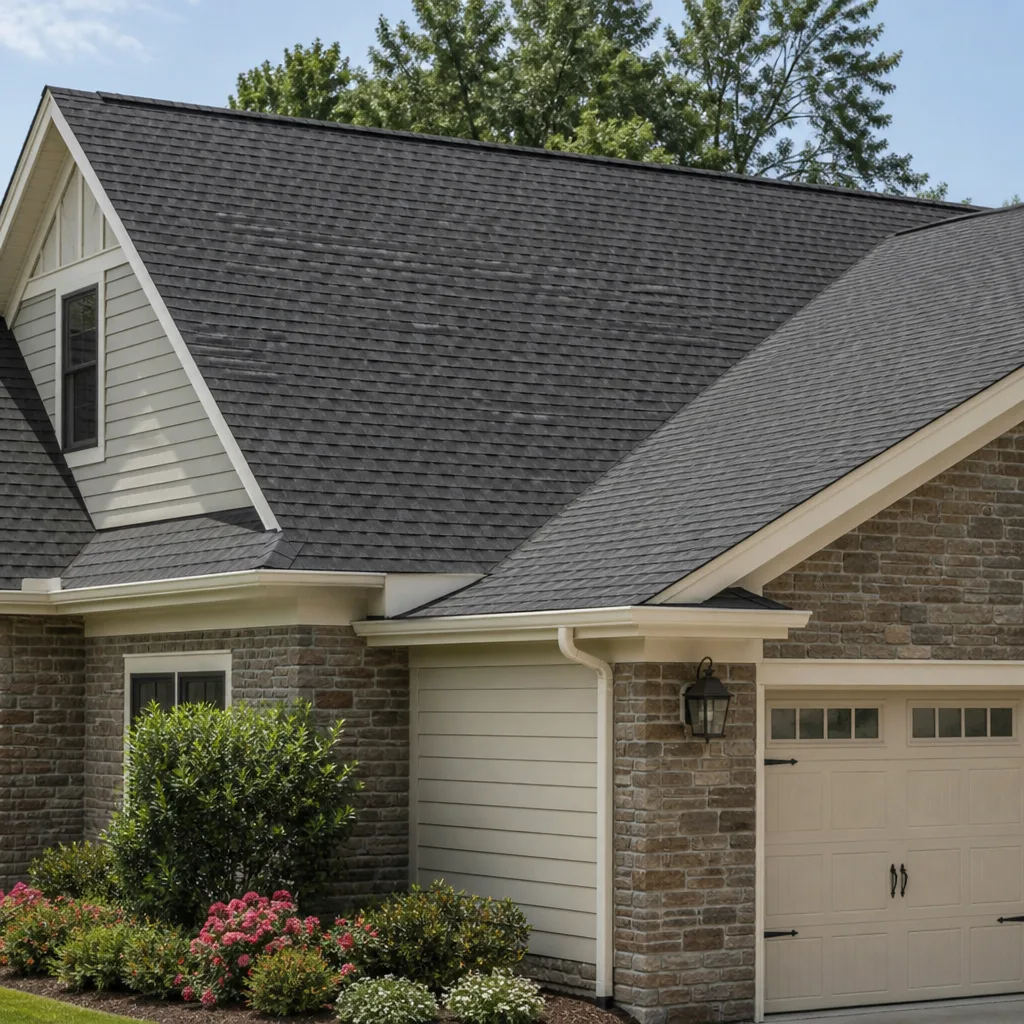 Architectural shingles
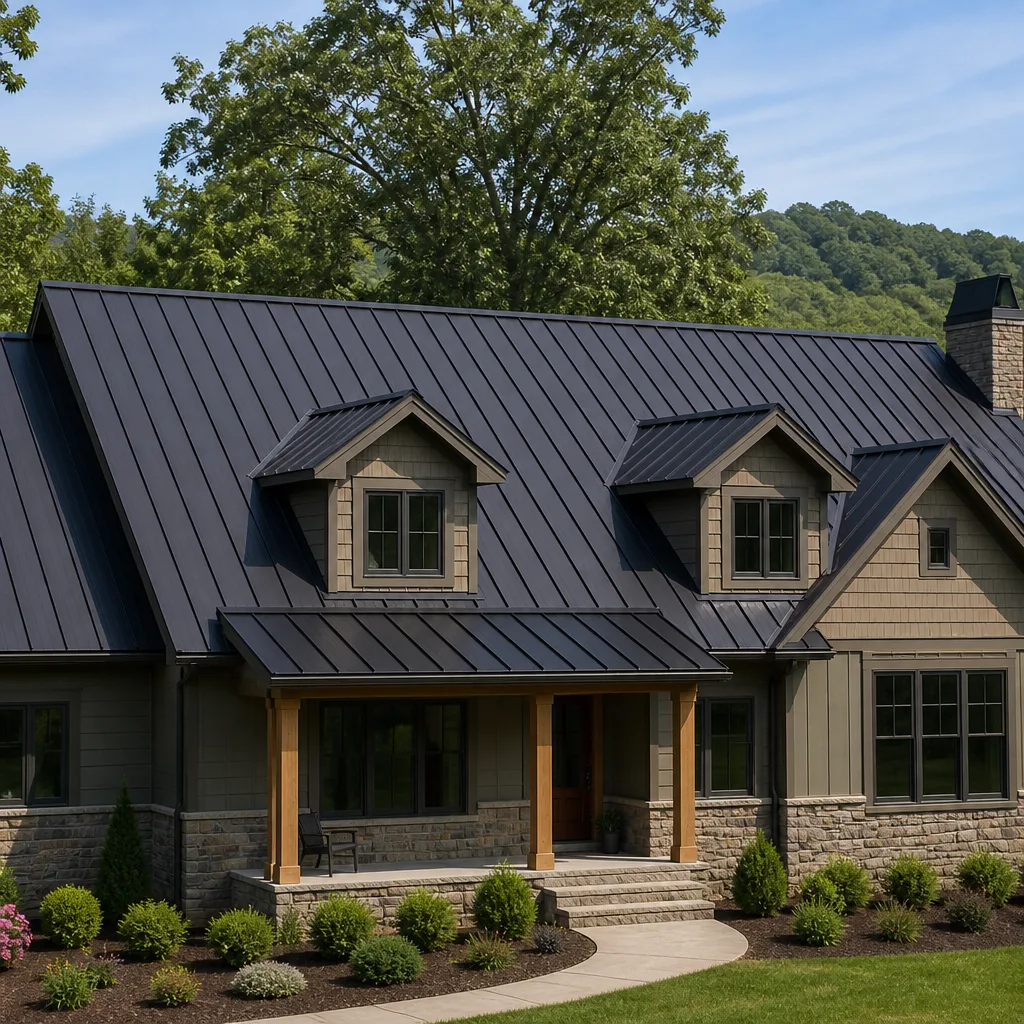 Metal roofing
 GAF
GAF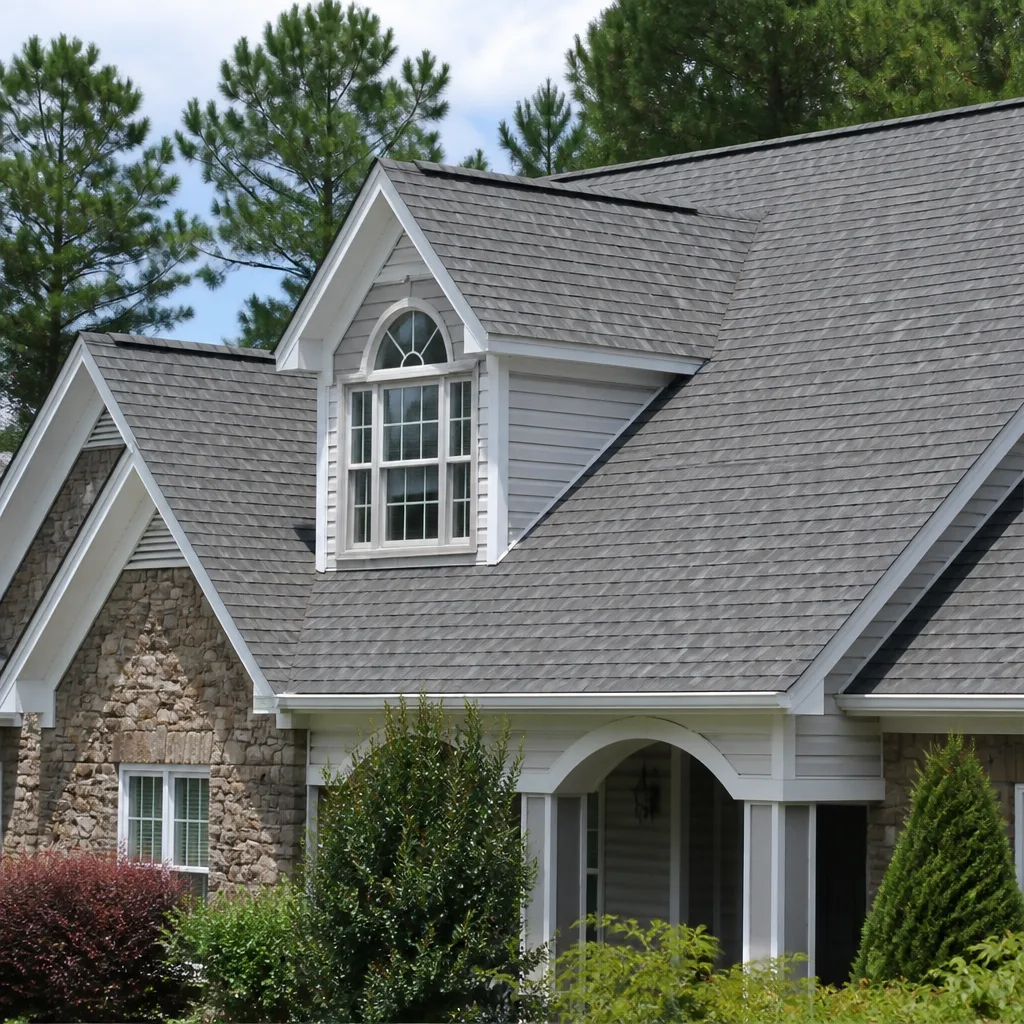 Owens Corning
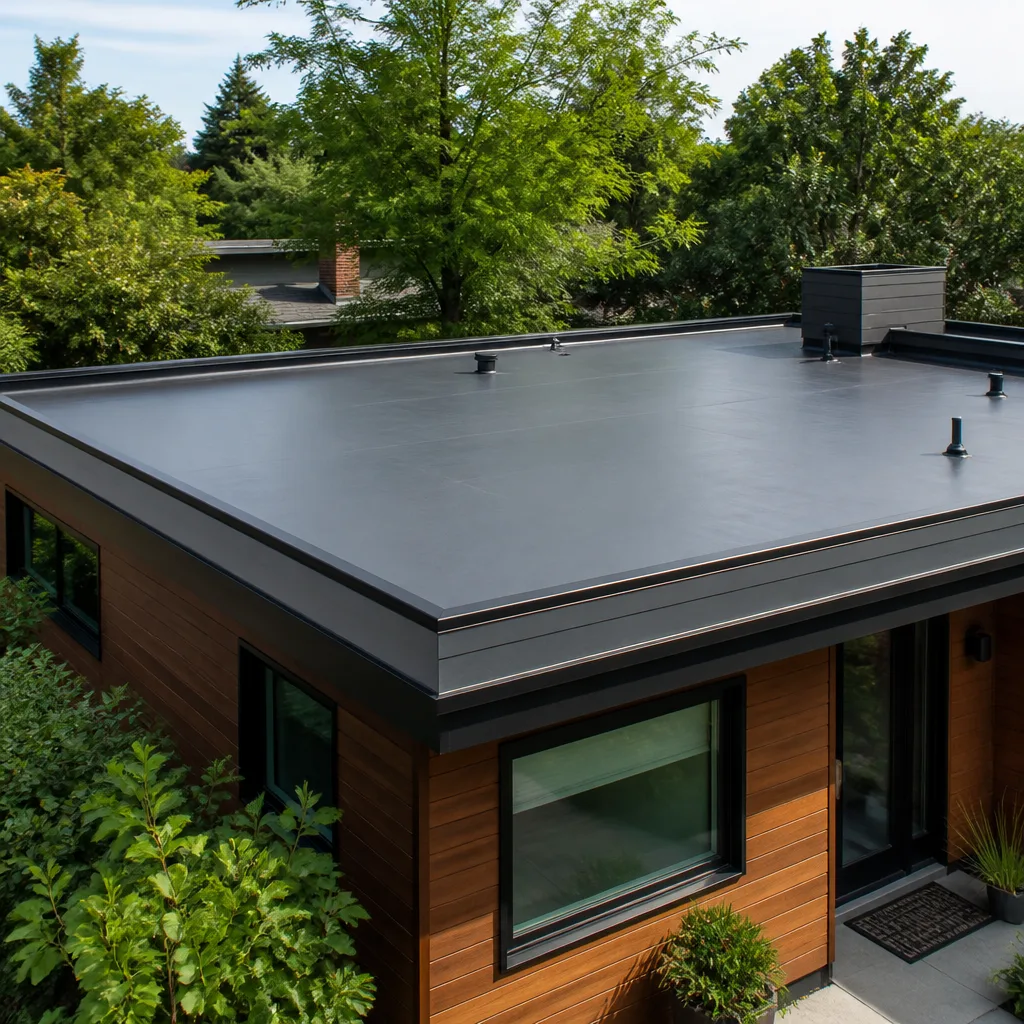 Flat & low-slope
Free roof inspection with deck photos before we talk money - GAF and Owens Corning certified installation
Atlas Flashing Replacement: The Austin Owner’s Guide
If you’re searching for Atlas flashing replacement in Austin, you’ve probably spotted water where it shouldn’t be. We stock Atlas-compatible flashing on our trucks and most replacements run $225 – $475 installed for typical residential repairs. The leak you’re chasing usually traces back to a piece of metal that’s been pried loose by wind, corroded by years of Texas heat and rain, or simply outlived the sealant that was holding it down.
Here’s what usually happens: an Austin homeowner notices a water stain on the ceiling, assumes the shingles failed, and calls us. We get on the roof and find the shingles are fine. The flashing, the thin metal that carries water off the roof at every joint and corner, is the actual culprit. It’s one of the most common misdiagnosed leaks in roofing, and it’s also one of the most straightforward fixes when you catch it early.
Which Atlas Models This Applies To
Atlas flashing is designed to work across their entire residential shingle lineup, so whether you have Pinnacle Pristine, StormMaster Shake, GlassMaster, or an older Atlas Signature Select roof, the flashing profiles are standard. What matters more than the shingle series is the flashing type and size: step flashing for walls, pipe flashing for vent stacks, valley flashing for roof intersections, and drip edge along the eaves and rakes.
The compatibility detail that trips people up: Atlas color matching. Atlas flashing is sold in specific color codes that coordinate with their shingle colors, but not every supplier in the Austin market carries all of them. If you need something like Weathered Wood or Stormfront and the local supply house only stocks gray and black, you either wait for a special order or make a mismatch work. We keep the five most common Atlas colors on hand and can order the full palette quickly.
One more thing about Atlas flashing specifically: their OEM step flashing is a 26-gauge galvanized steel with a UV-stable coating. There are plenty of aftermarket versions out there at 28 or 30 gauge. They’re cheaper, and for good reason. Thinner metal deforms more easily under thermal expansion, and Austin’s temperature swings, freezing nights in January, 105-degree afternoons in August, will work a thin piece of flashing loose years before a 26-gauge piece would fail. When we install, we use OEM or equivalent-gauge material. It costs a few dollars more per piece. It lasts.
Styles & brands we work with
Signs Your Atlas Flashing Replacement Is Failing
- Water stain on the ceiling near a wall or chimney. This is the classic pattern. Water runs down the inside face of a wall where step flashing has lifted or slipped. The shingle itself is usually dry.
- Curling or lifting flashing edges. Get a look at your roof line from the ground with binoculars. If the metal no longer lies flat against the roof plane, sealant has failed and the gap is letting wind-driven rain behind it.
- Granule loss concentrating around pipe collars. The rubber boot on pipe flashing degenerates in Austin’s UV-heavy sun. When it cracks, it lets water run straight down the pipe, and the surrounding shingles show granule wash-off from concentrated flow.
- Visible rust or corrosion at flashing joints. Metal doesn’t need to be old to corrode here. Austin’s seasonal storms, humidity, and the occasional hail dent strip protective coating, and once the steel is exposed, rust begins. Rust expands. Joints open.
- Leaks after a windstorm. A lifted corner or a bent piece of step flashing may not have leaked before the storm, but a 40 mph gust from the right direction will open it right up. If your leak appeared after a good blow, flashing is your prime suspect.
See the difference
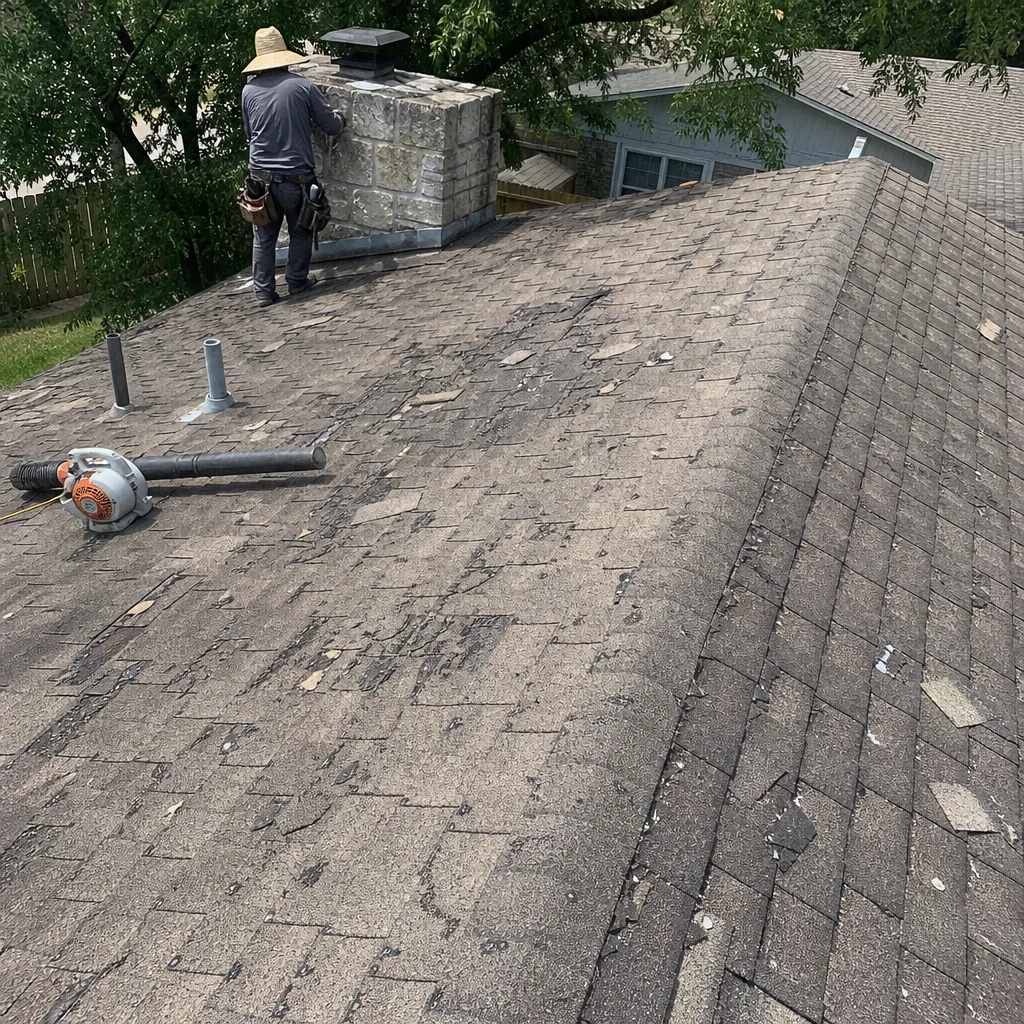 Before
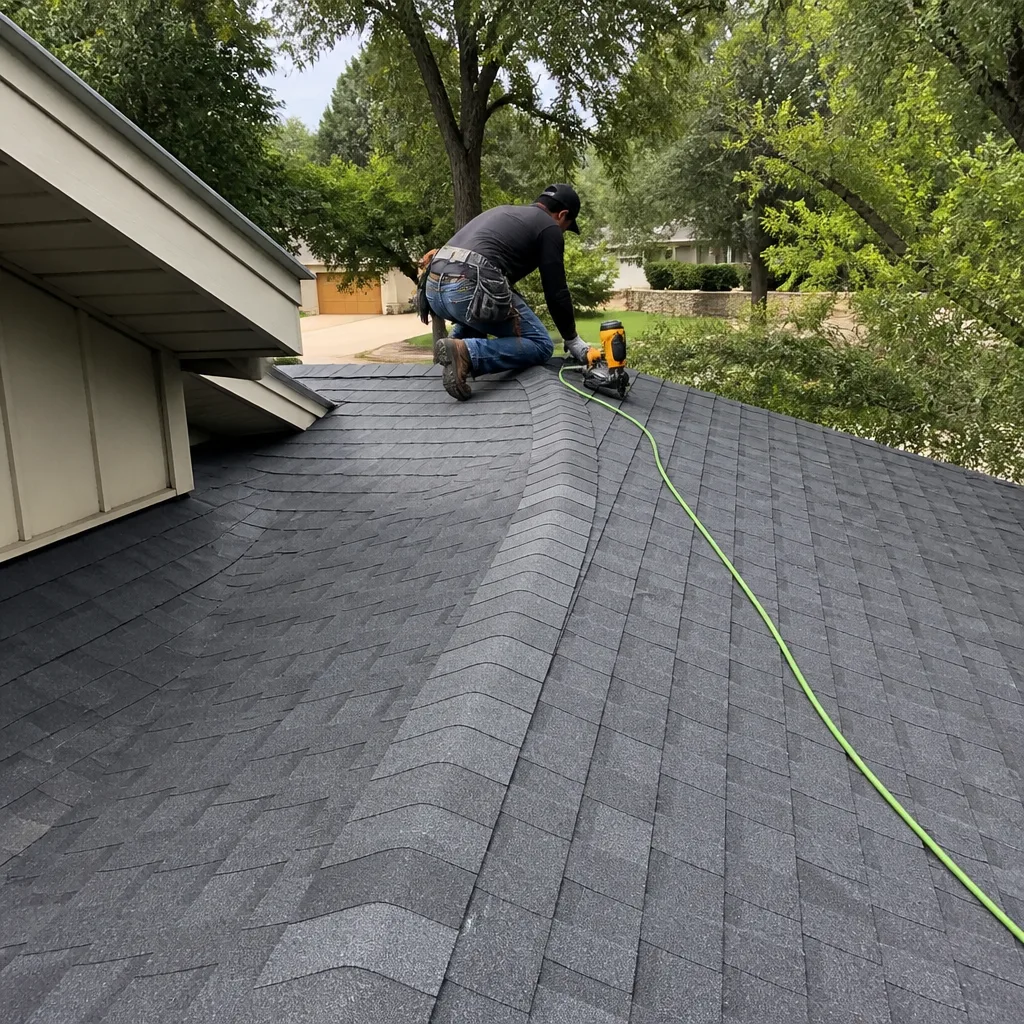 After
After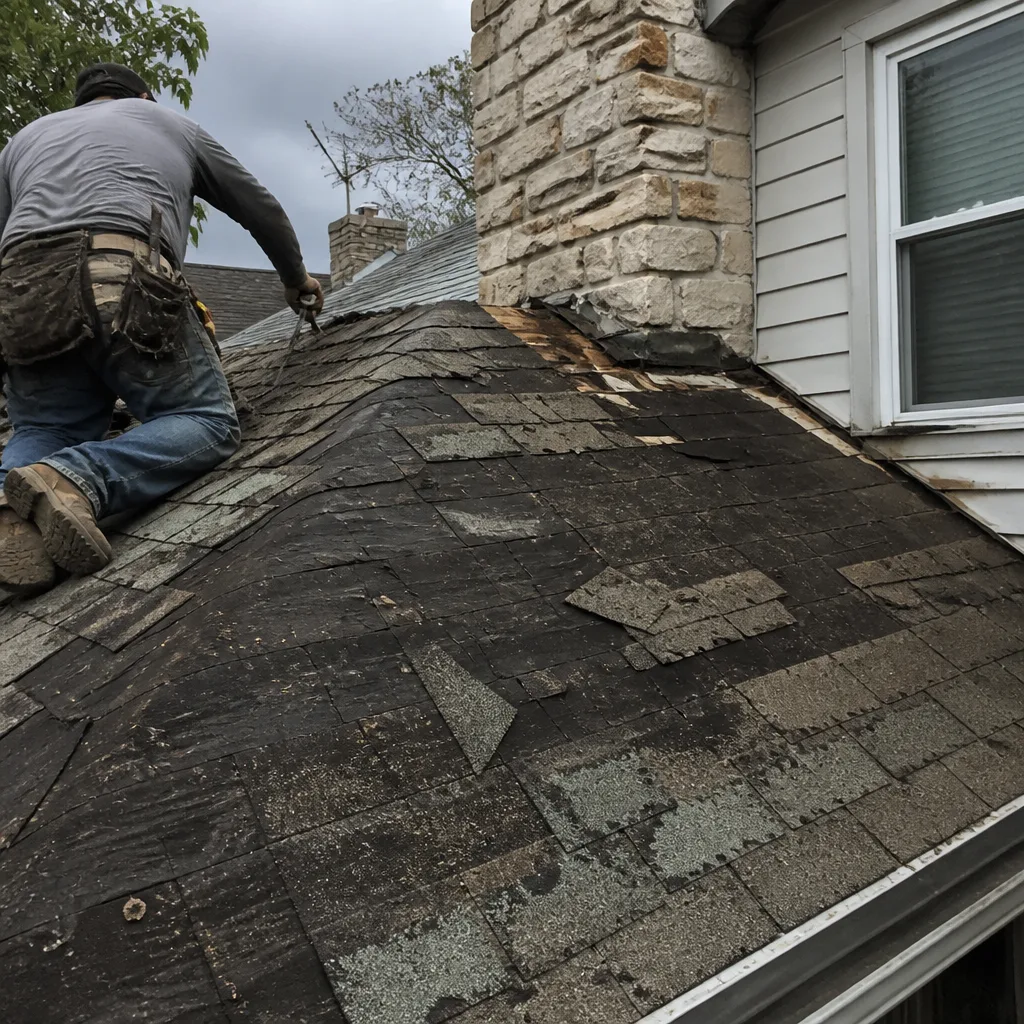 Before
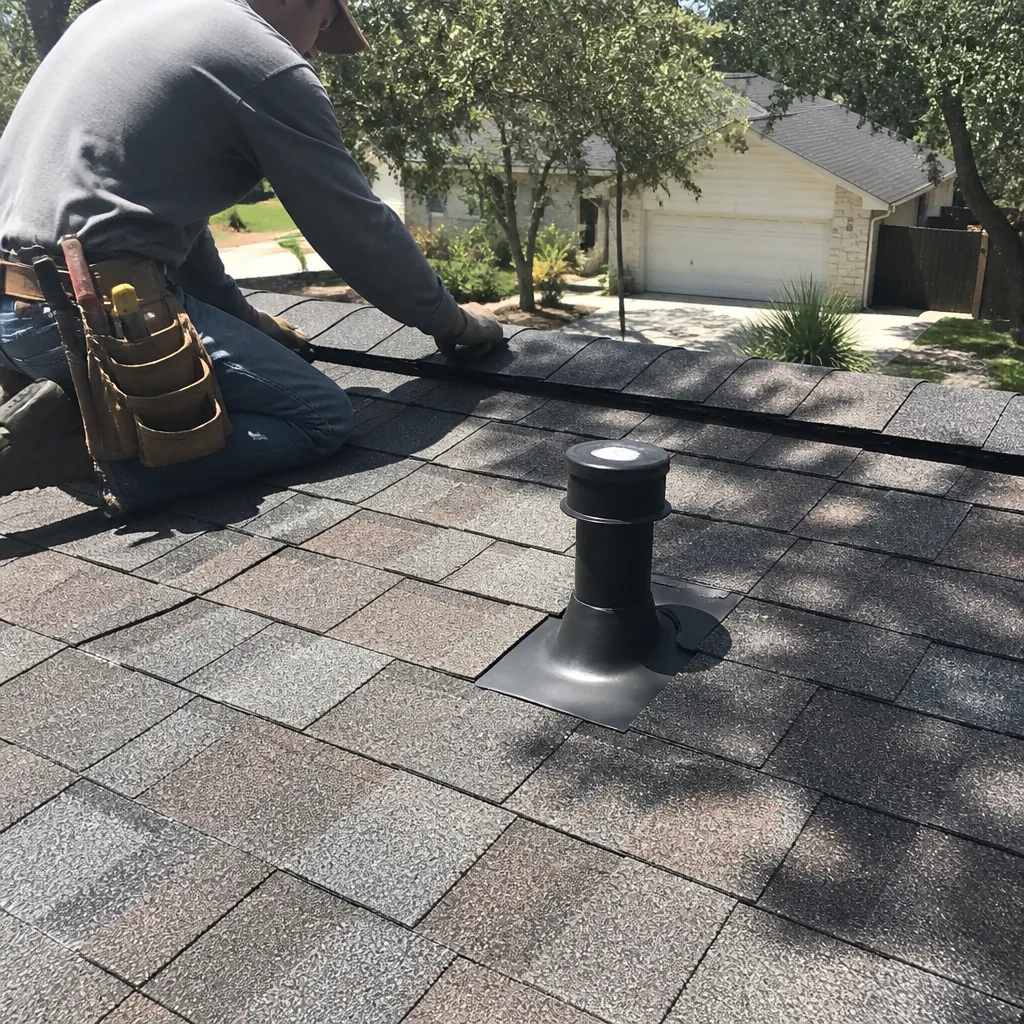 After
After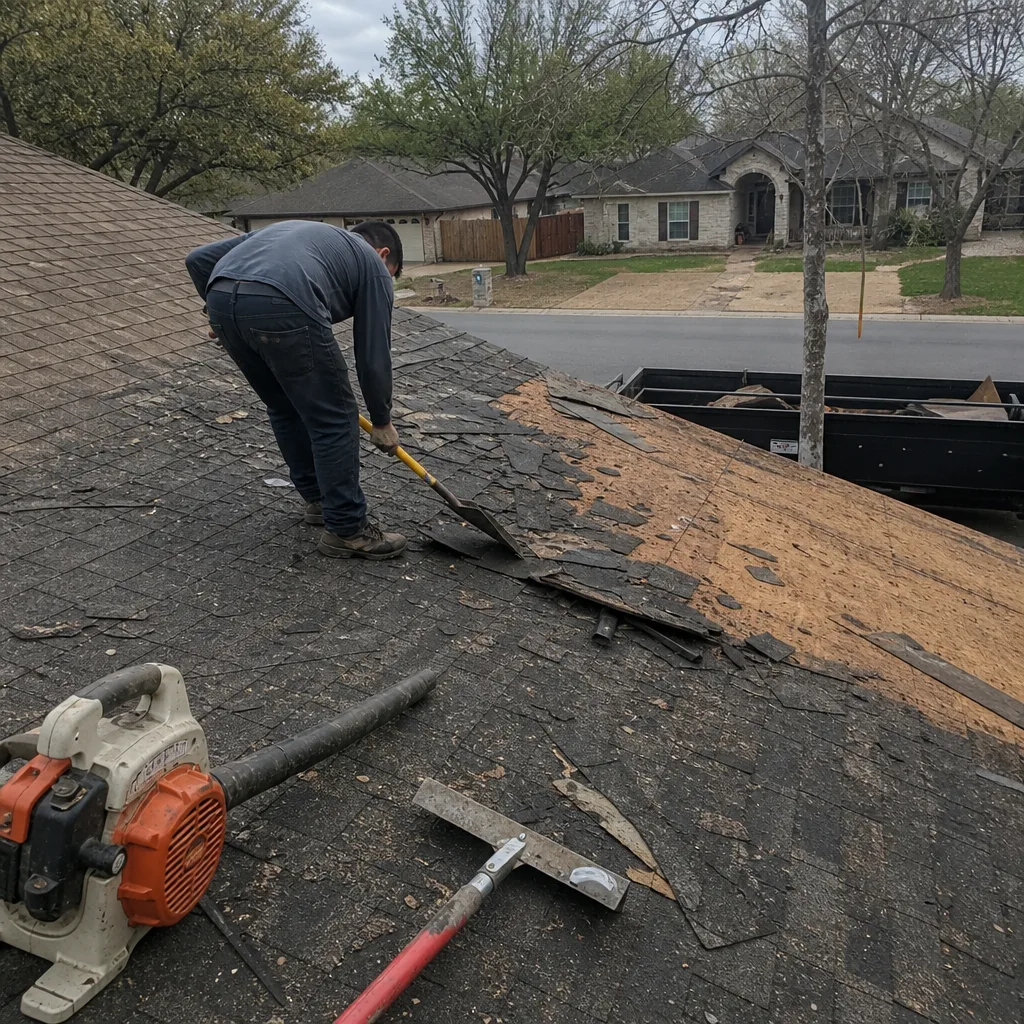 Before
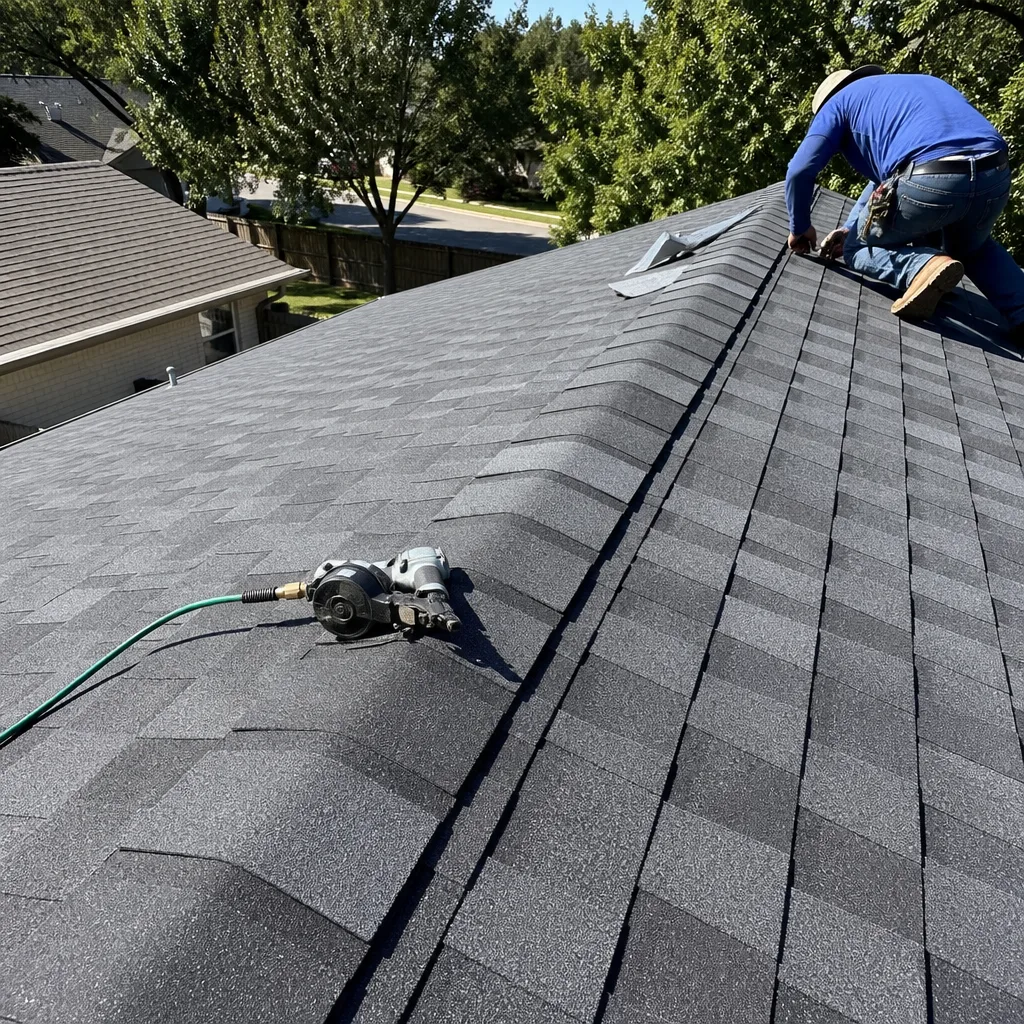 After
AfterReplacement Cost & What’s Included
In Austin, Atlas flashing replacement typically runs $225 – $475 installed for a single penetration (a vent pipe collar, a section of step flashing along a wall, a chimney counter-flashing repair). A full roof’s worth of new flashing during a re-roof is different math and is quoted with the full job. What drives the range on a repair is access, the number of linear feet being replaced, and whether we need to lift shingles or can slide new flashing into place.
Here’s what you get with a Tilehurst Roofing flashing replacement:
- Written line-item price before any work starts. You’ll know the material cost, the labor time, and the total before we touch the roof. No change orders unless you discover something big once we’re up there, and you’ll hear about it before we spend a dollar of your money.
- OEM-spec or equivalent-gauge Atlas flashing. We carry step flashing, pipe collars, valley metal, and drip edge in the common Atlas colors on the truck.
- Written guarantee on every repair. It’s in your hands before the crew leaves, not mailed later.
- The 365-Day Done Right Promise. If that flashing repair fails inside a year, we come back and make it right at no charge. That’s the Kingswell Way: say the price before the work, show up in the window we gave, leave the place cleaner than we found it, put the guarantee in writing, come back if it fails.
DIY or Call Us?
Flashing replacement is not a high-danger repair in the way spring tension or electrical work is. The real risk on this job is the roof itself. Austin roofs are pitched steep enough that a slip on a loose granule bed means a serious fall. If you’re comfortable on a ladder and the flashing in question is at the eave line, you can inspect and confirm what’s failed. If it’s a chimney, a valley, or anything on the upper slope, let a roofer with fall-protection gear and insurance handle it.
The other problem with DIY flashing work is sealant. The wrong caulk under Texas sun turns brittle in a season. We see it constantly: a homeowner replaces a pipe collar in March, and by September the neoprene is fine but the sealant bead has cracked and the leak is back. Roofing sealant is not hardware-store caulk, and applying it correctly matters as much as the metal itself. If this is a repair you’ve already done once, or you’d rather not walk a 6/12 pitch with a tube of adhesive in one hand, call us at (254) 540-7345. We’ll bring a written price with us.
FAQs
Most flashing is made from 26-gauge galvanized steel and should last 20 – 30 years, but the sealant at joints and collars typically fails first, usually between 10 and 15 years. Austin’s UV exposure and hail accelerate sealant breakdown. Replacing the flashing before the sealant fails is rare; replacing the sealant at year 12 is where the value is.
If you’re not sure whether your flashing is at the reseal or replace point, call (254) 540-7345 and we’ll give you an honest read.
Yes, when the metal is intact but the sealant is compromised. We clean the joint, apply a proper roofing-grade sealant, and re-secure the flashing. When the metal is bent, rusted through, or the step flashing has been torn loose, replacement is the only dependable fix.
A single pipe collar or a short section of step flashing is typically 1 – 2 hours including getting on and off the roof, cleanup, and a water test on the repair. Larger jobs like valley flashing or full chimney counter-flashing can run a half day.
We stock the five most common Atlas flashing colors on our service trucks, plus standard step flashing, pipe collars, valley metal, and drip edge. Less common Atlas colors may need a short order time, and we’ll tell you that up front before you commit. We also carry flashing for GAF, Owens Corning, and CertainTeed systems, so if your roof is a mixed-brand installation, we can match what’s already up there.
Only if we find something you need to know about that wasn’t visible from the ground, and we’ll show you a photo and get your sign-off before we do anything that changes the number. The written price you receive before work starts is the price you pay for the work described. That’s the point.
Written by Greg Holloway, Owner, Tilehurst Roofing Austin at Tilehurst Roofing Austin, serving Austin and nearby areas.
Need a flashing repair on your Atlas roof? Call (254) 540-7345 for a free estimate. Tell me the roof, I’ll tell you the price – no surprises once we’re up there.