
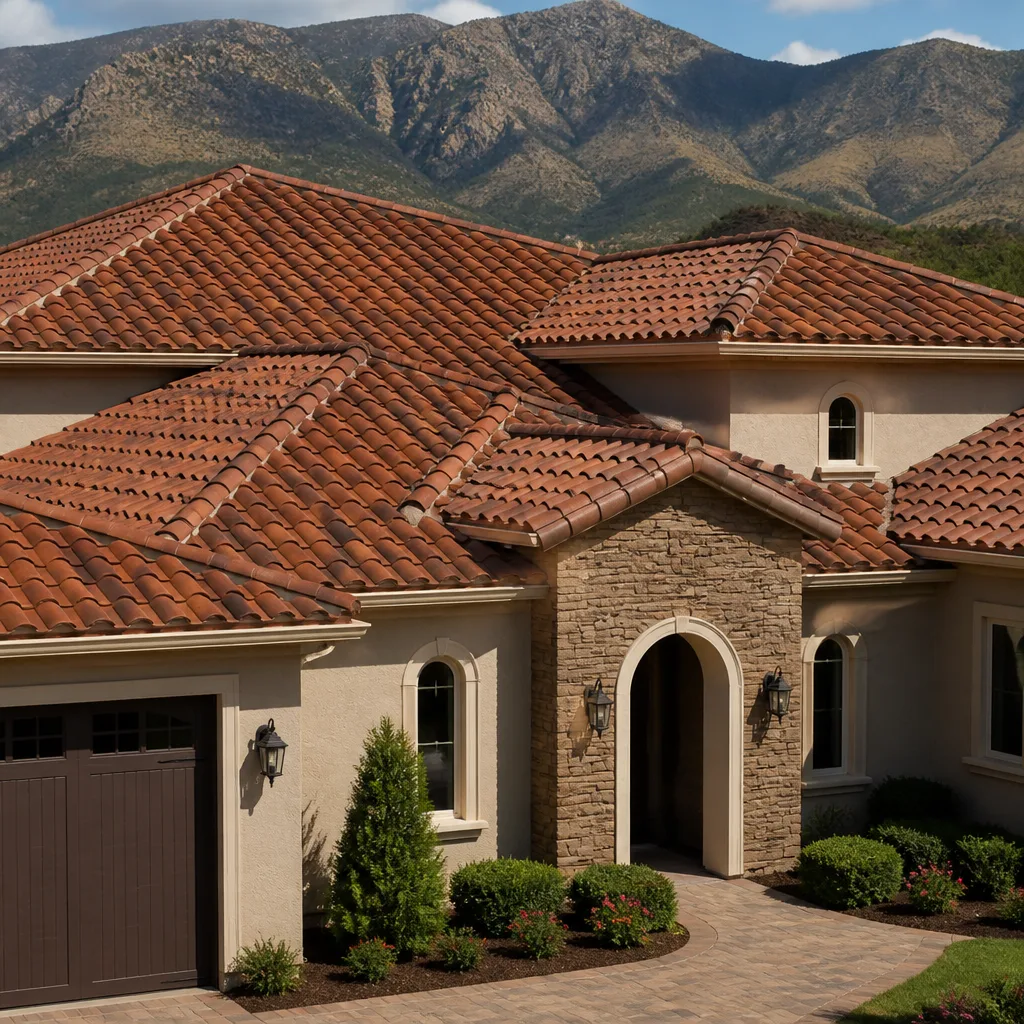
 Tile roofing
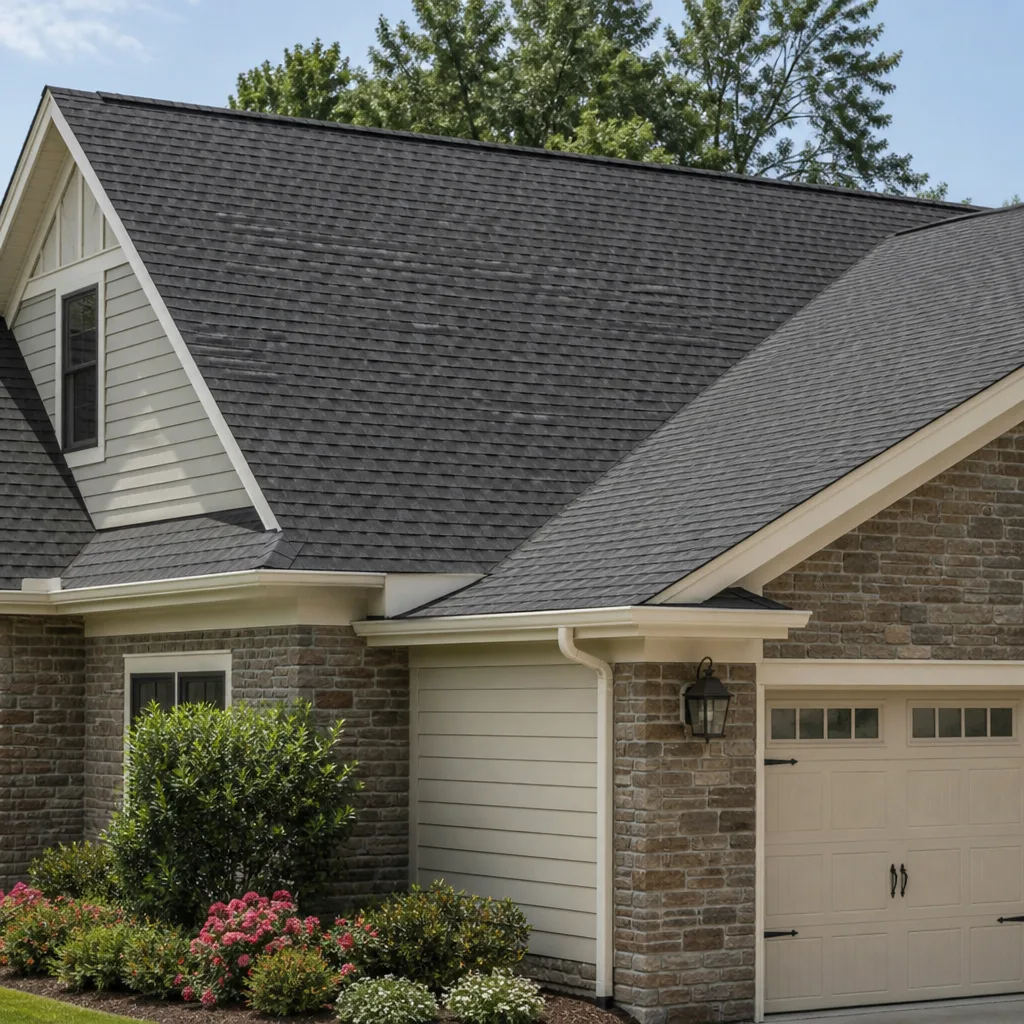 Architectural shingles
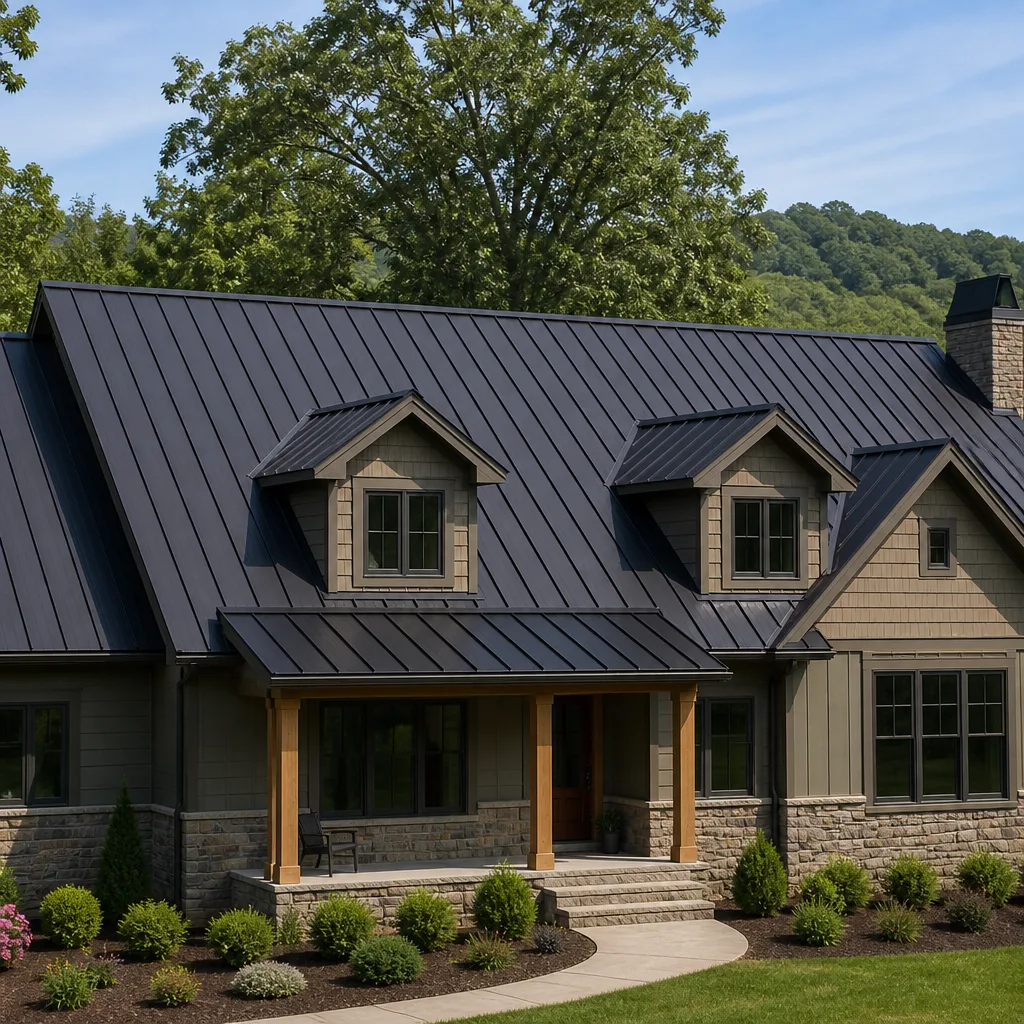 Metal roofing
 GAF
GAF Owens Corning
 Flat & low-slope
Free roof inspection with deck photos before we talk money - GAF and Owens Corning certified installation
Atlas Ridge Vent Installation: The Austin Owner’s Guide
Most Atlas ridge vent installations in Austin run between $450 and $900 when we handle the full job, and yes, we stock Atlas-compatible vent material on our trucks so we’re usually able to complete the work the same day we arrive. The most common way homeowners discover theirs has failed is a spike in attic temperature during a Texas summer, or worse, visible water staining on the ceiling near the eaves after a hard rain. If your roofline has an Atlas ridge vent that’s cracked, lifted, or pulling away from the shingles, this page will tell you exactly what to expect.
Tilehurst Roofing Austin is an independent service provider, not affiliated with Atlas. We stock and install Atlas ridge vent products because they’re what many Austin homes were built with, and matching the existing vent profile matters more than most people realize.
Which Atlas Ridge Vent Models This Applies To
Atlas makes two ridge vent lines we see most often on Austin roofs: the Atlas Shingle-Over Ridge Vent and the Atlas Pro-Cut Ridge Vent. The Shingle-Over is the more common of the two and the one we match most frequently during re-roofs. It’s a rolled vent with an internal baffle system that lets air escape while keeping wind-driven rain out, and it gets covered by your ridge cap shingles so it blends into the roofline. The Pro-Cut is a lower-profile aluminum option, less common in residential Austin neighborhoods but present on some mid-2000s builds.
Here’s the compatibility gotcha most homeowners hit: the Shingle-Over vent comes in different roll lengths and widths, and using a generic big-box vent to patch an Atlas installation usually leaves a visible seam and a mismatch in airflow. If you look at the end of your ridge where the vent meets the edge of the roof, the Atlas vent will often have the name printed on the underside or a distinct honeycomb baffle pattern. When we can’t identify it from the ground, we’ll check for the printed label during our roof inspection.
For the OEM-versus-aftermarket question on Atlas specifically: Atlas ridge vents are made from a polypropylene mesh that holds up well in Texas heat, and we generally recommend staying with Atlas or a genuinely equivalent vent rather than a cheaper imitation. The aftermarket generics often use thinner material that warps in the first Austin summer. We keep both the Atlas Shingle-Over and a quality equivalent on hand, and Greg Holloway makes the call on which fits your roof after looking at it. Tell me the roof, I’ll tell you the price, no surprises once we’re up there.
Styles & brands we work with
Signs Your Atlas Ridge Vent Installation Is Failing
- Attic heat that feels worse than usual. A compromised ridge vent stops pulling hot air out of the attic, which pushes your cooling bills up and cooks your stored belongings. In a Texas August, this is usually the first and most obvious signal.
- Water staining near the eaves or in the ceiling corners. Wind-driven rain can get pushed through a cracked or displaced vent baffle. The water travels along the roofline and shows up where the decking meets the top plate.
- Visible gaps between the vent and the shingles. Ridge vent installations rely on the shingles overlapping the vent’s edges. Once heat and wind get under that edge, it lifts, and every storm makes it worse.
- Crumbling or brittle vent material at the ridge. In Austin’s sun, inferior vent material degrades in a few summers. If you can see cracking or flaking from the yard, the vent’s already past saving.
- Birds, rodents, or wasps in the attic. A failing ridge vent is a welcome mat. If the baffle’s pulled loose, pests get a straight shot into your attic, and they’ll bring friends.
See the difference
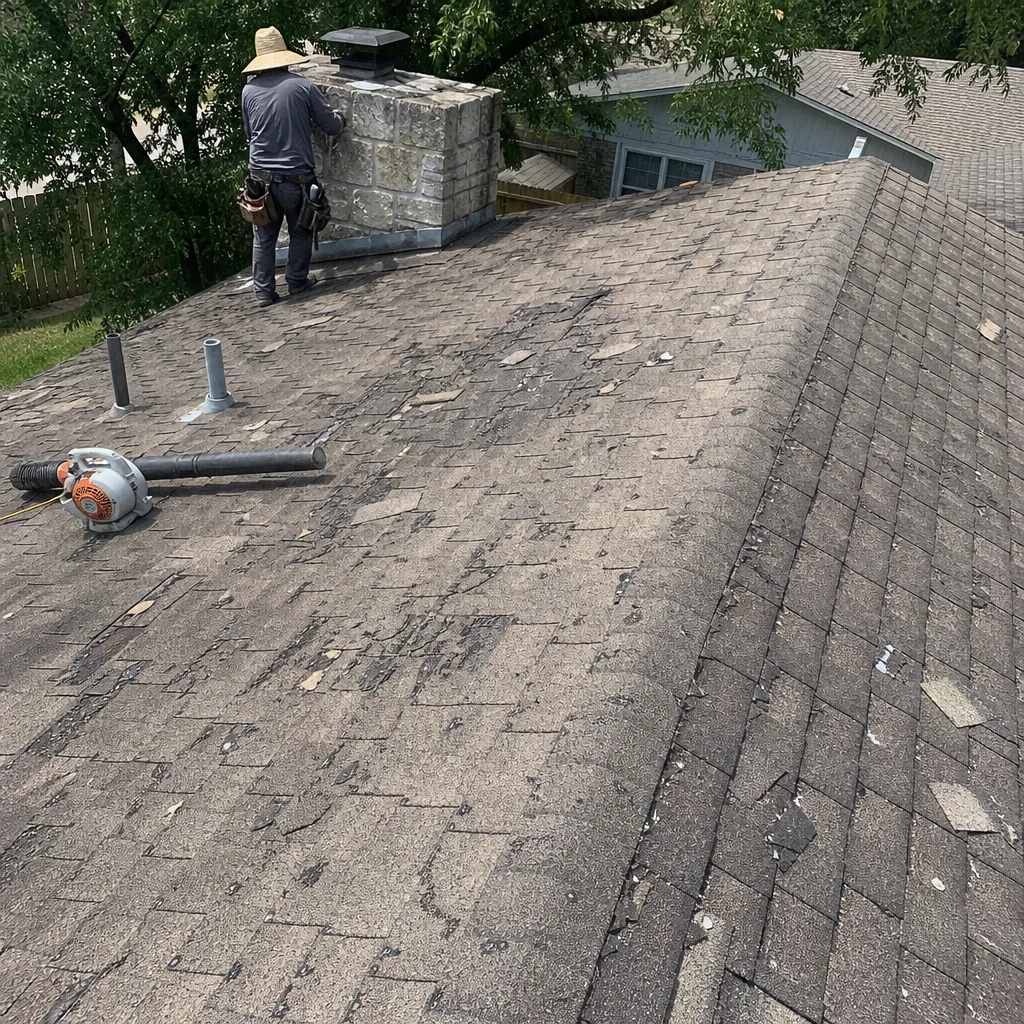 Before
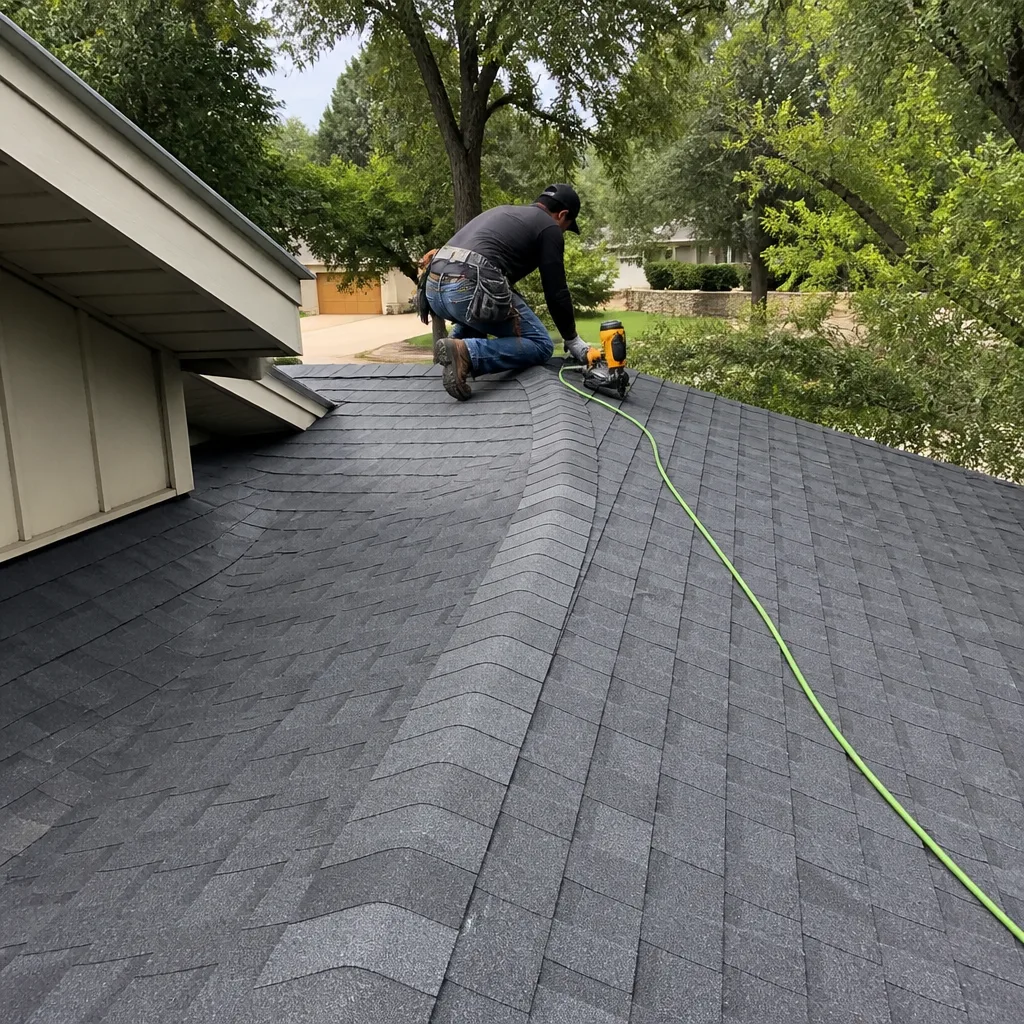 After
After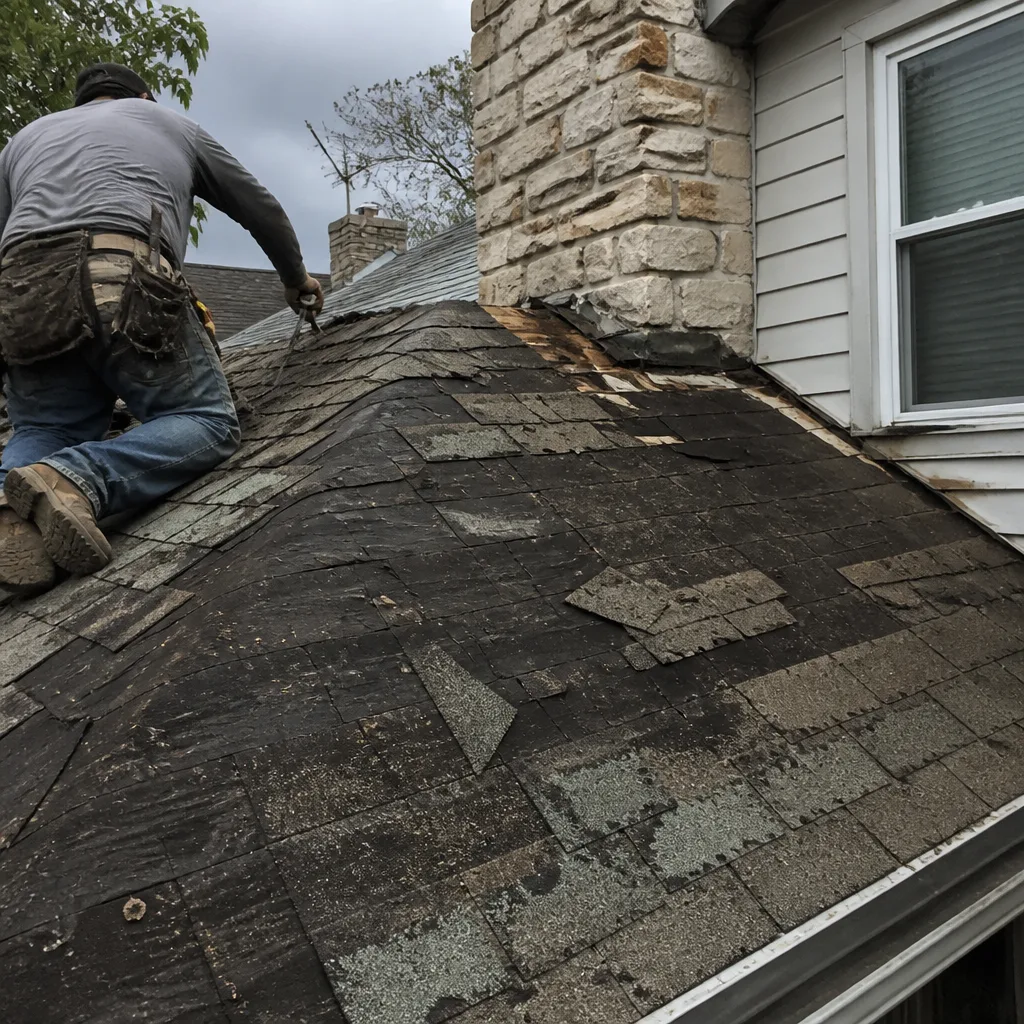 Before
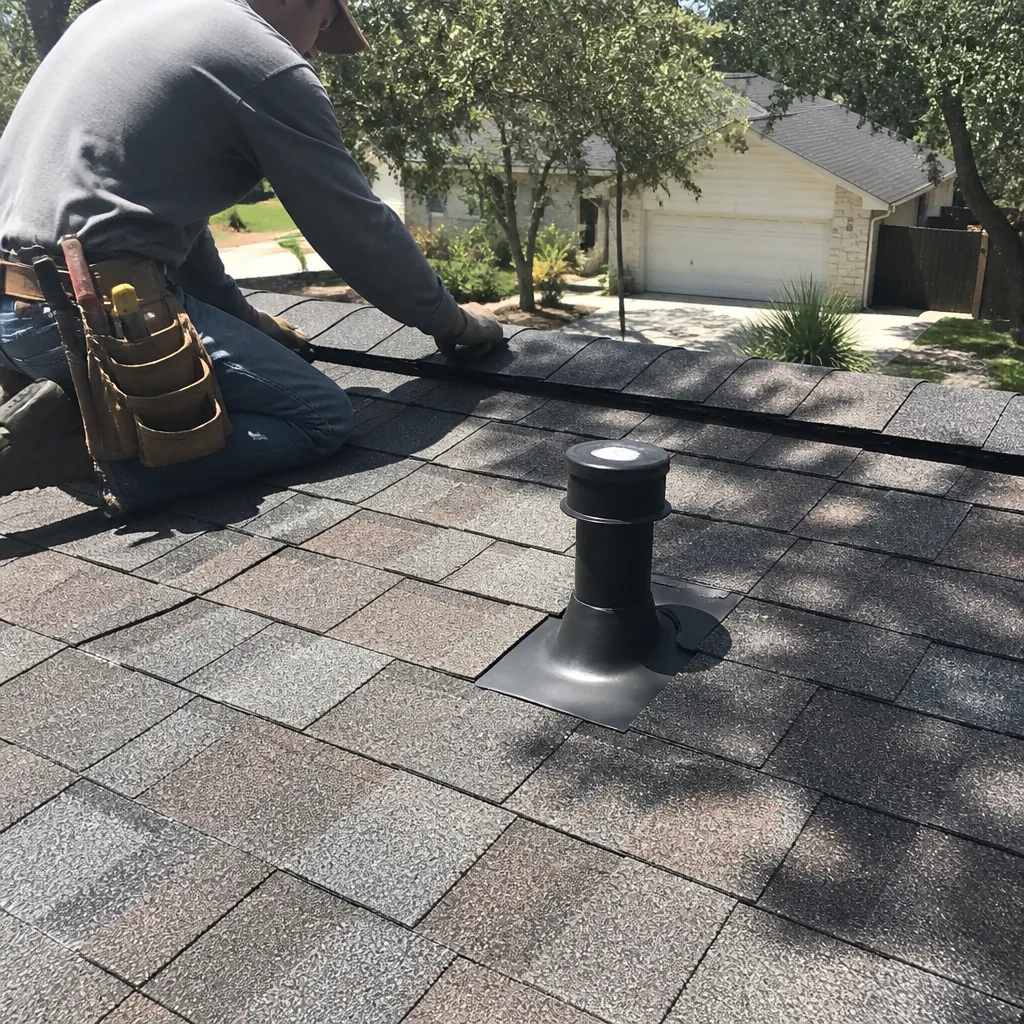 After
After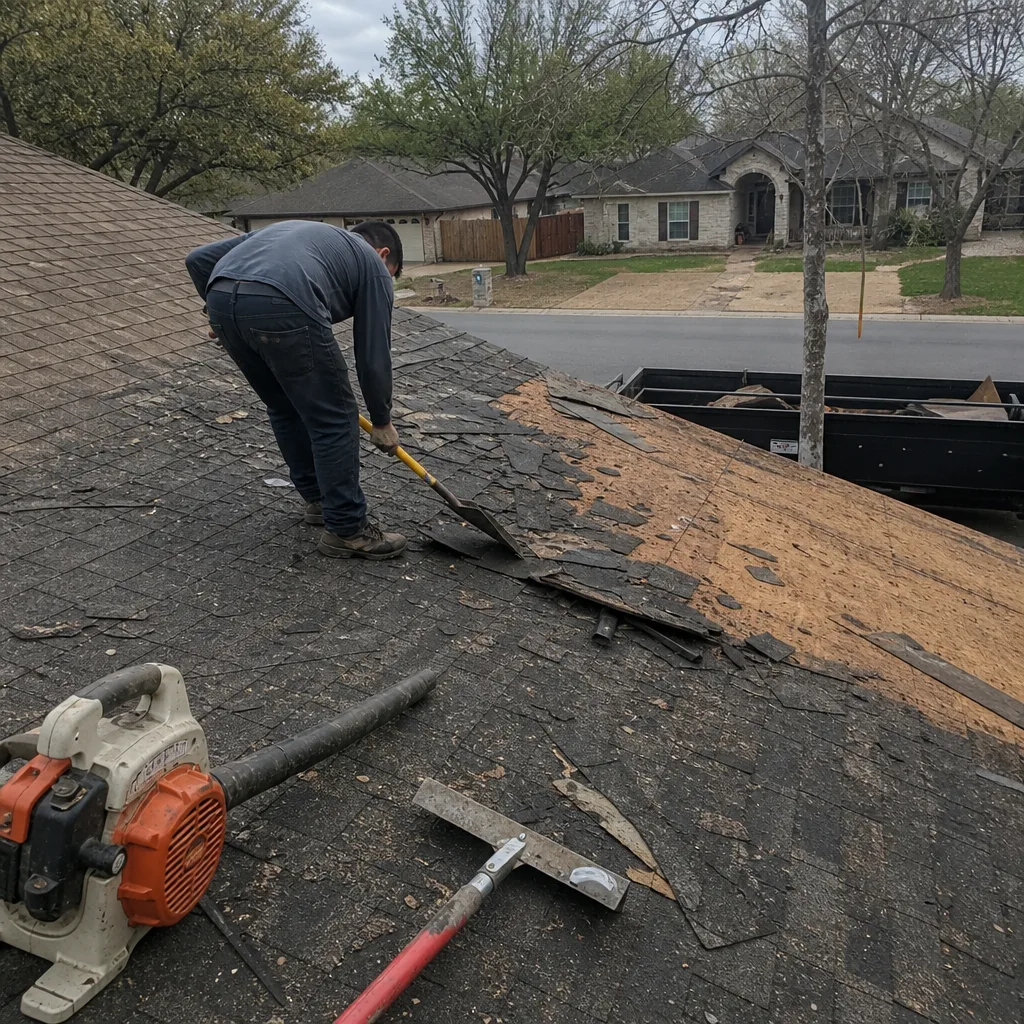 Before
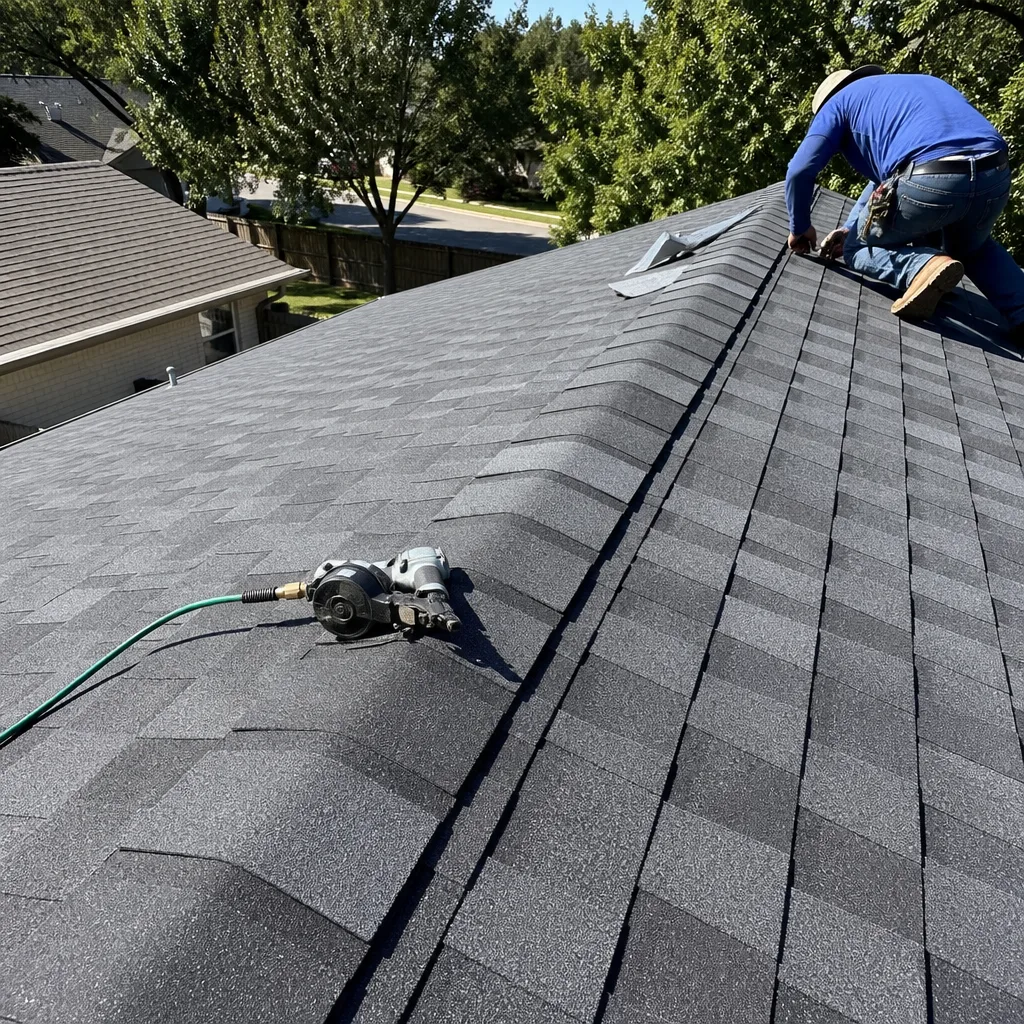 After
AfterReplacement Cost & What’s Included
The installed cost for an Atlas ridge vent replacement in Austin typically falls between $450 and $900. A straightforward swap on a single-story home with good roof access sits at the lower end. Two-story homes, steep pitches, multiple ridges, or a roof that needs shingle tabs lifted and re-sealed push the number toward the top.
Every quote includes the vent material, the fasteners, the labor to remove and replace the old vent, and the re-setting of any ridge cap shingles we disturbed. What it does not include, and should never surprise you with, are change orders. The written price you get before we start is the written price you pay. Our work comes with a written guarantee we hand you before the crew leaves, and if anything about that installation fails inside a year, the 365-Day Done Right Promise means we come back and correct it at no charge. Most asphalt shingle repairs related to this kind of work run $350 to $750, and we show you those numbers if the inspection turns up something beyond the vent itself.
DIY or Call Us?
You can check a few things from the ground or a ladder: look for visible gaps in the vent line, check for daylight coming through the ridge from inside the attic, and look for shingle tabs that have curled back. Those observations help us give you a faster estimate when you call. What you should not do is walk the ridge. The ridge is the highest point of the roof, your footing is the exact area that’s compromised, and a fall from there is a hospital visit at best. We’ve also seen homeowners nail a new vent over a rotten decking strip because they couldn’t see it through the shingles. The vent fails again within the year, and now the damage is bigger.
Ridge vent installation is one of those jobs that looks simple until you’re up there. You’ll need to peel back shingle tabs, inspect the decking underneath, ensure the vent’s centered over the ridge slot, and re-seal the cap shingles so wind-driven rain can’t get under them. That’s a professional installation, and we do it with background-checked, uniformed technicians who have seen every failed ridge vent configuration Austin can throw at them. Call (254) 540-7345 if you’re seeing any warning signs. The estimate is free and the price we quote is the price we’ll put in writing before any work begins.
FAQs
A properly installed Atlas ridge vent in Austin usually lasts 15 to 20 years before the material begins to degrade from UV exposure and heat. The UV radiation at our latitude takes its toll faster than in northern climates, which is why we recommend having a roofer inspect the ridge during any annual roof check after the ten-year mark. Call (254) 540-7345 if you’d like us to add your ridge vent to a full roof inspection.
A small lift at the vent’s edge can sometimes be re-sealed, but cracks, crumbling baffles, or gaps longer than a few inches almost always call for section replacement rather than patch work. The decision comes down to whether the vent material is still sound enough to hold a seal. We’ll tell you honestly which applies to your roof, and the inspection is always free.
Most Atlas ridge vent installations on a single ridge take between two and four hours from setup to cleanup. If your roof has multiple ridges or the decking underneath needs attention, the job can stretch to a full day, and we’ll tell you before we start.
Yes, we keep Atlas-compatible ridge vent material on our trucks for the most common Austin roof configurations, along with vent products for GAF, Owens Corning, and CertainTeed roofs. If your roof needs a vent we don’t carry that day, we’ll get it and be back within the week, and we’ll tell you that before you’ve paid a dime.
Written by Greg Holloway, Owner, Tilehurst Roofing Austin at Tilehurst Roofing Austin, serving Austin and nearby areas.