
 Tile roofing
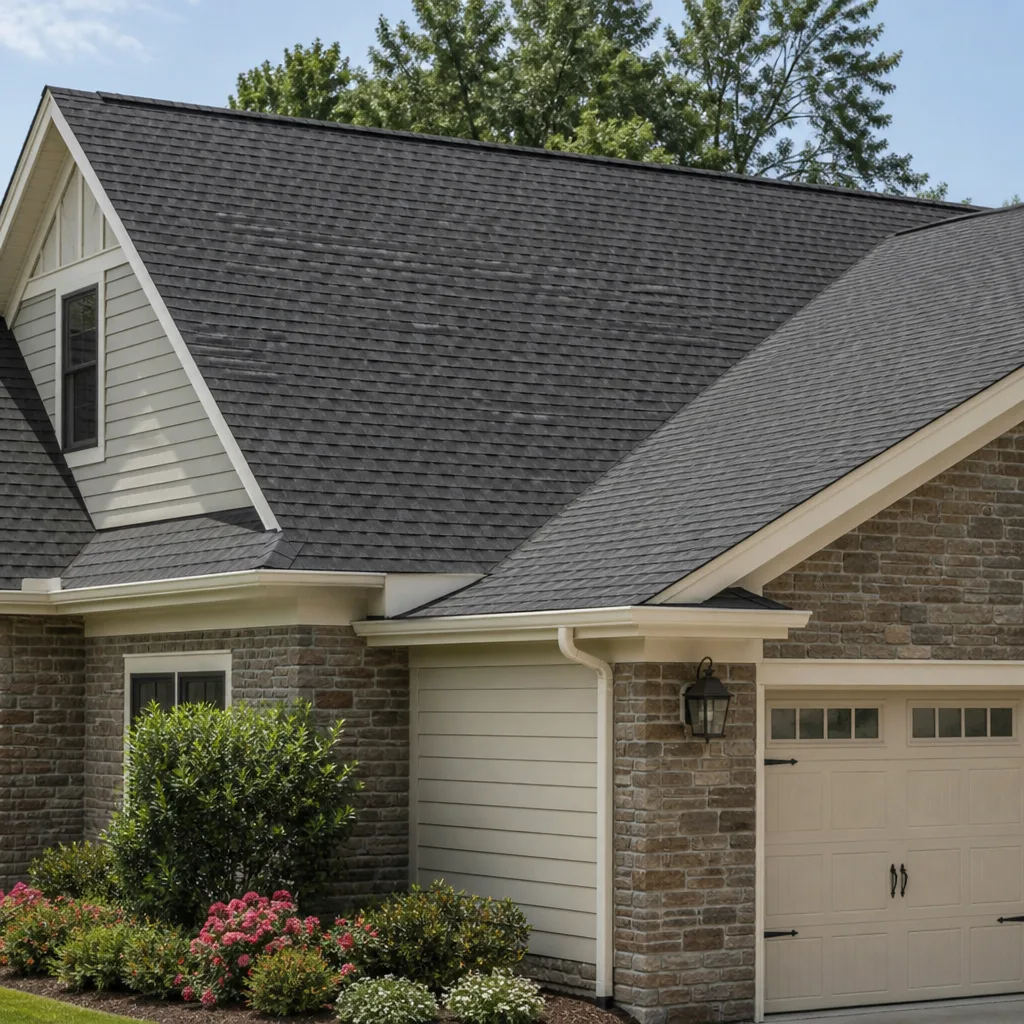 Architectural shingles
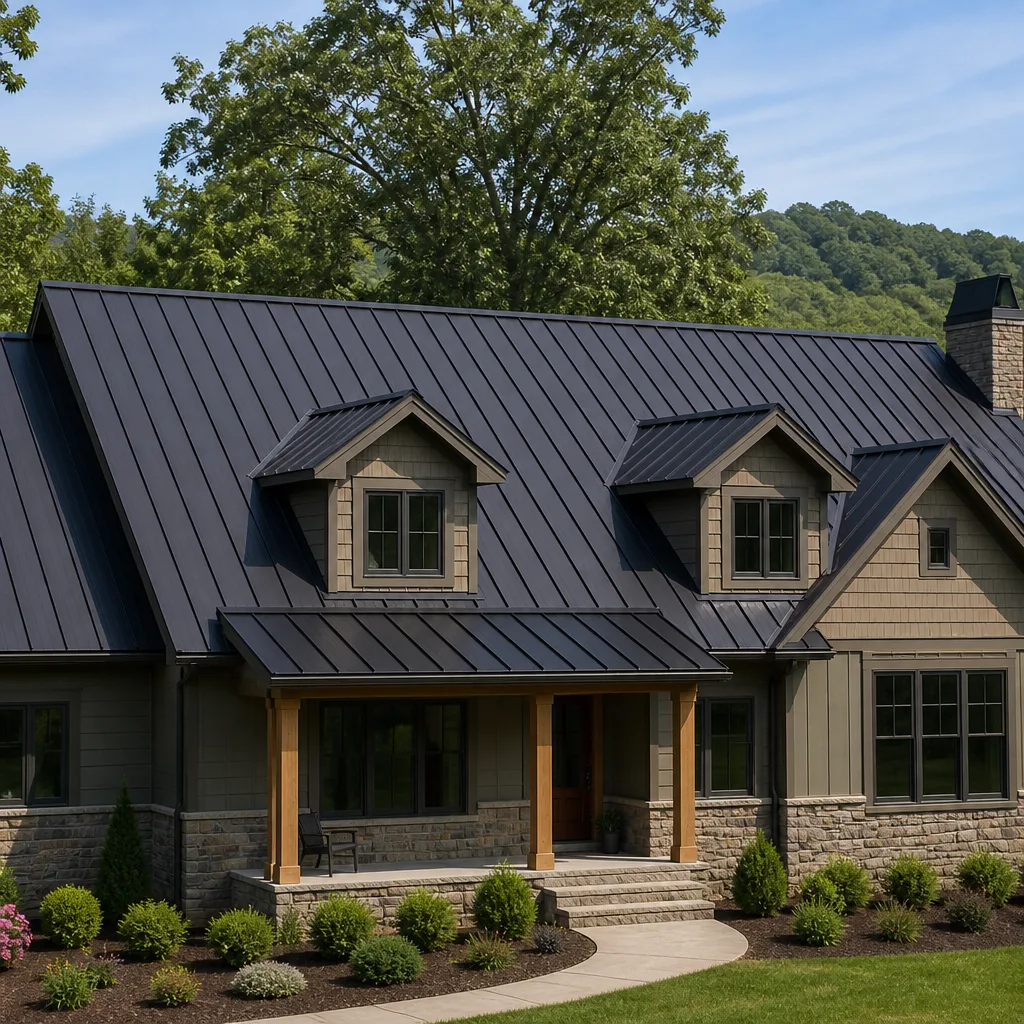 Metal roofing
 GAF
GAF Owens Corning
 Flat & low-slope
Free roof inspection with deck photos before we talk money - GAF and Owens Corning certified installation
IKO Ridge Vent Installation: The Austin Owner’s Guide
We stock and install IKO-compatible ridge vent systems across Austin, and a typical ridge vent replacement on an average single-family home runs $650 to $1,400 installed. That includes removing the old vent, preparing the ridge decking, installing the new IKO vent material, and sealing everything so it actually breathes. Most homeowners discover the problem either after a hard Central Texas storm pushes water under the ridge cap, or when an attic inspection shows condensation, rusted nails, or visible daylight through the vent gaps. If your ridge vent is cracked, brittle, or pulling away from the decking, it’s no longer doing its one job: letting hot attic air escape while keeping rain and embers out.
We know this part because we’ve replaced hundreds of ridge vents in this market, and the Texas sun is harder on ridge vent material than almost anything else. Here’s what you need to know before you spend a dollar.
Key Takeaways
- Installed IKO ridge vent replacement in Austin typically runs $650 – $1,400 depending on roof length and decking condition.
- We carry IKO-compatible ridge vent stock on the truck, so most installs happen in a single visit.
- The #1 failure point in Austin is UV degradation of the vent material’s cap shingle, followed by nail pull-out from thermal expansion.
- Tilehurst Roofing Austin is an independent installer, not an IKO affiliate or subsidiary.
- Written price before any work starts, written guarantee on the repair, and the 365-Day Done Right Promise come standard.
Styles & brands we work with
Which IKO Models This Applies To
IKO makes ridge vent under a few product families, and the compatibility question is the first thing we check on the phone. The common lines in Austin homes are the IKO PEAK® Ridge Vent, the IKO Ridge Vent with WeatherBloc™, and the mat-style vent that gets field-cut and capped with IKO’s matching ridge cap shingles. The tricky part with IKO specifically is that their ridge cap shingles are sized and profiled to match their dimensional shingle lines (Cambridge, Dynasty, Nordic, Royal Estate), so if your home has an IKO field shingle, the ridge cap was likely IKO too. Mixing a different manufacturer’s ridge cap over an IKO vent creates an aesthetic mismatch and sometimes a profile gap that doesn’t seal as cleanly.
You can identify what’s on your roof two ways. First, look at the bottom of a ridge cap shingle for a printed manufacturer code. Second, measure the exposed vent width at the ridge gap: most IKO vent systems are built for a 2-inch to 2.5-inch ridge slot. If yours is cut wider, someone may have adapted a non-IKO system. We can do a quick visual assessment with a few photos or during a free estimate visit. In this Austin market, we’ve seen enough IKO roofs to know the difference between what fits and what was forced to fit.
One note before we go further: Tilehurst Roofing Austin is an independent roofing contractor. We’re not affiliated with IKO and we don’t represent their warranty. We install IKO-compatible vent materials because we’ve found them to perform well in Texas heat, and we stock them alongside parts from GAF, Owens Corning, and CertainTeed, so homeowners have a real choice about what goes on their roof.
Signs Your IKO Ridge Vent Installation Is Failing
Ridge vents fail quietly, which is why most Austin homeowners don’t catch the problem until it’s already expensive. Here are the five symptoms we see most on service calls:
- Water staining on the ceiling near exterior walls or in the attic at the ridge line. This usually means the vent’s internal weather filter has failed or the cap shingles have lifted, letting wind-driven rain push into the ridge gap. It doesn’t take much water to stain drywall.
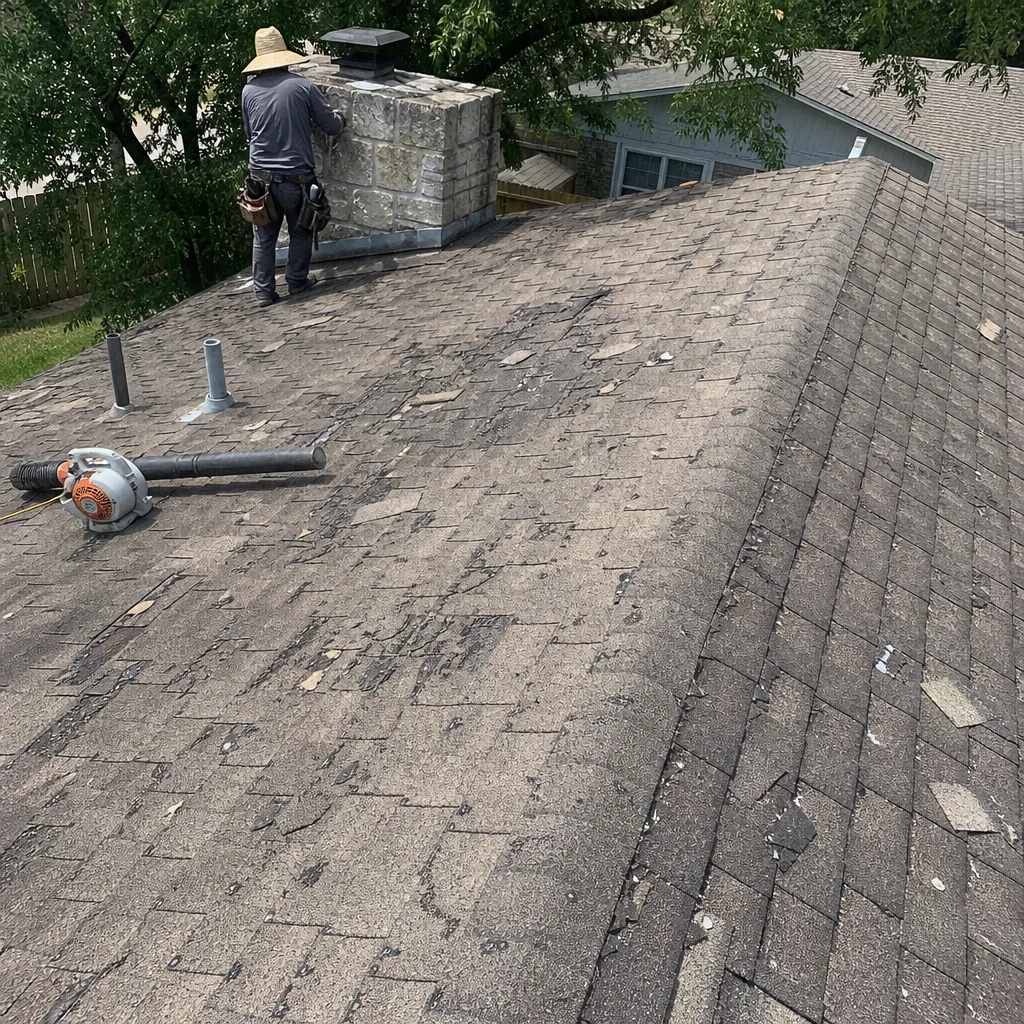
- Visible gaps, cracks, or curling in the ridge vent material from the ground. Austin’s UV load is brutal. IKO vent material is built for it, but after 10 – 15 Texas summers, the plastic or composite body can become brittle and pull away from the decking. If you can see daylight through the vent, it’s done.
- Elevated attic temperature on a mild day. A properly vented Austin attic stays within 10 – 15 degrees of outside air. If your attic hits 130°F in April or October, the ridge vent isn’t moving air. That heat shortens your shingle life and drives up your AC bill.
- Nail heads backing out along the ridge line. The vent expands and contracts with every temperature swing. In a place that swings 40 degrees between February night and April afternoon, the nails work loose over time. Loose nails mean the vent isn’t secured flat, which invites wind and rain.
- Debris buildup or animal activity inside the vent opening. Squirrels and rats love a warm ridge line. If you hear scratching in the attic or find nest material near the ridge, the vent’s end caps or filter have likely been compromised.
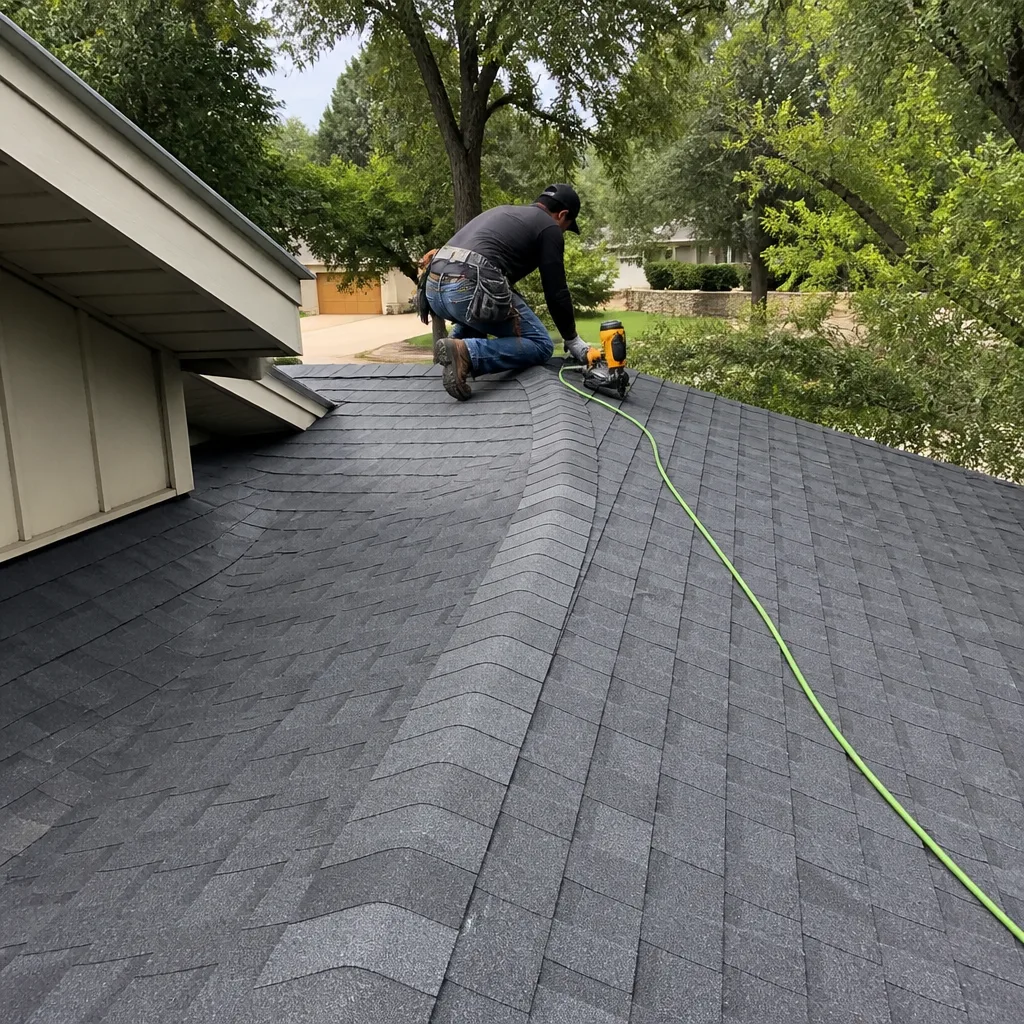
Any one of these is worth a look. All five together means replacement, not patchwork.
See the difference
 Before
 After
After Before
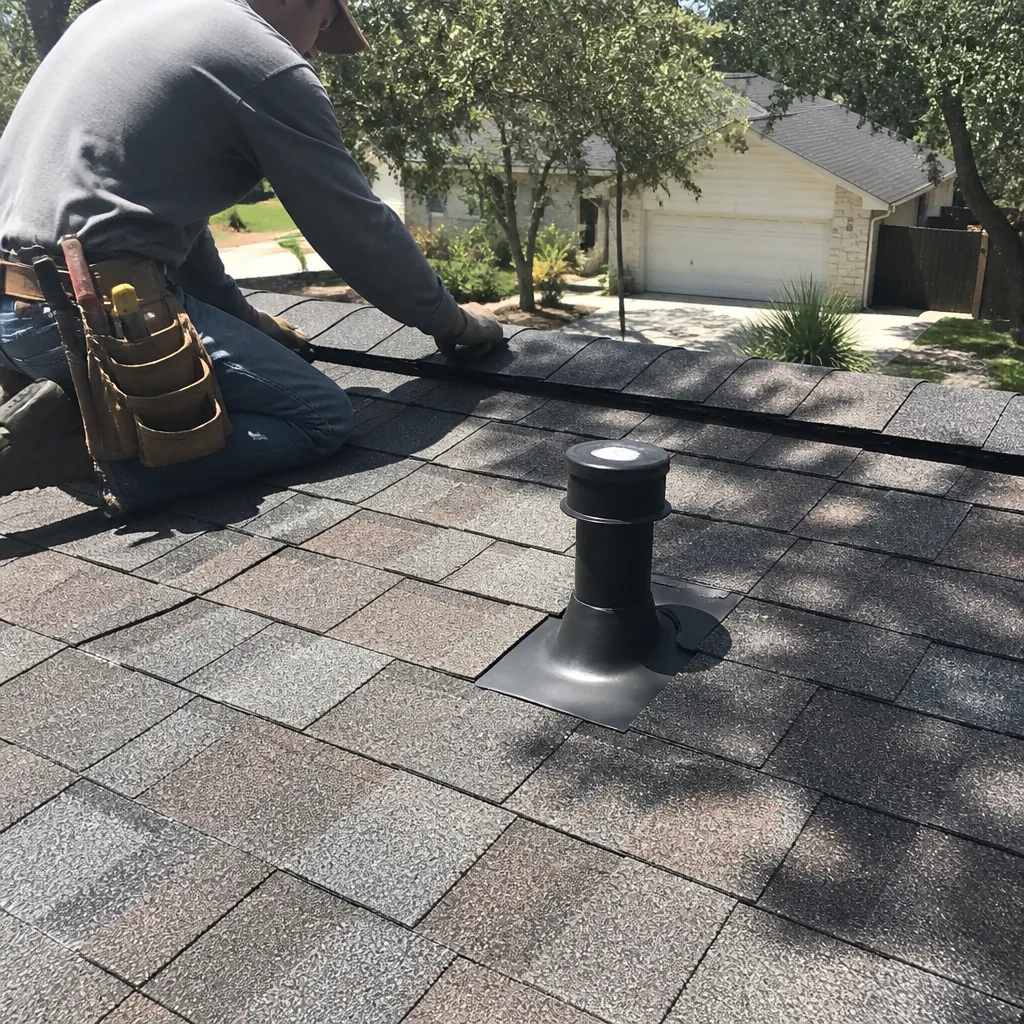 After
After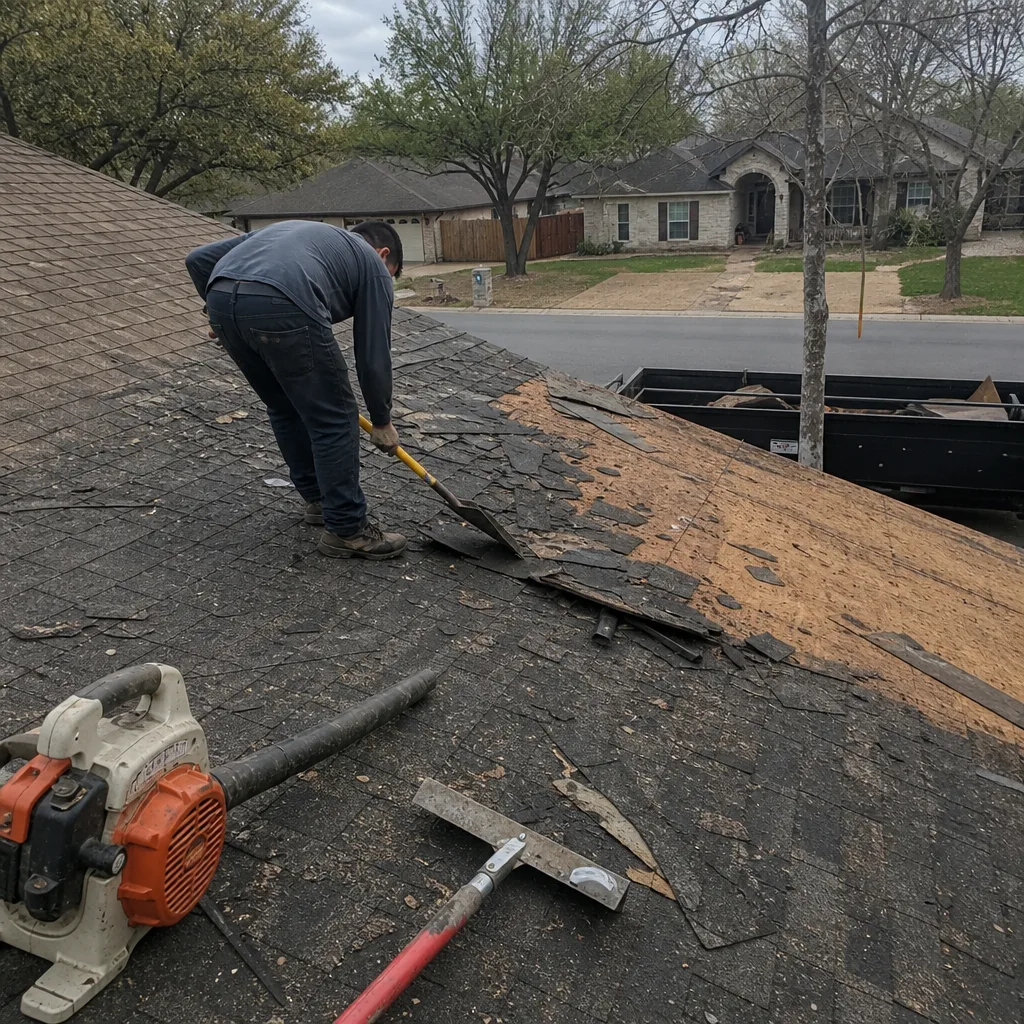 Before
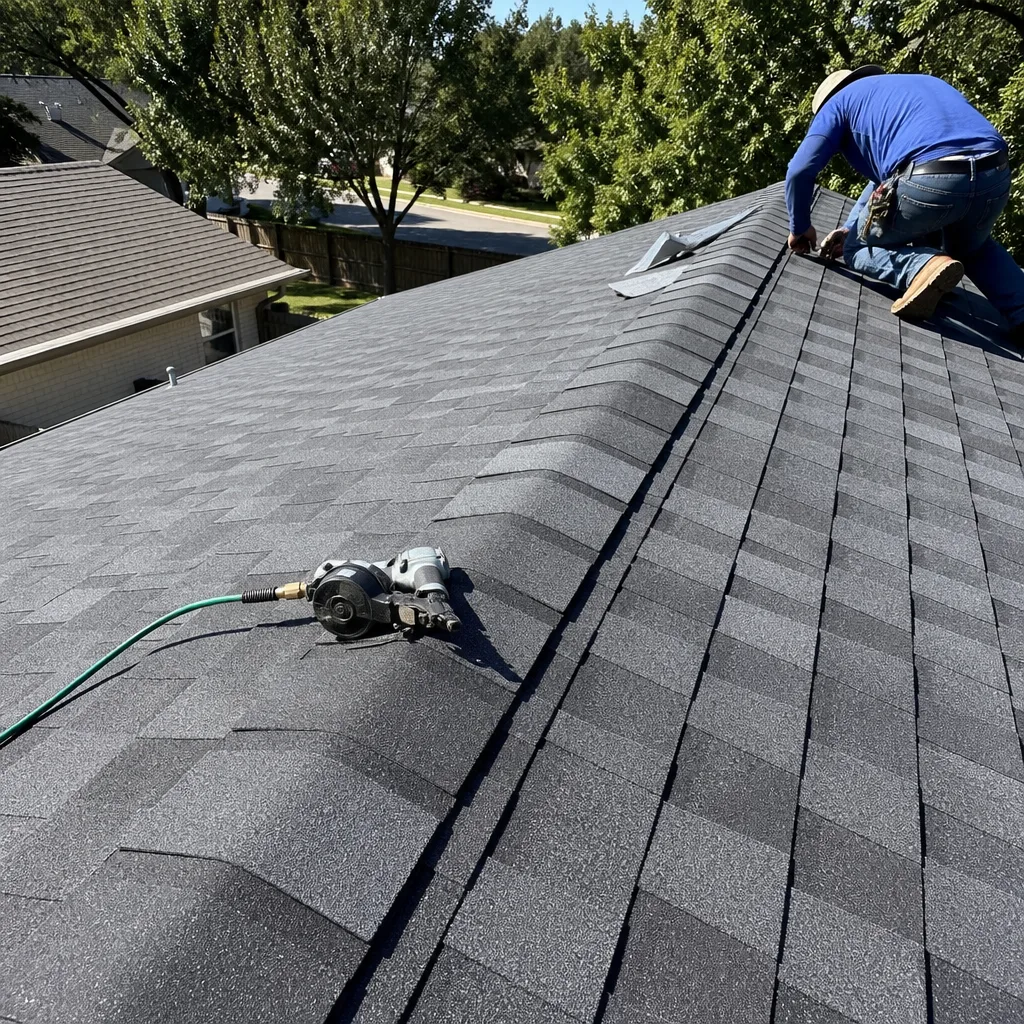 After
AfterReplacement Cost & What’s Included
In Austin, a full IKO ridge vent replacement runs $650 to $1,400 installed. The spread comes down to three things: linear footage of ridge line, the condition of the decking underneath, and whether we’re replacing just the vent or the ridge cap shingles too.
Here’s the breakdown in real dollars for a typical Austin single-story home with 40 to 60 linear feet of ridge:
- Vent material (IKO-compatible, 4-foot sections): $180 – $380
- Ridge cap shingles (IKO or matching manufacturer): $150 – $350 if needed
- Labor, removal, disposal, sealing, and fastening: $320 – $670
That’s parts and labor, start to finish. If the decking at the ridge is rotted or water-damaged, we’ll show you before we quote the repair, and we’ll put the number in writing before anything comes off the roof. Every ridge vent replacement carries the Tilehurst written guarantee, delivered before the crew leaves, and the 365-Day Done Right Promise behind it. If the repair fails inside a year, we return and correct it at no charge under the Kingswell Guarantee.
I’ll say what I tell every Austin homeowner on a ridge vent call: tell me the roof, I’ll tell you the price. No surprises once we’re up there.
DIY or Call Us?
You can safely check a few things from the ground or from an attic access without putting yourself on the roof: look for daylight through the ridge gap, feel for hot spots in the attic, and watch for any of the warning signs above after a storm. That’s fair game.
What we don’t recommend is a ladder-and-caulking-gun fix on the ridge line. The ridge is the most exposed point on the roof and the most common place for a homeowner to slip, especially on an Austin roof with a 6:12 or steeper pitch. More importantly, a ridge vent replacement isn’t just swapping plastic. If the slot is cut too narrow or too wide, the vent won’t breathe. If the fasteners aren’t set evenly, the vent will lift in the first wind event. If the filter isn’t seated right, the first gust of rain is in your attic. There’s also the question of matching the ridge cap profile so your curb appeal doesn’t take a hit. This is one of those repairs where it’s genuinely cheaper to have it done once, correctly. Call us at (254) 540-7345 and we’ll give you a written estimate before anything leaves the truck.
FAQs
In Central Texas, expect 12 to 18 years from an IKO ridge vent before the vent body or cap shingles degrade, compared to 20+ years in milder climates. Austin’s UV exposure ages vent material faster than the manufacturer’s national average, which is one reason we see ridge vent calls earlier here than in other markets. Call us at (254) 540-7345 and we’ll assess whether yours is at replacement age or just needs a repair.
Yes, in narrow cases where the vent body is still flexible and the failure is limited to a few lifted nails or a damaged end cap, a targeted repair works fine and usually runs $250 – $450 in Austin. If the vent plastic is brittle or cracking across multiple sections, a patch job is a band-aid and the ridge will fail again. Call (254) 540-7345 for an honest read on which situation you have.
A ridge vent replacement on a typical Austin home takes 3 to 5 hours from start to cleanup, assuming the decking is sound. Add an hour or two if we’re replacing decking or the ridge cap shingles. It’s a one-day job in almost every case. Call (254) 540-7345 to schedule a free estimate and we’ll give you a written timeline.
Yes. Our Austin trucks carry IKO-compatible 4-foot vent sections, matching ridge cap material, and the fasteners and sealants needed for a same-visit install in most cases. We also carry GAF, Owens Corning, and CertainTeed equivalents if a different system makes more sense for your roof. Call (254) 540-7345 and we’ll confirm stock before we head out.
Ready to Get the Ridge Vent Fixed?
If your IKO ridge vent is showing any of the signs above, or you just want a trained set of eyes on it, call us at (254) 540-7345. A live person answers, 24/7, and you’ll get a written price before any work begins. Written guarantee on the repair, delivered before the crew leaves. That’s the Kingswell Way, and it’s how we’ve operated in Austin from day one.
Written by Greg Holloway, Owner, Tilehurst Roofing Austin at Tilehurst Roofing Austin, serving Austin and nearby areas.